
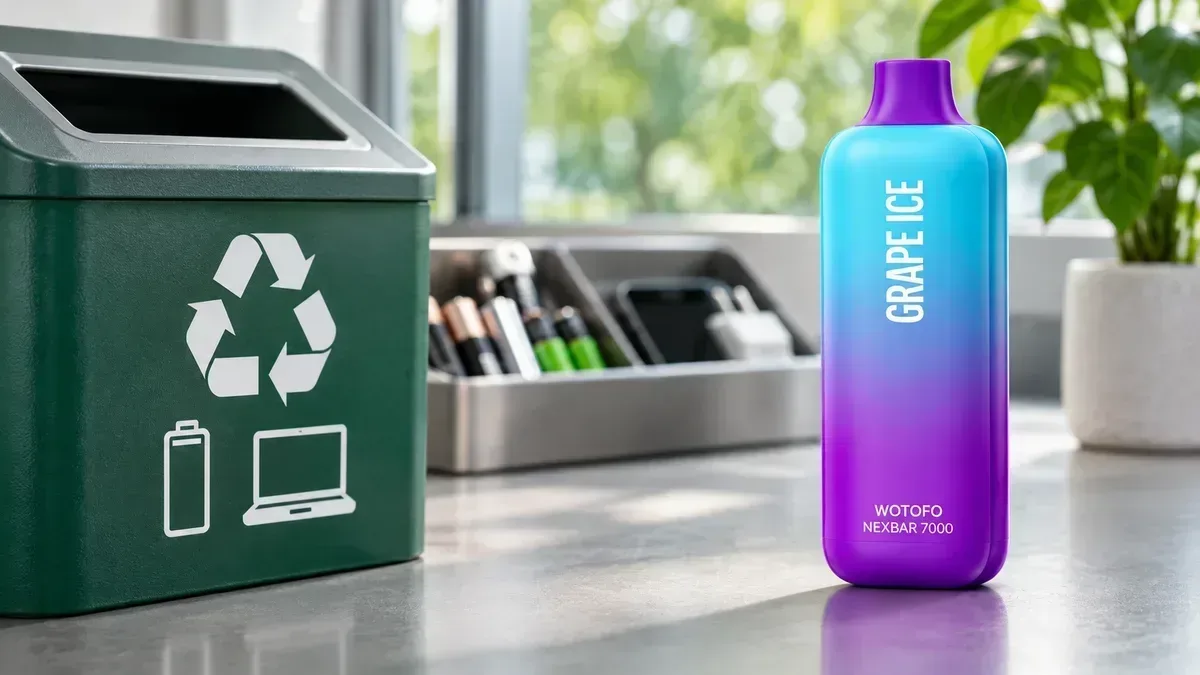
Where do you take a used WOTOFO NEXBAR 7000 if it still holds liquid or the casing looks damaged? The answer depends on the device’s condition and what your local collection site accepts. WOTOFO NEXBAR 7000 Puffs: Environmental Impact and Responsible Device Disposal starts with a practical decision about where to take it. Even a site that collects household batteries or electronics may have separate rules for whole disposable vapes.
How to Dispose of a WOTOFO NEXBAR 7000 Near You
Start with your local waste authority
First, consider the condition of the device without opening it or turning it on. If the casing looks intact, search your city or county waste directory for household hazardous waste collection. However, if the unit leaks, looks swollen, or has visible damage, call your local waste authority before moving it. If it smokes or catches fire, move away and call emergency services.
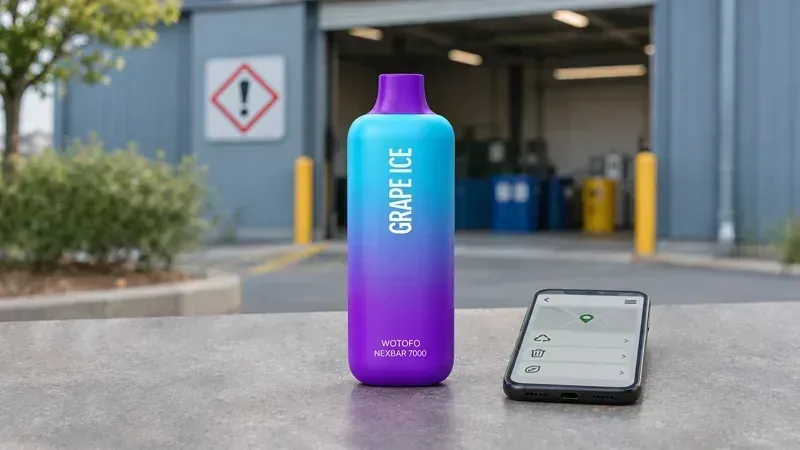
In the United States, the Environmental Protection Agency directs households to use household hazardous waste collection for e-cigarettes. Search the local directory for terms such as vape, e-cigarette, and household hazardous waste. Sometimes the directory lists these devices under a broader category. In that case, call the program and describe the item before planning a trip.
If household hazardous waste collection is unavailable, ask your waste authority which alternatives serve your address. Specifically, look for programs that accept the device with its battery and reservoir still inside. Depending on where you live, your options may include:
- A designated vape collection point that takes whole disposable units.
- An electronics program that explicitly lists intact disposable vapes among its accepted items.
- A participating retailer with a take-back program that accepts your type of vape.
For instance, a county might list a weekend collection event while a nearby retailer accepts vapes during staffed hours. Confirm acceptance with the location you plan to visit. A directory entry for rechargeable batteries alone leaves the question of whole vapes open.
Call the specific drop-off site before visiting
When you call, describe the unit in plain language. For example, you can ask, “Do you accept a whole disposable vape with the battery still installed? It might still contain nicotine e-liquid, and the battery may hold a charge. Can I bring it to this location?”
Once staff confirm acceptance, ask how they want you to prepare and hand over the device. Then check the details that could affect your trip:
- Whether your address qualifies and which proof of residency to bring.
- Whether you need an appointment or must attend a specific collection event.
- Whether the program charges a fee for household drop-offs.
- How to package the intact device for transport.
- Where to go on arrival and whether to hand it directly to staff.
If the site declines, ask your local waste authority for a referral that specifically handles whole disposable vapes. For instance, a city recycling center may collect loose batteries while the county hazardous waste program accepts complete devices. Additionally, confirm that the referral applies to your device’s condition. A site that takes intact vapes may have a different procedure for damaged ones.
What’s Inside the WOTOFO NEXBAR 7000?
Verify the exact model and its specifications
First, check the device label or original packaging for the model name. WOTOFO lists the device as the nexBar 7k. If the packaging shows a different model, use that name when speaking to the collection site. The model name helps staff identify what you have, especially when several product names look similar.
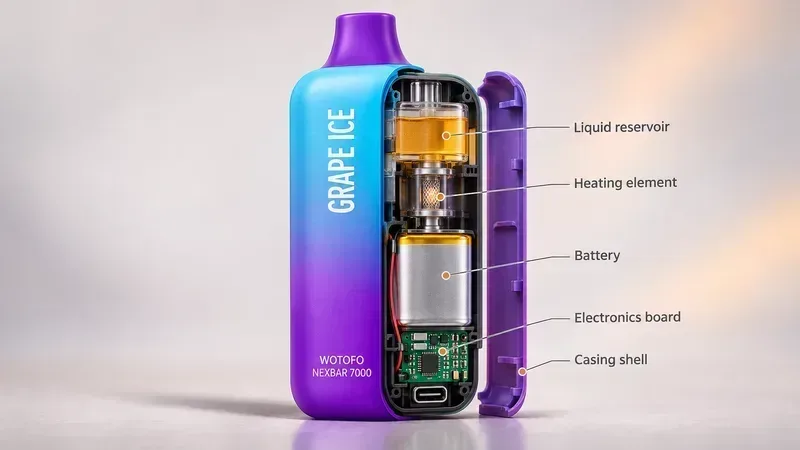
According to WOTOFO, the nexBar 7k has a 500 mAh rechargeable battery and a USB-C charging port. The manufacturer also lists polycarbonate and silicone construction and a prefilled reservoir with a 14 mL capacity. Additionally, its specifications identify a mesh heating coil. The manufacturer lists battery capacity without identifying the exact cell chemistry in those specifications.
Here, 500 mAh describes the battery’s rated capacity. The amount of charge in a used device depends on its condition and use. Similarly, 14 mL describes the reservoir’s capacity when full. Those figures help identify the model, while the collector needs to know what may remain inside your particular unit.
Explain why the whole device needs separate collection
       [Silicone mouthpiece]
                 │
    ┌────────────┴────────────┐
    │ Prefilled reservoir     │ ← Possible e-liquid residue
    │ Mesh heating coil       │ ← Heats the liquid
    │ Control electronics     │ ← Electronic waste
    │ Rechargeable battery    │ ← Stored energy
    └────────────┬────────────┘ ← Polycarbonate casing
                 │
[USB-C port]First, the battery can retain stored energy after the device stops working. Meanwhile, the control electronics and heating element add small electronic and metal parts to the waste. The casing and mouthpiece add different materials that a processor would need to separate. Together, these parts arrive at the collection site in one compact unit.
Additionally, nicotine-containing liquid may remain in the reservoir or around the heating assembly. The casing helps keep that residue contained while the device is intact. Opening it can expose you to the residue or damage the embedded battery. Therefore, bring the whole unit in the condition the collection site has agreed to accept.
Why Disposable Vapes Belong Outside Trash and Curbside Recycling
How waste collection and sorting can trigger fires
Keep disposable vapes out of household trash and curbside recycling. The U.S. Environmental Protection Agency warns that damaged vape batteries can start fires during transport and at waste facilities. For instance, a collection truck can compact a vape along with household waste. Similarly, sorting or processing equipment can crush a vape mixed with curbside recyclables.
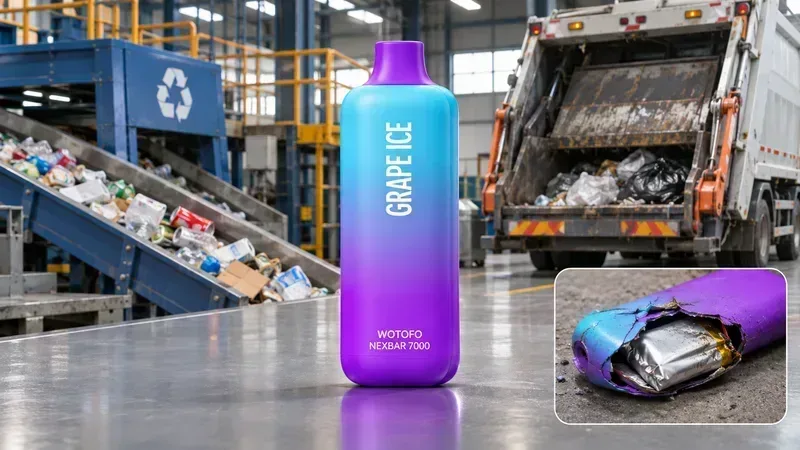
Crushing can damage the internal layers that keep the two sides of a lithium battery apart. If those layers fail, an internal short circuit can make the battery heat rapidly. As a result, the battery may ignite or set nearby material on fire. Paper and cardboard can give a small ignition more material to burn.
Consider a vape that stopped producing vapor yesterday. Its reservoir may have run low, or the electronics may have stopped powering the coil. Either way, the battery can retain energy after the device stops functioning. Therefore, an apparently dead vape belongs in the same separate collection stream as a working one.
Also, the outside of the device tells a sorting worker very little about the charge inside. A small vape can disappear among packaging before anyone spots it. By taking it directly to a program prepared to handle vapes, you keep it away from routine compaction.
How residual e-liquid affects disposal
A device can feel empty and still hold a small amount of liquid. For example, residue can remain inside the reservoir or on the material that feeds liquid to the coil. A cracked casing can let that liquid escape. In turn, leaked nicotine-containing liquid can expose anyone who handles the device or touches a contaminated surface.
Therefore, leave any residual liquid inside an intact vape for the approved collection site. Pouring it into a sink introduces the liquid into wastewater. Meanwhile, a storm drain may carry it toward a stream or another waterway. Pouring it on the ground puts the residue in contact with soil, where runoff can carry it farther.
Even a small amount can get on hands, work surfaces, or other objects during handling. Accordingly, tell the collector if you see liquid on the outside of the device. If it appears to be leaking, call for instructions before moving it. Staff can advise you based on the condition you describe.
Environmental Impact of Disposable Vapes Across Their Life Cycle
Material extraction and manufacturing
The environmental impact of a disposable vape starts before it reaches a store. First, producers extract and process raw materials for the battery and for metals used in electronic parts. Meanwhile, the shell and mouthpiece require their own materials and manufacturing steps. Assembly then brings the battery, electronics, casing, and filled reservoir together.
For example, a material analysis published in Science of the Total Environment examined nine disposable vapes. Researchers found that some devices consisted mainly of plastic by dry mass. In others, metal made up the larger share when the battery counted toward that total. That variation shows how much the material mix can differ across the category.
Furthermore, disposal ends the useful life of the complete product even when some parts still function. An empty reservoir can leave a working battery, charging port, or circuit inside the discarded unit. Those components embody the materials and energy used to make them. Estimating their impact for this model would require model-specific data.
Litter, disposal, and material recovery
Outdoors, a discarded vape can crack as it weathers or gets stepped on. As a result, trapped residue and internal parts can become exposed to rain or soil. The materials study identifies several constituents that can raise environmental concerns. What actually escapes depends on the device’s condition and the surroundings.
Meanwhile, recovering useful materials requires separating parts that fit tightly together. A processor has to manage possible e-liquid residue while handling the battery, mixed plastics, and small metal components. For instance, a metal coil provides little recoverable material on its own. Recovering it requires a process that can safely reach and sort it.
Authorized collection gets the device into a waste program equipped to manage it. Afterward, material recovery depends on the treatment method and what the receiving processor can separate. If you want to know what happens after drop-off, ask the program how it handles collected vapes. Its answer can clarify which materials, if any, go to recovery.
What to Do With Empty, Partly Used, Leaking, or Damaged Vapes
Empty or partly used and still intact
If the casing looks sound, tell the site you have a whole disposable vape. Some programs accept devices with liquid or battery charge remaining. Specifically, confirm that the site accepts both before you travel. If you cannot tell how much remains, say so when you call.
For example, you might find a partly used device in a drawer with its indicator dark. You can tell staff that the casing looks intact and the contents are uncertain. An estimate of the remaining liquid or charge adds little when you cannot check it safely. Instead, focus on describing the unit and following the site’s instructions.
Before drop-off, leave the vape in one piece. Avoid the following steps when preparing it for collection:
- Opening, prying, or cutting the casing to see what is inside.
- Removing the embedded battery to use a battery-only collection bin.
- Draining the reservoir or trying to clean out the remaining liquid.
- Using the vape to empty it or charging it to check whether it still works.
Then follow the receiving site’s packaging and handoff instructions. For instance, staff may want you to bring the unit to an attendant at a designated intake area. Tell the attendant that the device may still contain liquid and charge. That information helps them direct it to the appropriate collection container.
Leaking, swollen, hot, or otherwise damaged
If you notice leakage, swelling, or a split casing, stop handling the device. Avoid touching any leaked liquid, and keep other people and pets away from the affected area. Next, call the receiving facility or local hazardous waste authority before moving the vape. Ask what handling and transport arrangements apply to its condition.
When you call, describe what you can see without touching or testing the device. For example, say whether the casing split after a drop or whether liquid appeared around the mouthpiece. Additionally, mention any heat you already noticed and whether the condition seems to be worsening. An appointment for an intact vape may require different arrangements after damage occurs.
If a device becomes unusually hot, step away and keep others clear. Avoid picking it up to check the temperature or trying to pack it for travel. If you see smoke or an active fire, treat it as an emergency. Move away and call local emergency services from a safe location.
Likewise, skip the regular drop-off trip while you wait for handling instructions for a damaged device. A site may direct you to a different facility or arrange a specific handoff. For background on these procedures, the U.S. EPA’s e-cigarette collection tip sheet explains how collection programs plan for battery hazards. Follow the instructions you receive for the particular device and its condition.
What the 7,000-Puff Rating Tells You About Environmental Impact
An advertised maximum puff count
WOTOFO advertises the nexBar 7k as delivering up to 7,000 puffs. That figure describes an advertised maximum. In practice, the actual count can vary with puff duration and the condition of the device. A longer draw, for instance, can use more liquid than a shorter one.
Also, a puff count cannot tell you how many days a particular device will last. That estimate would require both the actual number of puffs the unit delivers and the user’s daily count. For example, two people who take different numbers of puffs per day would use the same total over different periods. The number printed on the package supplies neither person’s daily count.
What a footprint comparison would require
A defensible comparison starts with a common measure of actual use. For instance, researchers could define a consistent puff duration and compare devices across the same number of measured puffs. They would also need to track how many devices each comparison uses. Otherwise, two advertised maximums reveal little about how much hardware people actually discard.
Additionally, a footprint comparison needs information across the device’s life cycle. Relevant inputs include:
- The types and quantities of materials in each device, including its battery, electronics, and casing.
- The energy and other inputs used during manufacturing and assembly.
- The transport distances and methods across distribution and collection.
- The waste treatment each device receives, including any material recovery.
For example, a device that delivers more puffs could also contain more material. Whether it creates less waste for the same measured use would depend on both its mass and its actual yield. Similarly, emissions estimates need production and transport data, while recyclability depends on the design and available treatment. The 7,000-puff rating cannot answer those questions on its own.
Conclusion
Keep your WOTOFO NEXBAR 7000 intact and take it to a collection site that confirms it accepts whole disposable vapes. Even when the device looks empty, its battery, electronics, and possible liquid residue still matter for disposal. Before you travel, call your local household hazardous waste service and describe the device and its condition. Confirm the drop-off location and ask for handling instructions, especially if you see leakage, swelling, or damage.
