

Vaping devices may look simple, but what actually travels through that small mouthpiece? Vaping Explained: A General Educational Overview begins with an important distinction: users inhale an aerosol, not harmless water vapor. That aerosol may contain nicotine, fine particles, flavoring chemicals, metals, and unexpected contaminants.
However, conflicting claims often blur the difference between established evidence and assumptions. Adults, young people, parents, and educators may hear that vaping is harmless or identical to smoking. Neither claim accurately reflects the evidence. This guide explains the devices, ingredients, risks, emergencies, laws, and options for quitting.
1. Vaping Explained: A General Educational Overview
What vaping means
Vaping means inhaling an aerosol created when an electronic device heats a liquid or another substance. Common devices include electronic cigarettes, e-cigarettes, vape pens, pod systems, box mods, and disposable vapes. Additionally, some specialized devices heat cannabis concentrates or dry herbs instead of standard e-liquid.

Cigarettes burn tobacco, creating smoke through combustion. Vape devices heat a substance without burning tobacco in the same way. Therefore, vaping usually avoids many toxic combustion products found in cigarette smoke. However, the absence of smoke does not make the resulting aerosol safe.
Vapor, aerosol, and common reasons for use
People often call the visible cloud “vapor,” which suggests a harmless gas. In fact, it is an aerosol containing fine liquid droplets, tiny particles, and chemicals. Its contents vary with the device, liquid, temperature, and inhaling pattern. Moreover, some particles can travel deeply into the lungs.
People vape for many different reasons. Some seek nicotine, flavors, experimentation, social acceptance, stress relief, or cannabis effects. Meanwhile, adults who smoke may try vaping as a replacement for combustible cigarettes. A person can also begin casually and later develop a repeated pattern of nicotine use.
People who do not use tobacco or nicotine should not start vaping. Specifically, adolescents and pregnant people face concerns related to nicotine exposure. People with respiratory or cardiovascular conditions may also experience added risks. Therefore, they should discuss any nicotine product with a qualified healthcare professional.
2. How Vaping Devices Work and the Main Types Available
Core parts and operating process
Most vape devices contain a battery, heating coil, reservoir, mouthpiece, and airflow pathway. Many also include sensors, control buttons, adjustable settings, and a charging port. The atomizer usually combines the heating coil with material that draws liquid toward it. Additionally, a pod or tank holds the liquid until use.
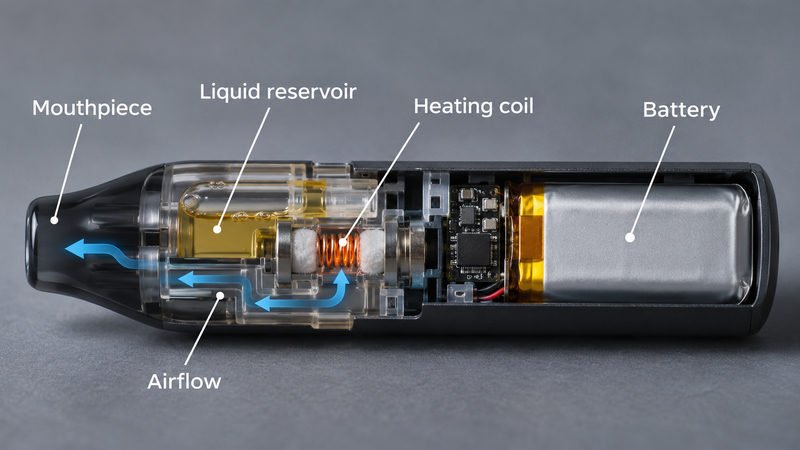
Inhaling or pressing a button sends battery power to the coil. The heated coil then turns nearby liquid into an aerosol. Air carries that aerosol through the mouthpiece and into the user’s mouth and lungs. Notably, the device does not simply release stored water vapor.
Common device categories
- Cigalikes resemble traditional cigarettes and usually offer limited power or adjustment.
- Vape pens use a pen-shaped battery with a tank or cartridge.
- Pod systems accept refillable pods or sealed, prefilled cartridges.
- Box mods often provide larger batteries, adjustable power, and replaceable tanks.
- Disposable vapes combine the liquid, coil, and battery in one compact unit.
- Cannabis devices may heat THC concentrates, CBD liquids, oils, or dry herbs.
Products within the same category can deliver very different doses. For instance, a high-powered mod may create more aerosol than a small cigalike. Nicotine delivery also changes with liquid strength, inhalation depth, puff duration, and frequency. Furthermore, coil age and temperature affect which chemicals form during heating.
Device damage and unsafe modifications
Leaking liquid can expose skin, eyes, children, or pets to concentrated ingredients. Damaged chargers and batteries may overheat, ignite, or explode. As a result, fires can cause facial injuries, burns, and property damage. Users should keep batteries away from loose coins, keys, extreme heat, and visible damage.
Additionally, incompatible chargers may supply the wrong voltage or current. Users should follow the manufacturer’s charging and storage instructions. They should never leave a charging device near bedding or other flammable materials. A swollen, unusually hot, hissing, or damaged battery requires immediate caution.
Modifying a device can defeat its built-in protections. Similarly, mixing unverified liquids may introduce contaminants or unsuitable ingredients. Illicit products and informal sellers may provide little reliable information about manufacturing or storage. Therefore, users should avoid tampered cartridges, homemade mixtures, and products from unknown sources.
3. What Is in E-Liquid and Vape Aerosol?
Typical ingredients
E-liquids commonly use propylene glycol and vegetable glycerin as carrier fluids. These ingredients help create the aerosol and influence its thickness or throat sensation. Manufacturers may also add water, flavors, nicotine, sweeteners, cooling agents, acids, and other additives. However, formulas vary considerably between brands and individual products.

Many products contain nicotine, including formulations made with nicotine salts. These salts can allow high nicotine concentrations with less throat irritation. Some products claim to contain no nicotine. Nevertheless, inaccurate labeling, cross-contamination, or incomplete testing means users should not automatically assume nicotine is absent.
Other devices may contain THC, CBD, or mixtures of cannabis-derived substances. Additionally, unregulated products can contain residual solvents, pesticides, diluents, or unexpected drugs. Tampering may introduce oils or additives that were never intended for inhalation. Product appearance alone cannot confirm its contents or quality.
What users may inhale
Vape aerosol may contain nicotine, ultrafine particles, volatile organic compounds, and flavoring chemicals. Heating can also create carbonyl compounds, including formaldehyde, acetaldehyde, and acrolein under certain conditions. Moreover, coils and other metal components may release nickel, chromium, lead, or additional metals. The amounts depend heavily on the product and its use.
Specifically, high power and overheated coils can change the aerosol’s chemical profile. A dry or worn coil may produce an unpleasant burnt taste and additional degradation products. Frequent, deep puffs can also change temperature and exposure. Therefore, findings from one device may not describe every product on the market.
Heating and poisoning concerns
An ingredient considered acceptable for eating is not automatically safe to inhale. The digestive system and lungs process exposures differently. Furthermore, heating can transform familiar ingredients into new compounds. Long-term inhalation data remain limited for many flavoring mixtures and newer additives.
Concentrated nicotine liquid can cause poisoning when swallowed or absorbed through skin. Children may mistake colorful or sweet-smelling liquid for food. Pets can also become seriously ill after chewing a pod or licking spilled liquid. Therefore, users should store every device and refill in a locked, inaccessible place.
Possible nicotine poisoning symptoms include nausea, vomiting, sweating, dizziness, confusion, weakness, and a rapid heartbeat. Severe exposure may cause seizures, breathing problems, or collapse. In fact, symptoms can progress quickly after concentrated exposure. Contact emergency services or a local poison center promptly when poisoning is suspected.
4. Health Effects, Dependence, and Higher-Risk Groups
Short-term and possible long-term effects
Short-term effects can include coughing, throat irritation, dry mouth, headache, dizziness, and nausea. Nicotine may also increase heart rate and temporarily raise blood pressure. Additionally, aerosol can irritate airways and worsen wheezing or breathing symptoms. Experiences vary with dose, product contents, and personal sensitivity.
Vaping products remain relatively recent, and their designs change quickly. Therefore, researchers do not yet have lifetime evidence matching decades of cigarette research. Current concerns include respiratory, cardiovascular, oral, and immune effects. However, uncertainty does not prove either complete safety or inevitable severe disease.
Some users report gum irritation, mouth dryness, or changes in oral comfort. Meanwhile, laboratory and clinical research continues examining inflammation, blood-vessel function, and lung responses. Researchers must separate vaping effects from previous smoking and dual use. Consequently, careful language matters when interpreting associations and possible causes.
How nicotine dependence develops
Nicotine activates reward pathways in the brain and can reinforce repeated use. Over time, users may develop tolerance and need more nicotine for similar effects. Cravings can begin linking vaping with driving, studying, socializing, or managing stress. As a result, occasional use may become automatic throughout the day.
Signs of dependence include unsuccessful quit attempts, strong cravings, and difficulty following self-imposed limits. Another sign involves continued use despite health, financial, school, or relationship problems. Specifically, some users wake during the night to vape or use immediately after waking. High-nicotine products can make this pattern develop quickly.
Stopping nicotine may cause irritability, anxiety, low mood, restlessness, and concentration problems. Sleep disruption, increased appetite, and powerful cravings can also occur. However, withdrawal symptoms usually ease with time. Support and a structured plan can make them easier to manage.
Groups facing particular concerns
Adolescent and young adult brains continue developing into early adulthood. Nicotine exposure during this period may affect attention, learning, mood, and impulse control. Moreover, discreet devices, appealing flavors, peer influence, and high nicotine levels can encourage frequent youth use. Young users may develop dependence before recognizing the pattern.
Nicotine crosses the placenta and can expose a developing fetus. Therefore, vaping during pregnancy presents concerns even without cigarette smoke. Other aerosol ingredients may create additional exposures with limited pregnancy safety data. Pregnant people should seek individualized guidance from a qualified healthcare professional.
People with asthma or other lung diseases may experience worsening irritation, coughing, or breathing symptoms. Those with heart disease may face added concerns from nicotine’s cardiovascular effects. Additionally, sensitive individuals may react to solvents, flavors, or other aerosol ingredients. A sudden change in symptoms deserves medical assessment.
Nicotine-free vaping does not remove every risk. These products can still expose lungs to particles, solvents, flavorings, metals, contaminants, and heat-generated chemicals. Furthermore, labels may not always match laboratory findings. Avoiding nicotine does not turn inhaled aerosol into clean air.
5. Vaping Versus Smoking, Secondhand Exposure, and EVALI
Relative risk and smoking cessation
Cigarette smoke contains numerous toxic products created when tobacco burns. For that reason, cigarette smoking is generally more harmful than vaping. However, lower relative risk does not mean harmless or risk-free. The safest option for health is avoiding inhaled tobacco and vaping products.
Some adults who smoke use e-cigarettes while trying to replace cigarettes. For them, switching completely may reduce exposure to combustion products. However, prolonged dual use maintains cigarette-smoke exposure and may preserve nicotine dependence. Benefits depend on complete switching, product quality, usage patterns, and continued avoidance of smoking.
Evidence about vaping for smoking cessation continues to evolve. Moreover, results vary because devices, nicotine strengths, and behavioral support differ widely. Adults considering a switch should discuss the options with a qualified healthcare professional. Personal medical history, preferences, and locally available treatments should guide the decision.
Established cessation support may include counseling, quitlines, approved medications, and structured follow-up. Specifically, a clinician can explain which options suit pregnancy, age, current medicines, and existing conditions. Combining behavioral support with appropriate treatment often improves quit attempts. Users should also plan how they will eventually manage continued vaping or nicotine dependence.
Secondhand aerosol and surface residue
Bystanders may inhale aerosol exhaled by a person who vapes. That aerosol can contain nicotine, particles, flavoring chemicals, and other substances. Exposure may increase in cars, small rooms, or poorly ventilated spaces. Therefore, vaping away from children and other people reduces avoidable exposure.
Aerosol components can also settle on furniture, clothing, floors, and dust. Researchers sometimes describe this material as thirdhand residue. Young children may contact contaminated surfaces and then place their hands in their mouths. However, researchers are still studying the size and health significance of this risk.
Understanding EVALI
EVALI means e-cigarette or vaping product use-associated lung injury. The major outbreak had a strong historical association with vitamin E acetate in some illicit THC products. However, investigators could not exclude every other substance in all cases. Product tampering and informal supply chains were important warning factors.
Symptoms can include cough, chest pain, shortness of breath, fever, nausea, vomiting, or diarrhea. The illness may worsen quickly and require hospital care. Therefore, recent vaping history helps clinicians evaluate unexplained respiratory and gastrointestinal symptoms. Users should honestly describe substances, sources, and timing without fearing judgment.
Four common vaping myths
- “Vape aerosol is only water.” It can contain droplets, particles, nicotine, chemicals, metals, and contaminants.
- “Every vape contains nicotine.” Some do not, although labels may occasionally prove inaccurate or incomplete.
- “Nicotine-free vaping is harmless.” Aerosol can still contain solvents, flavors, particles, and heat-generated compounds.
- “Vaping and smoking are equally harmful.” Smoking generally causes greater harm, but vaping still carries meaningful risks.
6. Emergencies, Quitting Vaping, and Current Regulations
When to seek urgent help
Severe or rapidly worsening breathing difficulty requires urgent medical help. Chest pain, blue or gray lips, confusion, collapse, or seizures are also emergency signs. Additionally, persistent vomiting or severe weakness may signal serious illness or poisoning. Contact local emergency services immediately when these symptoms appear.
Suspected exposure to concentrated nicotine also needs prompt professional guidance. Do not induce vomiting unless a medical professional specifically instructs you. Meanwhile, move spilled liquid away from children and pets, and avoid further skin contact. Keep the packaging available because its label may help emergency specialists.
Cough, fever, chest pain, breathlessness, or gastrointestinal symptoms after vaping need prompt assessment when they worsen. This concern becomes especially important after using THC products or items from informal sources. Furthermore, a normal-looking cartridge does not guarantee safe contents. Tell the clinician what product was used and when symptoms began.
Building a practical quit plan
Start by choosing a realistic quit date and identifying common triggers. These might include stress, alcohol, driving, breaks, certain friends, or seeing the device nearby. Therefore, remove devices, chargers, pods, liquids, and hidden backups before the date. Tell supportive people how they can help without criticizing or policing you.
- Replace vaping breaks with a short walk, stretching, or slow breathing.
- Keep water, sugar-free gum, or a simple snack nearby.
- Avoid high-risk situations during the first difficult days.
- Plan a brief response when someone offers you a vape.
- Track cravings to identify patterns and useful coping strategies.
Professional help can include healthcare guidance, behavioral counseling, quitlines, text programs, and peer support. A clinician can also discuss suitable nicotine-dependence treatments. Notably, recommendations may differ by age, pregnancy status, health history, and location. Young people should receive confidential, developmentally appropriate support whenever available.
Cravings and mood changes usually become less intense over time. Meanwhile, regular sleep, hydration, movement, and structured meals can support recovery. A lapse does not erase earlier progress or prove failure. Instead, identify the trigger, adjust the plan, and return to quitting promptly.
Laws, age limits, and supportive conversations
Vaping laws differ between countries and often vary within states, provinces, or cities. Rules may cover minimum purchase ages, retailer licensing, product standards, packaging, and taxes. Additionally, governments may restrict flavors, advertising, online sales, delivery, or vaping in public places. Readers should verify current national, regional, and local requirements directly.
Parents and educators should begin with calm, factual, non-stigmatizing conversations. Open-ended questions can reveal what a young person has heard, used, or worries about. Moreover, adults can correct myths while discussing marketing, nicotine dependence, and household or school expectations. Anger and shame may discourage honest disclosure.
Most importantly, support should remain available after the conversation. Adults can help young people contact a clinician, counselor, quitline, or confidential cessation service. Clear boundaries still matter, but they work best alongside practical assistance. Repeated, respectful conversations often achieve more than a single warning.
Conclusion
Vaping avoids tobacco combustion, but it still creates an aerosol for users and bystanders. That aerosol may contain nicotine, particles, chemicals, metals, and contaminants. Risks change with the device, liquid, temperature, source, and pattern of use. Moreover, long-term effects remain under active investigation.
Young people, pregnant people, nonsmokers, and people with existing health conditions face particular concerns. Nicotine can cause dependence, while liquids and batteries can create poisoning, fire, and injury emergencies. Therefore, severe breathing problems, chest pain, seizures, collapse, or suspected poisoning require urgent help.
If you vape and want to stop, create a quit plan and contact a qualified healthcare professional or local cessation service. Support can reduce withdrawal difficulties and help you recover from a lapse. Most importantly, if you do not currently use tobacco or nicotine, do not begin vaping.
