
Introduction
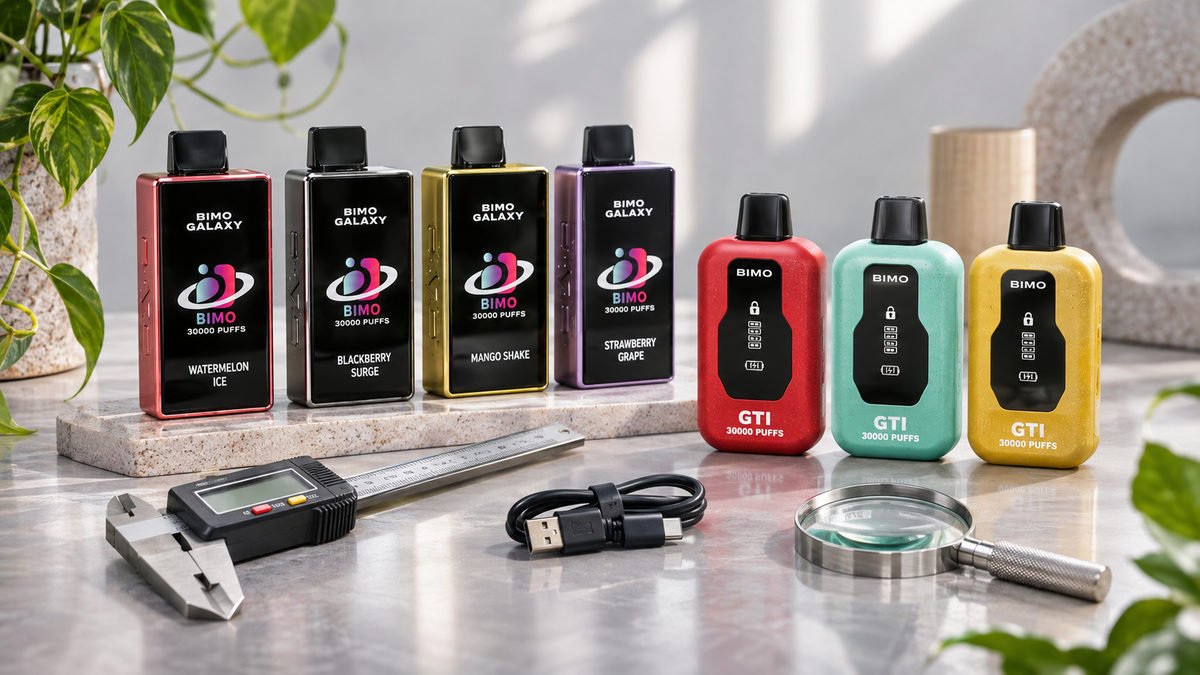
A BIMO vape may advertise thousands of puffs, but what do those numbers reveal about everyday performance? Understanding BIMO Vape Product Specifications requires more than reading the largest number on the box. However, inconsistent listings, unexplained terms, and regional variations can make direct comparisons difficult.
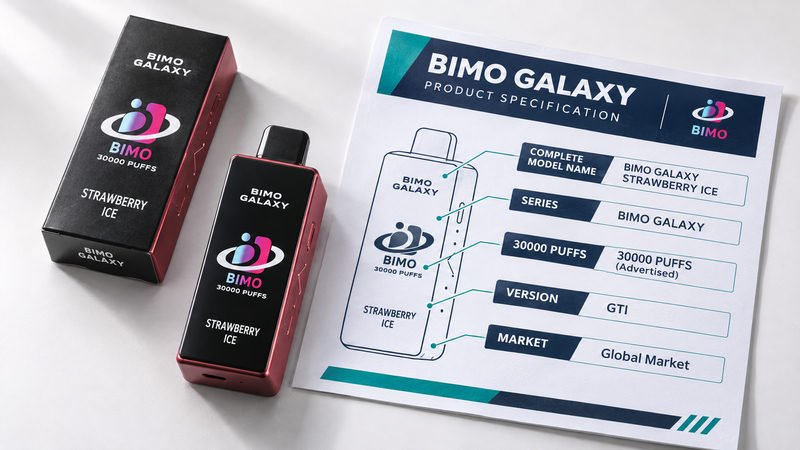
Specifications can still provide useful guidance when buyers separate measurements from promotional estimates. For instance, battery capacity and liquid volume describe physical characteristics. Meanwhile, puff count depends heavily on laboratory conditions and personal use.
This guide explains how adults can compare documented models, charging systems, coils, nicotine labels, and safety information. Additionally, it shows where information remains undisclosed or varies between markets. The aim is a practical choice based on verified needs, not headline claims.
1. Understanding BIMO Vape Product Specifications
Start with the exact product identity
Begin with the complete model name printed on the device and packaging. Specifically, identify the series, advertised puff count, version, and intended market. Similar names do not always identify products with identical components.
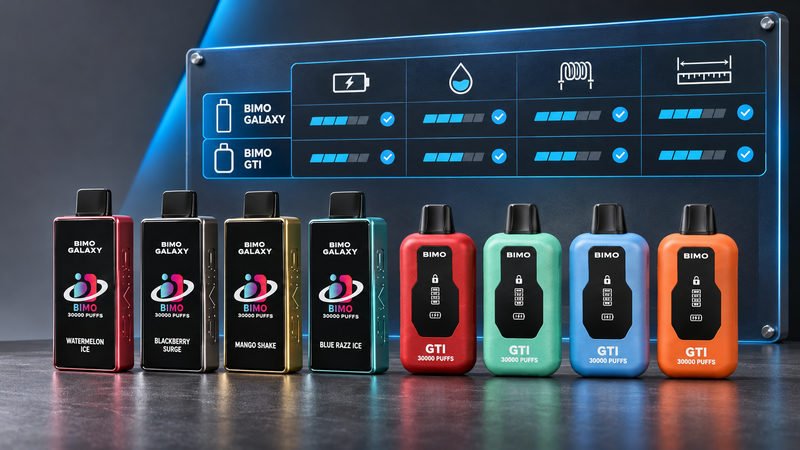
A specification sheet should also identify the device category and intended use. For example, a BIMO Crystal 12000 and a BIMO GTI 40000 represent different formats. Therefore, buyers should not transfer specifications from one model to another.
Regional variants can differ in nicotine strength, liquid capacity, packaging, and availability. Moreover, local rules may force manufacturers or distributors to change particular features. Always compare the physical package with current manufacturer information for that region.
Measurements versus conditional claims
Some specifications describe measurable physical properties. These include battery capacity in milliamp-hours, liquid volume in millilitres, coil resistance in ohms, dimensions, and weight. However, even these figures need confirmation from reliable packaging or documentation.
Other statements describe estimated performance rather than fixed output. Puff count is the clearest example because draw length changes consumption. Likewise, words such as “fast charging,” “intense,” or “long-lasting” need supporting test conditions.
- Disposable: The complete device reaches the end of its intended life after its liquid or hardware expires.
- Prefilled: The manufacturer supplies the device with e-liquid already inside it.
- Rechargeable: The internal battery accepts additional electrical charge through a supported port.
- Refillable: The user can safely add compatible e-liquid through a designed filling system.
- Draw-activated: An airflow sensor starts vapor production when the adult user inhales.
Notably, rechargeable does not automatically mean refillable. Many BIMO products use rechargeable batteries but contain sealed, prefilled liquid reservoirs. Therefore, users should never open a sealed device to add liquid.
Check specifications against current manufacturer pages, intact packaging, user instructions, and authorized sellers. Furthermore, compare several sources when one listing omits important details. Treat conflicting figures as unverified until the manufacturer or regional distributor resolves them.
2. BIMO Vape Models and Verified Specification Comparison
Documented model comparison
The following comparison reflects manufacturer materials and documented regional listings available for these model names. However, BIMO offers different versions across markets. Buyers should treat the package in hand as the final reference for its contents.
| Model | Advertised puffs | Battery and charging | E-liquid and nicotine | Coil | Size and weight |
|---|---|---|---|---|---|
| BIMO 5000 | Up to 5,000 | 550mAh; rechargeable; port type not consistently disclosed | 14mL; 2% or 5%, depending on region | Not disclosed | Not disclosed |
| BIMO Crystal 12000 | Up to 12,000 | 550mAh; USB-C rechargeable | 20mL; 2% or 5%, depending on region | 1.2-ohm mesh | Device dimensions and weight not consistently disclosed |
| BIMO Turbo 20000 | Up to 20,000 | Rechargeable; exact capacity varies or remains undisclosed | Capacity and nicotine vary by regional version | Mesh configuration advertised; resistance not consistently disclosed | Not disclosed |
| BIMO GTI 40000 | Up to 40,000 | 850mAh; USB-C rechargeable | 30mL; 2% to 5%, depending on region | 0.55-ohm dual mesh | 49 × 27 × 100mm; approximately 90g |
| BIMO 4 IN 1 | Up to 100,000 | 650mAh; USB-C rechargeable | 64mL total, listed as four 16mL chambers; 2% to 5% | Four 1.0-ohm mesh coils | 44 × 44 × 111mm; weight not disclosed |
| BIMO 3 IN 1 Hookah | Up to 160,000 | 650mAh; USB-C rechargeable | 46mL total, listed as two 23mL chambers; 2% to 5% | Two 1.0-ohm mesh coils | 46 × 46 × 118mm; weight not disclosed |
These puff figures are advertised estimates, not independently verified guarantees. Nicotine and liquid configurations may also be unavailable or unlawful in some regions.
Format, controls, and indicators
The documented products above are prefilled devices rather than ordinary open-tank systems. Most listings describe them as disposable after their liquid reaches depletion. However, their rechargeable batteries can receive multiple charges during the intended product life.
Available documentation commonly identifies draw activation, although some model pages omit the activation method. Therefore, buyers should check the user guide before assuming button-free operation. No one should operate an unfamiliar control without understanding its function.
The Crystal 12000 includes a screen or LED display for battery and liquid status. Meanwhile, GTI listings describe a smart display, adjustable airflow, and dual mesh construction. Turbo materials advertise a large digital screen and adjustable power, but specifications differ between regional listings.
The 4 IN 1 and 3 IN 1 Hookah use multiple chambers or flavor sections. Additionally, manufacturer information identifies smart displays on both models. Exact switching controls, airflow arrangements, and power modes should still match the package instructions.
Leak-resistant construction appears in promotional descriptions for several products. However, independent leakage testing is not consistently published. Buyers should treat “leak-resistant” as a design claim rather than a promise that leaking cannot occur.
Matching specifications to likely use
The BIMO 5000 has a smaller documented liquid capacity than the higher-count models. As a result, it may suit adults who prioritize simpler carrying and lower total capacity. Yet its physical dimensions remain undisclosed in the reviewed materials.
The Crystal 12000 balances a 20mL reservoir with a 550mAh rechargeable battery. Moreover, its liquid and battery indicators may help users monitor remaining resources. Its 1.2-ohm coil also represents a different operating design from the lower-resistance GTI coil.
The GTI 40000 provides documented dimensions, weight, airflow adjustment, and a larger battery. On the other hand, its 90g weight makes it less minimal than a narrow disposable. Adults should decide whether controls and capacity justify the added bulk.
Multi-chamber products provide substantial capacity and selectable flavor arrangements. However, their headline puff counts demand especially cautious interpretation. No listed model is universally best because portability, draw preference, nicotine limits, and legal availability differ.
3. Puff Count, Battery Capacity, and Charging Performance
Why advertised puffs differ from actual use
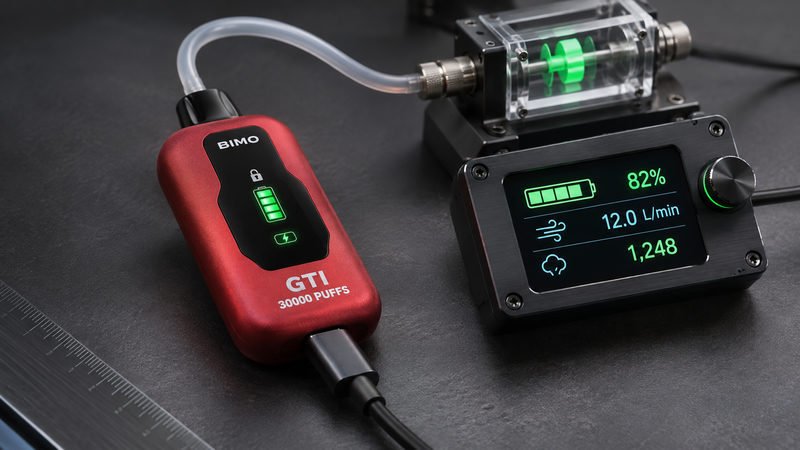
Advertised puff count normally comes from controlled testing with short, standardized draws. BIMO documentation describes laboratory puff measurement using a one-second draw. Therefore, a person taking three-second draws may receive far fewer total puffs.
Draw frequency also changes coil temperature and liquid movement. Furthermore, open airflow, higher power, and repeated inhalations can increase liquid and electrical consumption. Cold surroundings may reduce battery performance, while extreme heat can stress the cell.
- Longer draws generally consume more liquid per activation.
- Higher power can create more vapor while increasing energy demand.
- More open airflow may encourage longer or deeper draws.
- Coil condition can alter heat production and liquid use.
- Battery age and manufacturing variation can change runtime.
What battery capacity means
Battery capacity uses milliamp-hours, written as mAh. In general, a higher capacity stores more electrical charge under comparable conditions. However, it does not guarantee proportionally longer use across devices with different coils and power settings.
For instance, an 850mAh device running at higher power may recharge sooner than expected. Meanwhile, a 550mAh device with modest output could use energy more slowly. Circuit efficiency, screen use, temperature, and cutoff settings also affect runtime.
Charging safely
Verified listings identify USB-C charging for the Crystal 12000, GTI 40000, and documented multi-chamber models. Exact charging times remain undisclosed in the reviewed manufacturer materials. Therefore, avoid accepting an unsupported charging-time promise from a seller.
Check the indicator or screen and disconnect the device after charging completes. Additionally, use a sound cable and a compatible, moderate-output power source. Do not assume the device supports high-wattage charging because its port uses USB-C.
- Keep the charging port clean and completely dry.
- Place the device on a stable, nonflammable surface.
- Monitor charging instead of leaving it unattended overnight.
- Replace frayed, bent, or heat-damaged cables.
- Stop immediately if the device swells, smells unusual, or becomes excessively hot.
Use while charging requires explicit manufacturer support for pass-through operation. Otherwise, wait until charging finishes and allow a warm device to cool. This approach reduces unnecessary battery and connector stress.
A device may stop producing vapor before reaching its advertised count. Specifically, liquid depletion, weak battery output, blocked airflow, leakage, or coil failure can end operation. Unusually long draws may also exhaust the available liquid much earlier.
4. E-Liquid, Nicotine Strength, Coils, and Airflow
Capacity and nicotine labels
E-liquid capacity describes how much liquid the sealed reservoir contains. A 20mL device holds more liquid than a 14mL device, assuming both labels are accurate. However, capacity alone cannot predict an exact number of puffs.
Power, coil surface, airflow, and draw behavior determine how quickly that liquid disappears. Moreover, some liquid may remain unusable after coil or battery failure. A high capacity therefore represents potential use, not guaranteed longevity.
Documented BIMO 5000 and Crystal 12000 variants list 2% or 5% nicotine. These labels commonly correspond to approximately 20mg/mL and 50mg/mL. However, buyers must use the exact conversion and wording printed on their regional package.
GTI and multi-chamber manufacturer materials list ranges from 2% to 5%. Notably, that range does not prove every strength exists in every market. Nicotine-free choices should only be treated as available when the exact package clearly states 0% or 0mg/mL.
Nicotine delivery differs even when two products show the same concentration. For instance, deeper draws, open airflow, coil output, and frequent use can increase total intake. Individual inhalation patterns also create substantial variation.
Coils, resistance, and airflow
A mesh coil uses a perforated metal heating surface instead of a simple traditional wire shape. Its larger contact area can promote even heating under suitable conditions. Nevertheless, documentation must explicitly identify mesh construction before buyers assume its presence.
Verified materials identify a 1.2-ohm mesh coil in the Crystal 12000. They also list a 0.55-ohm dual mesh arrangement in the GTI 40000. Additionally, the documented multi-chamber products use multiple 1.0-ohm mesh coils.
Resistance measures opposition to electrical current and uses ohms. Generally, lower resistance can support warmer, larger vapor output when paired with appropriate circuitry. As a result, it may increase battery demand and liquid consumption.
Resistance alone does not determine performance because the device controls supplied power. Furthermore, coil material, surface area, liquid composition, and airflow affect the result. Buyers should avoid comparing resistance numbers without considering the complete system.
Fixed airflow offers simplicity, while adjustable airflow changes draw resistance. A more open setting can create an airier draw. Meanwhile, a tighter setting may feel more restricted and can change how the user inhales.
Adjustable power can also change warmth and consumption. However, use only settings documented for that exact model. Higher output may drain the battery and liquid faster, reducing practical puff count.
Flavor categories
Documented BIMO flavor lists vary substantially by model and market. Common categories include fruit, cooling, beverage-inspired, dessert or candy, and mint profiles. Some regional ranges may also include tobacco-style options.
- Fruit: mango, berry, melon, apple, grape, coconut, and mixed-fruit combinations.
- Cooling or mint: dynamic mint, cool mint, and fruit blends labeled “ice.”
- Beverage-inspired: cola, lemonade, energy-drink, and mojito-style labels.
- Dessert or candy: bubblegum, rainbow candy, and similarly labeled sweet profiles.
- Tobacco: availability varies and requires confirmation from regional packaging.
Flavor names describe intended taste profiles, not safety or performance. Therefore, a fruit label does not make an aerosol harmless. Adults should choose only legally available, clearly labeled products from verifiable sources.
5. Safety, Authenticity, Storage, and Responsible Handling
Protections and initial checks
Product listings sometimes mention short-circuit, low-voltage, overcharge, or overheating protections. However, consistent model-specific documentation for every BIMO device remains limited. Buyers should only rely on protections named in the exact user guide or package.
Before first use, inspect the casing, mouthpiece, charging port, and packaging. Additionally, remove only the transport plugs, stickers, or seals identified by the instructions. Do not use a product with cracks, swelling, heavy leakage, or exposed wiring.
Warning: Nicotine is addictive. Vaping products are intended only for adults and are not risk-free. People who do not use nicotine should not start vaping.
Storage and transportation
Store the device upright when practical, especially after temperature changes or transportation. Moreover, choose a moderate, dry location away from direct sunlight. Heat can damage the battery, while cold conditions can temporarily reduce performance.
Keep every device and package away from children and pets. Nicotine liquid can cause poisoning if swallowed or absorbed through skin. Therefore, treat any significant exposure as urgent and contact local medical or poison-control services.
During transport, protect the device from crushing, puncture, and unintended activation. Furthermore, keep it away from keys, coins, and other loose metal objects. Never leave a vape inside a hot vehicle or near an open flame.
Authenticity and disposal
Authentic packaging should appear intact and carry consistent model, nicotine, batch, and manufacturer details. Some products may include security labels or QR codes. However, use only the manufacturer-provided verification channel shown on trusted documentation.
Visual similarity cannot prove authenticity because counterfeit packaging may copy logos and colors. In fact, a working QR code alone may still lead to an imitation page. Avoid any product whose source, batch information, contents, or seller cannot be verified.
- Compare the model name across the box, device, and receipt.
- Check spelling, print quality, batch details, and warning labels.
- Confirm that liquid and nicotine figures match regional documentation.
- Buy through a manufacturer-recognized or otherwise accountable seller.
- Reject opened, altered, unusually cheap, or unverifiable products.
Disposable vapes contain a lithium battery and electronic components. As a result, they should not enter household trash, recycling bins, or fire. Use a local battery or electronic-waste collection service that accepts vaping devices.
Regional laws and travel rules
Age limits, nicotine caps, approved capacities, and sales channels differ across jurisdictions. Additionally, some locations restrict flavors, online sales, imports, possession, or vaping entirely. Rules can also change faster than retail listings.
Check current government guidance before buying, carrying, or using any BIMO product. Specifically, confirm destination and transit rules before travel. Airlines usually prohibit vaping devices in checked baggage and forbid charging or use onboard.
A product sold online may still violate the buyer’s local rules. Therefore, availability does not prove legality or regulatory approval. Adults remain responsible for following local purchase, possession, transport, and disposal requirements.
6. BIMO Vape Troubleshooting and Buyer Checklist
Common symptoms
- No vapor: Remove approved transport seals, check battery status, and ensure the airflow inlet remains uncovered.
- Weak vapor: Recharge a supported model, clean external condensation, and avoid using it in extreme cold.
- Burnt taste: Stop immediately because the liquid may be depleted or the coil may have failed.
- Blinking indicator: Check the model guide because patterns may signal low battery, timeout, or a circuit fault.
- Leaking: Wipe only the exterior, keep the device upright, and stop after severe or repeated leakage.
- Blocked airflow: Inspect external openings and the mouthpiece without inserting sharp objects.
- Charging failure: Inspect the cable, power source, and dry port without forcing the connector.
- Early depletion: Consider draw length, power setting, leakage, liquid status, and possible coil failure.
After charging, allow a warm device to cool before further use. However, troubleshooting should end after swelling, casing damage, battery odor, persistent overheating, severe leakage, or repeated charging failure. Move the device away from combustible materials if doing so remains safe.
Never dismantle, puncture, refill, or bypass protections on a sealed disposable. Moreover, do not attempt battery or coil repairs. Contact the seller for a documented return or use an appropriate disposal service.
Final buyer checklist
- Exact model name, version, and regional variant
- Prefilled, refillable, rechargeable, or fully non-rechargeable format
- Advertised puff estimate and stated testing conditions
- Battery capacity, supported port, and charging instructions
- E-liquid capacity and exact nicotine label
- Documented coil type and resistance
- Fixed or adjustable airflow and power
- Dimensions, weight, screen, and status indicators
- Authenticity features, batch details, and accountable seller
- Safety warnings, storage guidance, and fault indicators
- Local age, nicotine, sales, possession, and travel rules
- Available battery or electronic-waste disposal route
- Total value based on usable features, not puff claims alone
Finally, compare the complete operating system rather than one impressive figure. A modest, documented device may fit practical needs better than an enormous puff claim. Verified specifications provide a stronger buying basis than promotional language alone.
Conclusion
The most useful BIMO comparison separates technical measurements from conditional performance claims. Buyers should confirm the exact regional model, device format, battery, charging requirements, liquid content, nicotine strength, coil technology, and safety instructions. Additionally, they should verify authenticity and current local legality before purchasing.
Puff count can guide comparison, but it cannot promise a personal result. Meanwhile, charging behavior, draw length, power, airflow, and coil condition shape everyday performance. Responsible storage and approved disposal also belong in the total cost decision.
Use the final checklist to compare current official product information side by side. Then choose only an authentic adult-use model that fits verified needs and local regulations. Most importantly, never let maximum puff claims replace careful product and safety checks.
