

If two people use the same SOEKE S9, but one takes longer draws, should both expect identical puff counts? Probably not. SOEKE S9 28000 Puffs: Understanding the Advertised 28,000 Puff Rating and Its Limitations starts with that important distinction. A single headline number cannot capture every person’s vaping pattern.
The 28,000 figure establishes the advertised rating for the S9. However, it does not reveal how your draws compare with the conditions behind that number. Draw duration, airflow, spacing, device operation, and remaining e-liquid can all affect the result.
Moreover, the public documentation reviewed does not explain an S9-specific full-life test. Therefore, readers cannot independently reproduce the advertised count from the available details. Understanding that gap helps you estimate lifespan more carefully and compare competing devices more fairly.
1. What Does the SOEKE S9 28000 Puffs Rating Mean?
The SOEKE S9 28000 Puffs figure represents the advertised maximum puff claim for the device. In simple terms, one puff means one draw through the mouthpiece. However, the number does not guarantee that every individual S9 will deliver exactly 28,000 draws.
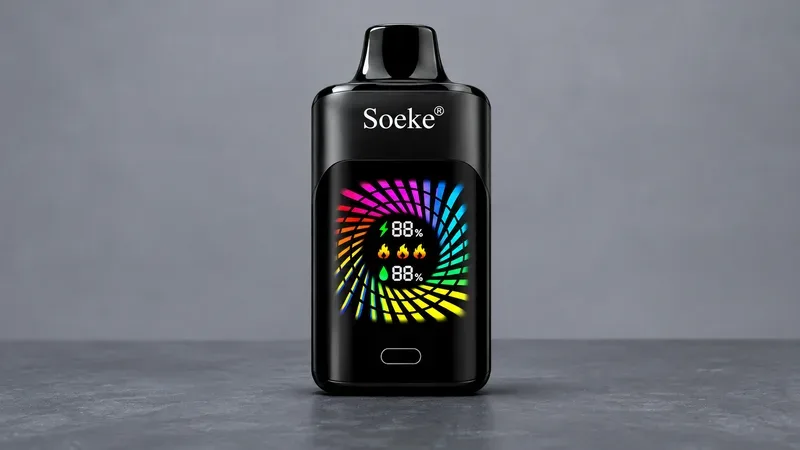
A puff counter treats two completed draws as two puffs. Yet those draws may consume noticeably different amounts of e-liquid. For instance, a short one-second draw and a longer four-second draw could each add one to the count.
Meanwhile, the heating coil usually remains active longer during the four-second draw. That extra operating time can produce more aerosol and consume more liquid. As a result, equal puff counts do not necessarily represent equal liquid use or equal aerosol output.
This difference matters because the device carries a finite liquid supply. Imagine two users starting with identical devices. One takes brief draws, while the other prefers longer, deeper draws throughout the day.
Both users might record 200 daily puffs. However, the second user may use the available liquid faster. Therefore, their devices could reach different lifetime totals despite showing the same daily frequency.
A measured puff count requires more than watching somebody use one device. Specifically, a documented test defines the draw pattern, equipment, settings, charging rules, and stopping point. It should also report how many devices were tested and how much their results differed.
The advertised count and a reproducible measured count are therefore different forms of information. The advertisement tells you the stated target or maximum. However, a complete protocol would show what researchers did to produce and verify that number.
2. How Are Vape Puff Counts Measured, and What Does SOEKE Disclose?
What a puff test specifies
A laboratory can connect a vaping device to a machine that repeats controlled draws. The operator can set draw duration, air volume, flow shape, and time between draws. Therefore, each tested device experiences a more consistent pattern than it would during casual human use.
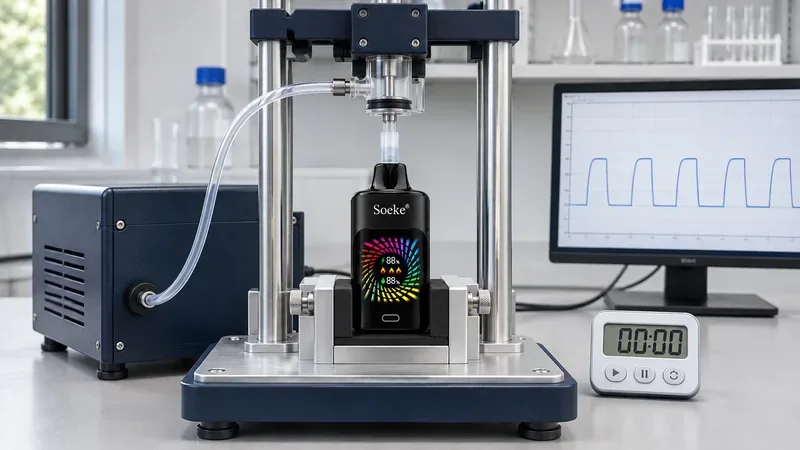
One recognized aerosol-collection approach uses a three-second draw with a volume of 55 millilitres. A new draw starts every 30 seconds under that approach. The CORESTA technical guide discusses this controlled regime and related testing considerations.
That regime helps laboratories collect aerosol consistently for analysis. However, it does not automatically define the lifespan test for every commercial puff claim. Most importantly, no reviewed source confirms that SOEKE used this method to establish the S9 rating.
A machine protocol should also describe the draw profile. For instance, a constant-flow draw may activate an automatic device differently from a gradually rising draw. Moreover, some devices need a minimum airflow before their sensors activate the coil.
The interval between draws matters as well. A 30-second gap gives the coil and surrounding parts some time to cool. Conversely, rapid consecutive draws may retain more heat and alter aerosol delivery or device performance.
A full-life test needs a clear stopping rule. Specifically, testers might stop when aerosol output falls below a defined level. Alternatively, they could stop after repeated failed activations, depleted liquid, unacceptable flavour, or another measurable condition.
What the S9 documentation establishes
The reviewed SOEKE S9 product page identifies the S9 product and presents its marketing material. However, an S9-specific puff-count protocol was not located in the public material reviewed. Consequently, the advertised total cannot be reproduced from that page alone.
Several essential testing details remain unverified:
- The duration of each machine or test draw
- The air volume and flow profile used for each draw
- The interval between consecutive puffs
- The device settings or operating mode used during testing
- The recharging procedure followed during the full-life test
- The condition used to identify and count the final acceptable puff
- The number of S9 units tested and their individual results
These omissions do not prove that SOEKE performed no testing. Instead, they mean the reviewed public information does not describe the test sufficiently. Therefore, readers should treat the figure as an advertised rating rather than a transparent laboratory result.
In fact, reporting only an average could still hide meaningful differences between devices. Five units might finish near one another, or their totals might spread widely. Without individual results, a range, or another variability measure, buyers cannot see that distinction.
A useful disclosure would name the equipment, puffing pattern, settings, charging schedule, and failure criterion. Additionally, it would report sample size and results across all tested units. Those details would let another laboratory repeat the procedure and evaluate the claim.
3. Why the SOEKE S9 Real-World Puff Count Can Vary
Draw length and e-liquid use
A longer draw can keep the heating coil active for more time. During that period, the coil can vaporize additional e-liquid and generate more aerosol. Therefore, longer draws may reduce the number of draws available from the same finite liquid supply.
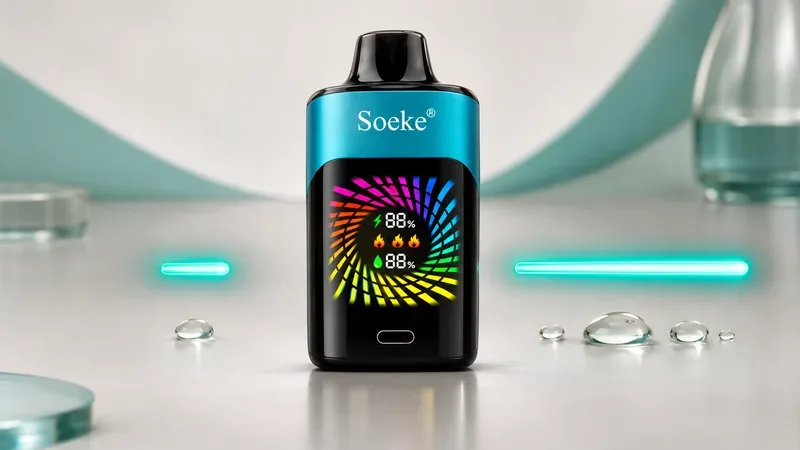
The CORESTA vaping-regime guide explains why puff duration and other operating parameters matter during aerosol generation. It also shows why a test needs defined conditions. However, those general considerations do not establish the exact S9 response under every draw pattern.
Consider Mia and Daniel, who each record 150 puffs daily. Mia usually takes short draws, while Daniel prefers longer ones. Although their diaries show equal puff frequency, Daniel’s device may consume its liquid faster.
However, you should not assume a simple fixed ratio. A four-second draw does not necessarily use exactly twice the liquid of a two-second draw. Coil design, airflow, power control, wick saturation, and safety cutoffs can change that relationship.
Moreover, aerosol output may not remain perfectly constant across the device’s entire life. Liquid level, coil condition, and temperature can influence performance. Consequently, early and late puffs may not consume or deliver identical amounts.
Draw strength, spacing, and settings
Draw strength affects airflow through a puff-activated device. A very gentle draw may fail to cross the sensor’s activation threshold. Conversely, a stronger draw can alter airflow, cooling, and aerosol movement through the device.
The spacing between puffs also matters. Rapid draws can leave less cooling time for the coil and nearby components. As a result, closely grouped use may produce different results from evenly spaced machine draws.
For instance, one person may take ten puffs within five minutes. Another person may spread those ten puffs across an hour. Their counters could show the same number, yet the device experiences two different thermal patterns.
Any discussion of power modes must match manufacturer documentation for the exact S9 variant. A different setting could change coil operation and liquid use. However, the reviewed public materials do not establish a dependable everyday puff-count range for each possible setting.
Manufacturing variation can also influence outcomes across individual devices. Additionally, storage conditions and handling may affect liquid movement or battery performance. These factors make a precise personal result difficult to predict from one advertised number.
Therefore, the most defensible conclusion remains limited. The S9 carries an advertised 28,000-puff rating, while real-world results can vary. Publicly available details do not support a narrower universal range for every user.
4. Battery Runtime per Charge and Total Device Lifespan
What a charge can support
Battery runtime means the period of use available between charges. People often describe it in hours, days, or puffs per charge. However, these measures depend heavily on how frequently and intensively someone uses the device.
Battery capacity alone cannot establish a reliable puff count per charge. Longer coil activation usually requires more energy than shorter activation. Moreover, internal electronics, operating settings, coil resistance, and conversion efficiency influence energy use.
Imagine that one user takes 100 brief draws across a full day. Another takes 100 long draws during several concentrated sessions. Although their puff counts match, the second pattern may require more battery energy.
Additionally, elapsed time provides an imperfect comparison. A light user might report three days between charges, while a frequent user reports one day. The difference could reflect usage frequency rather than different battery performance.
A controlled battery-runtime claim would need defined draws and a clear battery endpoint. Specifically, testers should identify the draw duration, interval, setting, and low-battery condition. They should also report whether all requested puffs activated successfully.
What ends the device’s usable life
Recharging restores electrical energy to a rechargeable device. However, charging does not replace consumed e-liquid. The battery may complete many charging cycles while the original liquid supply continues moving toward depletion.
Therefore, battery runtime per charge and total device lifespan describe different things. The first concerns energy available before another recharge. The second concerns how long the complete device remains usable before a permanent limiting condition occurs.
A finite liquid supply can end usable life even when the battery still holds power. Conversely, a discharged battery can interrupt use while liquid remains. In that situation, charging may restore operation because the limiting condition was temporary.
A full-life test should explain how testers handled every low-battery event. For example, they might recharge at a defined warning and resume the same draw program. Additionally, they should state whether charging time counts toward the test duration.
The final-puff rule matters just as much. Testers could stop at the first weak puff, after several failed puffs, or after measured aerosol falls below a threshold. Each rule may produce a different lifetime total.
Notably, the condition ending the test helps readers interpret its result. A liquid-limited ending says something different from battery failure or sensor failure. Without that information, the total count reveals less about real device longevity.
5. How Long Does the SOEKE S9 Last in Days?
The arithmetic behind a days estimate
You can create a simple estimate by dividing total puffs by average daily puffs. Using the advertised figure, the formula becomes 28,000 advertised puffs ÷ average daily puffs. The result represents hypothetical days of use under those inputs.
For example, assume someone averages 200 puffs each day. The calculation becomes 28,000 ÷ 200 = 140 days. Therefore, the advertised total would equal 140 hypothetical days at that daily frequency.
However, that result depends on actually reaching 28,000 puffs with the person’s draw pattern. It does not prove that the device will last 140 days. Instead, it converts an assumed total into calendar time.
Other illustrative calculations show how strongly frequency changes the estimate:
- 100 puffs daily: 28,000 ÷ 100 equals 280 hypothetical days.
- 200 puffs daily: 28,000 ÷ 200 equals 140 hypothetical days.
- 400 puffs daily: 28,000 ÷ 400 equals 70 hypothetical days.
- 800 puffs daily: 28,000 ÷ 800 equals 35 hypothetical days.
These examples are arithmetic scenarios, not predicted S9 lifespans. Moreover, they assume every user achieves the advertised total. They also ignore changes in daily use, missed activations, device faults, and differences in draw duration.
Why the result can differ in everyday use
A days estimate contains two uncertain inputs. The first is daily puff frequency, which can change from one day to another. The second is the total number of usable puffs the individual device actually delivers.
A simple diary can improve the first input. Specifically, record daily puff counts for one or two representative weeks. Then divide the combined count by the number of recorded days.
For instance, a seven-day record containing 1,540 puffs gives an average of 220 daily puffs. Using the advertised total, 28,000 divided by 220 produces roughly 127 hypothetical days. However, the result still assumes the device reaches all 28,000 puffs.
Furthermore, a diary should note unusually long sessions or changing draw habits. Daily totals alone cannot show how much liquid each puff used. Nevertheless, the record offers a better frequency estimate than relying on memory.
Most importantly, the advertised count leaves the achievable-total input uncertain for an individual user. Therefore, present any days figure as a conditional estimate. Avoid treating the calculation as a guaranteed replacement date.
6. Can You Compare the S9 Rating With Other Disposable Vape Puff Counts?
What a fair comparison requires
You can place advertised puff numbers beside each other, but that comparison may be misleading. Two manufacturers might use different draw lengths, intervals, settings, or stopping rules. Consequently, the larger advertised number might not prove longer usable life under identical habits.
A fair comparison requires matching test conditions and transparent reporting. At minimum, check the following fields for every device:
| Comparison field | What the documentation should report | Why it matters |
|---|---|---|
| Draw duration | Seconds of coil activation per puff | Longer activation can increase liquid and energy use. |
| Draw volume | Air volume pulled through the device | Volume can affect activation and airflow conditions. |
| Puff interval | Time from one draw’s start to the next | Spacing influences cooling and thermal buildup. |
| Device settings | Mode, power level, and airflow configuration | Settings can change output and consumption. |
| Charging rules | When and how testers recharged the device | Charging determines whether testing can continue. |
| End-of-test criterion | The measurable rule defining the final puff | Different stopping rules can produce different totals. |
| Units tested | Sample size and results for each device | Multiple units reveal normal variation and failures. |
If these fields differ, the advertised totals do not form a controlled comparison. For example, a device tested with shorter draws may accumulate more counted puffs from the same liquid quantity. Meanwhile, another device may face a stricter final-puff threshold.
Therefore, “40,000” does not automatically establish a longer practical life than “28,000.” The higher number could reflect different test conditions rather than greater usable capacity. Matching protocols provide much stronger evidence than matching package claims.
What independent testing would add
No independent S9 full-life test with a reproducible protocol was located in the sources reviewed. That statement describes the reviewed source set, not every test that might exist. However, no located evidence supplied a repeatable independent result for the full advertised life.
A useful study would test the S9 and comparison devices on the same equipment. It would apply identical draw duration, volume, interval, orientation, and environmental conditions. Additionally, testers would use consistent charging rules and the same measurable stopping criterion.
The study should test multiple units of each model. One successful device cannot reveal how often early failures or unusually high totals occur. Therefore, researchers should publish individual totals, averages, ranges, and relevant failure observations.
For instance, ten tested units could produce a reasonably tight group around one value. Alternatively, their totals could spread across several thousand puffs. Both groups might share the same average, but buyers would face different levels of predictability.
Independent testing could also record device weight loss or collected aerosol during the test. Those measurements would provide context beyond the raw puff counter. Furthermore, researchers could identify whether output weakened gradually before the final accepted puff.
Until comparable evidence becomes available, treat cross-brand puff rankings cautiously. Advertised numbers offer a quick label, but they may reflect different procedures. A smaller transparent claim can sometimes provide more useful information than a larger unexplained claim.
Conclusion
The SOEKE S9’s 28,000 figure is an advertised puff rating. Everyday totals can change with draw duration, draw strength, spacing, settings, and usable e-liquid. Moreover, battery runtime between charges does not determine the device’s full lifetime count.
Days-of-use estimates depend on both actual lifetime puffs and average daily frequency. A diary can improve the daily-frequency input. However, the advertised figure alone cannot confirm the total that your individual draw pattern will achieve.
The reviewed public documentation leaves the S9 test conditions unverified. Specifically, it does not establish the draw regime, charging process, stopping rule, or tested sample size. Those missing details also weaken direct comparisons with competing puff ratings.
Before relying on the rating, ask SOEKE for the complete S9 puff-test protocol. Additionally, check whether any device you compare underwent testing under matching conditions. That evidence will tell you far more than two large numbers printed beside each other.
