

Does a vape labelled Pineapple Coconut actually contain pineapple or coconut? The name can suggest a taste while leaving the source of that taste unclear. For the SOEKE S9 28000 Puffs Pineapple Coconut and Strawberry Coconut Watermelon: Mixed-Fruit Ingredient Labelling guide, start with the exact package.
For instance, a fruit name, an ingredient list, a nicotine warning, and a puff count each answer a different question. The front panel can make those details look equally informative, especially when a retailer shows only one photo. However, a missing detail leaves an open question about the formula. The packaging and matching manufacturer documents can help you establish which details the available evidence supports.
SOEKE S9 28000 Puffs Mixed-Fruit Ingredient Labelling at a Glance
Read each part of the label for what it tells you
Think of the box as a collection of statements, each with its own job. The flavour name sets a taste expectation, while an ingredient list identifies substances or categories the company discloses. Meanwhile, a nicotine statement may tell you whether the liquid contains nicotine or give its strength. A warning communicates a risk, and the puff count describes claimed device output.
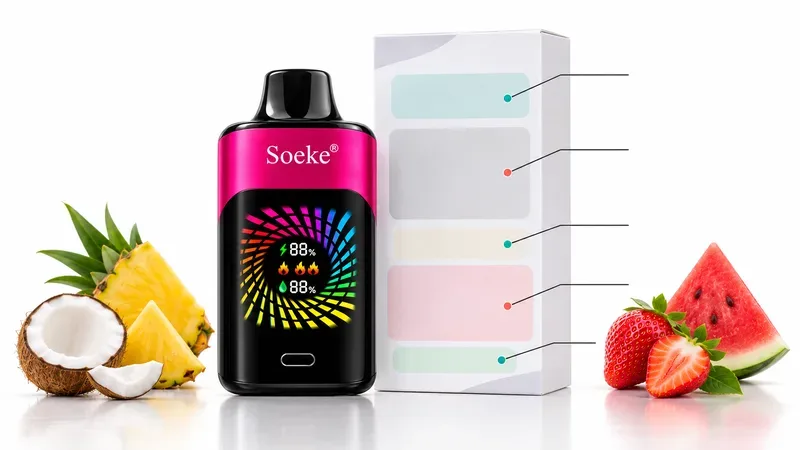
For instance, a front panel might place a fruit name beside a nicotine warning and a large puff number. The fruit name alone gives you a flavour description. The warning may report that nicotine is present, while a separate strength marking supplies the concentration. In practice, you may need to turn the box over to find the information you expected upfront.
The supplied product title alone leaves the formula of both variants unverified. Specifically, it gives no basis for identifying the liquid’s base ingredients, flavouring sources, or additives. Even if both versions share the SOEKE S9 name, each needs its own disclosures. If you have a clear photo of one box, keep those findings with that variant.
Start with the package and work outward
- The physical package. Use the box, device label, and any enclosed leaflet to record what accompanies the exact unit.
- Official manufacturer documentation. Match the document to the model, flavour, strength, and sales market. Also check its revision or batch reference when available.
- Regulatory filings or records. Where public records exist, check that the product entry matches yours. Specifically, confirm which details the record actually provides.
- Retailer descriptions. Use listings as leads when they show clear package photos or identify a distributor. However, verify details from the exact package or matching documents before relying on them.
Sometimes two sources disagree. For example, a listing may show one strength while the box in your hand shows another. Record both values and where you found them, then ask the manufacturer or distributor to explain the difference. Until then, any conflict about the unit’s strength remains unresolved.
Also, check how specific the evidence is. A package may establish that the company lists “flavourings” while leaving their source open. If a broad description leaves your question unanswered, look for a document that addresses that detail for the same variant.
Do Pineapple Coconut and Strawberry Coconut Watermelon Name Actual Ingredients?
What the flavour names can tell you
Pineapple Coconut ordinarily suggests a pineapple taste with a coconut note. Similarly, Strawberry Coconut Watermelon suggests a blend built around those three flavour cues. You might picture tart pineapple with a mellow coconut finish, or strawberry sweetness with a lighter watermelon note. Those are reasonable expectations to draw from the names.
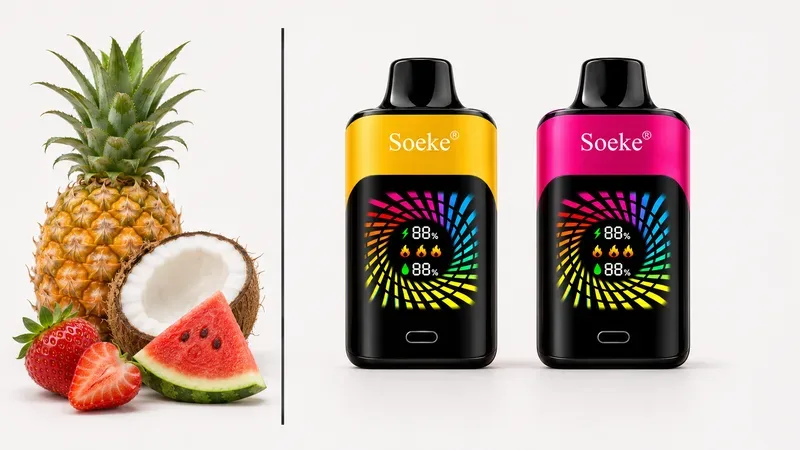
However, a taste expectation answers a sensory question. A composition claim answers a different one about the substances used to create that taste. For instance, you could describe a liquid as tasting like watermelon without knowing which flavouring substances produced that impression. The same distinction applies when fruit words appear on the front of a box.
Fruit words alone leave several possibilities open. Pineapple could appear as a flavour name whether the formulation uses juice, extract, concentrate, or flavouring from another source. Likewise, the word coconut leaves the presence of coconut oil, coconut extract, and other coconut-derived ingredients unverified. Even a detailed tasting description leaves those questions open.
What would support a claim about ingredients?
Depending on the formulation, a company might use natural flavourings, artificial flavourings, or a mixture of flavouring substances. For example, a documented blend might use several substances to produce a single recognizable fruit note. Other formulations could use different ingredients to create a similar taste. Only matching documentation can tell you what the company discloses for either SOEKE variant.
Furthermore, broad ingredient descriptions can leave the source of a flavour unclear. If a list says “natural flavourings,” record that wording and check whether the manufacturer identifies their source. Likewise, “artificial flavourings” leaves open what other ingredients the full formulation contains. Each phrase supports a narrower conclusion than a complete list of substances and their sources would.
Imagine a box that says “Pineapple Coconut” on the front and “flavourings” on the back. You can report the front-panel name and the wording of the ingredient disclosure. However, those details leave pineapple juice, coconut extract, and the origins of the flavourings unverified. A matching specification or a written manufacturer response could clarify those points.
Similarly, imagine an official document that explicitly names a fruit extract for Strawberry Coconut Watermelon. First, check whether it identifies the same model, strength, and market as your package. Then report the exact ingredient it names. One named extract would still leave the sources of the other flavour notes open unless the document covers them too.
When comparing the variants, ask two separate questions. First, what taste does each name suggest? Second, what ingredients does each verified disclosure identify? As a result, you can describe the flavour profiles accurately while keeping any claims about fruit-derived ingredients tied to evidence.
How to Compare the Two SOEKE S9 Ingredient Disclosures
Build a record for each exact variant
Start by photographing every panel of each package, including small print on the base and along folded edges. Also, capture the device label, any peel-back information, and both sides of any enclosed leaflet. Take a wide photo that connects the text to the package, then close-ups to make the small print legible. Keep each variant’s photos together.
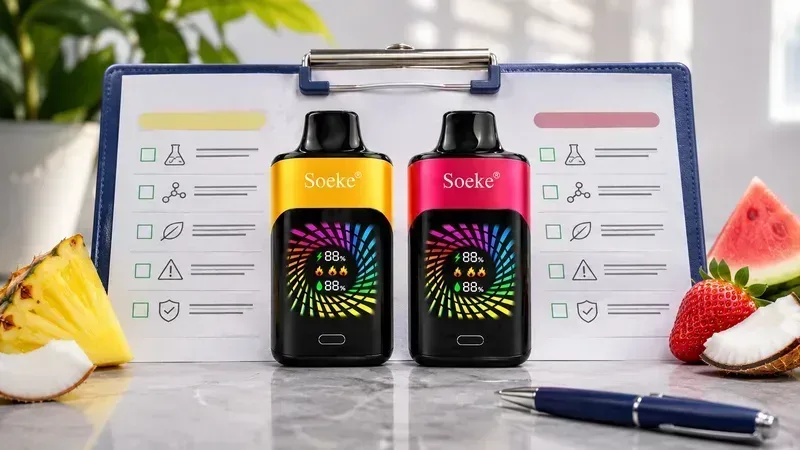
Next, write down the model designation, full flavour name, declared nicotine strength, and intended sales market. Add a batch or lot code and any product identifier you can read. If you have a manufacturer document, compare those details before using it to complete a record. A shared product image or logo gives you much less to work with.
For example, a manufacturer sheet for SOEKE S9 Pineapple Coconut might match the name on your box. However, the sheet could cover a different nicotine strength or a package revision for another market. In that case, record the difference and confirm whether the manufacturer applies the sheet to your unit. Use the same check for Strawberry Coconut Watermelon.
Compare the wording field by field
Make two columns, one for each flavour, and copy relevant wording into the corresponding row. Include the source and location next to each entry, such as “side panel” or “enclosed leaflet.” In particular, keep the units, qualifiers, and wording intact. A short note about where you found a statement saves time if the two boxes differ.
- Base liquids. Copy the disclosed names and any stated proportions. Leave proportions open when the package lists only names.
- Flavourings and additives. Record named substances and general categories separately. Also note whether the wording provides a source or describes only a category.
- Nicotine and liquid volume. Capture the strength, its units, and any stated fill volume in separate fields.
- Allergen information. Copy explicit allergen statements, including any qualifying language or limits.
- Manufacturer and batch details. Record the printed manufacturer, importer, or distributor details along with the batch or lot code.
- Warnings. Copy the cautionary text and note where it appears on the exact unit or its packaging.
Finally, distinguish a blank field from an illegible one. If you reviewed every panel and leaflet, write “no statement found in material reviewed.” If the image cuts off the base, write “base panel unavailable.” In either case, keep familiar vape ingredients out of the record until you find a matching disclosure that names them.
Use the same care when one variant provides more detail. For instance, if one lists a named additive and the other offers only a broad category, record that difference in wording. The available labels establish a difference in disclosure. Whether the formulas differ on that point remains a separate question.
Where Nicotine Content and Warning Statements May Appear
Look beyond the largest print
Start with the front, side, and back panels, then turn the package over and check the base. Also, inspect the outer box, any peel-back label, and any enclosed leaflet. If the device carries printed information, compare it with the box. Placement depends on packaging design and the requirements of the market where the product is sold.
For instance, UK rules for covered products illustrate how packaging and a leaflet can serve different purposes. The rules address package information about nicotine and specify information for an accompanying leaflet. To identify which requirements apply to your unit, confirm its intended market and product category. The source is regulation 37 of the UK Tobacco and Related Products Regulations.
Meanwhile, pay attention to where the strength and warning appear. You might see a prominent nicotine warning on the front and a strength value in small type on the side. Write down both, including their locations. If a warning states that the product contains nicotine, look for the separate information that quantifies its strength.
Read the units alongside the number
- Percentage. Copy the percentage and check whether the manufacturer explains how it expresses that value before converting it.
- Milligrams per millilitre. A value in mg/mL describes the concentration of nicotine in the liquid.
- Total nicotine content. A figure in milligrams needs a clear reference, such as the stated amount per device or container.
- Presence statement. Wording that says the product contains nicotine tells you about its presence. Look for separate strength information.
For example, imagine a liquid labelled 10 mg/mL in a device that holds 2 mL. Together, those hypothetical values imply 20 mg of nicotine in the stated liquid volume. The calculation describes the contents of the liquid. The amount in aerosol and the amount a person absorbs require further information.
Likewise, puff behaviour describes how someone uses a device, including the frequency and duration of their draws. Liquid volume describes how much liquid the device holds. Concentration describes how much nicotine each millilitre contains. Keep these values in separate fields to avoid mistaking a volume, a strength, or a use pattern for the same measure.
Finally, match the nicotine statement and warning to the exact unit and package. A retailer may display a single listing title across several options or use one image for multiple variants. If the box lacks a readable strength or contradicts the listing, ask for written confirmation before relying on either figure.
Coconut Wording, Allergen Disclosures, and Missing Information
Identify what kind of statement you have
Both flavour names contain the word coconut. In each case, that word tells you what taste the name signals and leaves the ingredient source open. For example, a coconut note could come from a documented coconut-derived ingredient or from a flavouring blend with another source. The name itself leaves both possibilities open.
Start by locating any wording that specifically addresses allergens or ingredient origin. Then compare it with the general ingredient list and check whether both apply to the same variant. In particular, record any conditions or limitations the company includes. A statement about one named ingredient can have a different scope from a claim about the finished liquid.
- Explicit allergen statement. Look for wording that directly addresses coconut or another allergen and note the product or component it covers.
- General ingredient list. This may name materials individually or group them under broader terms such as “flavourings.”
- Flavour description. This describes the intended taste and may appear alongside fruit names or pictures.
- Missing allergen information. Record which materials you checked and whether any panels or documents were unavailable.
For instance, suppose every visible panel lists “flavourings” and none names coconut as an ingredient. The evidence supports a statement about what those panels disclose. However, the generic term leaves the source of the flavouring blend unanswered. A verified coconut-free claim would require evidence that specifically addresses coconut for the exact formulation.
Ask for written clarification when avoidance matters
If you need to avoid coconut because of an allergy, request written clarification from the manufacturer or distributor. Include photos and identify the full flavour name, model, strength, market, and batch code where available. Specifically, ask whether the liquid or any component of the flavouring blend uses coconut-derived ingredients. That wording invites a more precise answer than asking whether the product tastes like coconut.
Additionally, compare the response with the details you supplied. A generic answer about the SOEKE S9 line may leave the exact variant or batch unspecified. If the response cites a specification, check its product identifier and scope. Keep the reply with the package photos so you can trace the answer to the unit you asked about.
Finally, if the company cannot provide a specific answer, mark the coconut source as unverified. Treat a missing statement as an unresolved question when deciding whether the product meets your allergy avoidance needs.
What the 28000 Puffs Claim Means—and What It Cannot Prove
Read the puff number as a device claim
“28000 Puffs” is a marketed estimate or claim about potential device output. To understand its basis, look for any conditions the company prints beside the number or explains in its documentation. For example, look for a stated draw duration, airflow, device setting, or endpoint for counting puffs. If those details are missing, the test basis remains unverified.
Actual puff totals can vary with draw duration and intensity, as well as the amount of liquid available. Device behaviour also matters, including how it activates and operates during a draw. Meanwhile, a test protocol defines when a draw counts and when the testing stops. A claimed total without those conditions leaves room for different real-world results.
For example, consider a machine test that counts two-second draws and a person whose draws typically last four seconds. The draws differ in duration, so the same count represents a different amount of time drawing on the device. However, that comparison alone cannot tell you how many draws the person will get. Airflow, device operation, and liquid use can also differ.
Keep puff count separate from ingredients and exposure
The number gives you no ingredient information about the two variants. Specifically, it cannot identify fruit ingredients, individual flavouring substances, or allergens. It also gives no nicotine concentration or reliable measure of personal nicotine exposure. For those details, look for disclosures or measurements that directly address the question.
For example, dividing total nicotine in the liquid by the advertised puff count gives an arithmetic average. It leaves open how much liquid each draw uses and how much nicotine reaches the aerosol. Furthermore, the nicotine emitted by the device differs from the amount an individual absorbs. A reliable personal estimate needs product-specific delivery data and measurements of individual use.
Controlled research has measured how puff duration, device voltage, and liquid concentration affect nicotine output. Those measurements illustrate why a package count alone cannot establish intake. However, results for a tested device apply to the conditions the researchers studied. The primary study is Effects of User Puff Topography, Device Voltage, and Liquid Nicotine Concentration on Electronic Cigarette Nicotine Yield.
Check either variant in this order
- Match the full flavour name, model, strength, and sales market to the unit you have.
- Photograph each package panel and check the device label and any enclosed leaflet.
- Record the ingredient, nicotine, allergen, and warning statements exactly as they appear.
- Look for any explanation of the conditions behind the puff claim.
- Compare your notes with matching official documentation and request written clarification for unresolved details.
Conclusion
Pineapple Coconut and Strawberry Coconut Watermelon describe intended flavour profiles. Use reliable documentation for the exact variant to verify any claim about fruit-derived ingredients. Likewise, read ingredient lists, nicotine statements, allergen declarations, and warnings according to what each discloses. The 28000 Puffs claim concerns estimated device output and leaves ingredients and personal nicotine exposure unverified.
Start by photographing every panel of the exact package. Then compare the wording with official documentation for the same flavour, strength, and sales market. If a detail remains missing or unclear, mark it as unverified. Finally, request written manufacturer clarification before relying on the label for nicotine or allergy-related decisions.
