

The IGET Bar Pro 10000 Puffs Kiwi Pineapple listing gives two puff counts, two battery capacities and two liquid volumes. Which figures describe the device, and can an Australian pharmacy lawfully supply it? IGET’s catalogue settles some of the numbers, while Australian rules settle the supply question.
However, the listing leaves several claims open, including the liquid volume, nicotine concentration and origin of individual units. If you already have the box, its identifiers and security mark give you a way to check it. Meanwhile, a used device still needs a safe drop-off point because it contains a built-in battery.
What is the IGET Bar Pro 10000 Puffs Kiwi Pineapple?
How to identify the model and flavour
Kiwi Pineapple is a flavour in IGET’s Bar Pro lineup. The seller calls the product the IGET Bar Pro 10000 Puffs Kiwi Pineapple, combining the model, advertised puff rating and flavour. Specifically, IGET uses Bar Pro as the model name and Kiwi Pineapple as the flavour name. See IGET’s IGET Bar Pro product page.
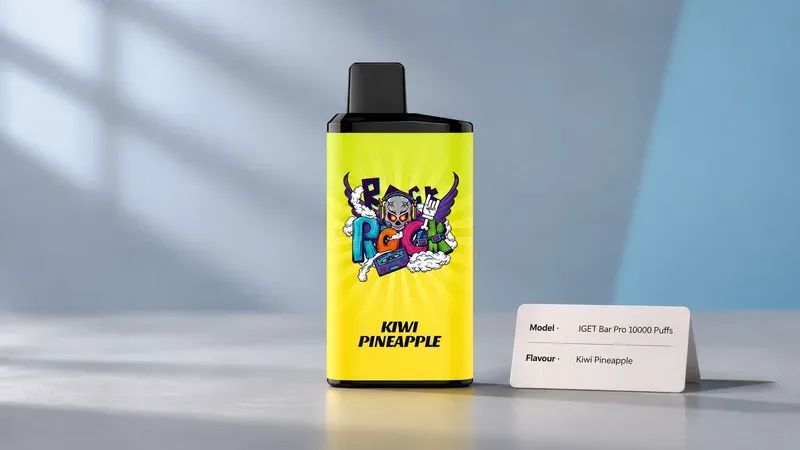
That wording matters when you compare a listing with the box you already have. For instance, IGET also catalogues Kiwi Pineapple for its Bar Plus 3.0, a distinct model with replaceable pods. Meanwhile, the standard IGET Bar shares part of the name and has its own specifications. Match both the model and the flavour before using a product page to check any figures. See IGET’s IGET Bar Plus 3.0 and IGET Bar product pages.
What the seller says about flavour and cooling
The seller describes pineapple sweetness, kiwi tartness and a cooling sensation. It assigns sweetness 8/10 and coolness 9/10. However, those scores are subjective, and the listing gives no scoring method. Another seller’s 9/10 could describe a different sensation, even if both use the same scale.
Does Kiwi Pineapple contain menthol? The ingredient remains unconfirmed because the listing describes cooling without identifying what produces it. Meanwhile, IGET calls this flavour Kiwi Pineapple and uses Ice in some other flavour names. That naming choice leaves the cooling ingredient unresolved. See IGET’s IGET Bar Pro flavour catalogue.
Which Bar Pro specifications match IGET’s documentation?
Retailer figures compared with IGET’s published specs
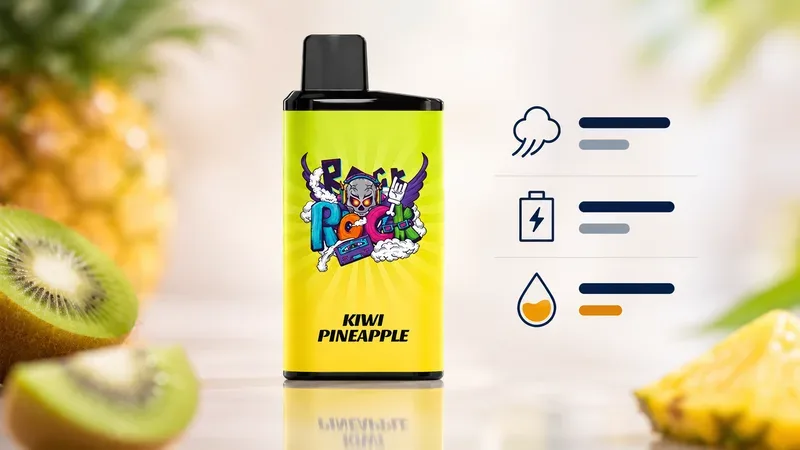
The retailer’s summary and technical description disagree on three basic specifications. However, IGET’s public Bar Pro page supports the higher puff and battery figures from the technical description. The liquid volume remains open because the manufacturer’s public model page omits that measurement. See IGET’s IGET Bar Pro product specifications.
| Specification | Retailer summary | Retailer technical description | Manufacturer finding |
|---|---|---|---|
| Puff count | Up to 3,500 | Up to 10,000 | IGET advertises 10,000 puffs for Bar Pro. |
| Battery capacity | 1,500 mAh | 2,000 mAh | IGET lists 2,000 mAh. |
| E-liquid volume | 12 mL | 20 mL | The public model page confirms neither figure. |
| Coil | Unspecified | 1.2 Ω mesh coil | IGET lists a 1.2 Ω mesh coil. |
| Dimensions | Unspecified | 44.1 × 22.5 × 96.5 mm | IGET lists the same dimensions. |
| Weight | Unspecified | 93 g | IGET lists a net weight of 93 g. |
For instance, IGET advertises up to 3,500 puffs for the standard IGET Bar. That makes a model mix-up plausible, especially when a store uses similar names across product pages. However, IGET lists a 1,400 mAh battery for the standard Bar, which differs from the retailer’s 1,500 mAh figure. The reason those figures appear together remains unknown. See IGET’s IGET Bar product specifications.
The liquid figures need their own evidence. Specifically, 20 mL appears beside the correct 2,000 mAh figure in the technical description. That proximity tells you where the seller put both numbers, while IGET’s page supports only the battery capacity. A clear volume declaration on matching packaging would provide a better basis for checking the exact unit.
Is the Bar Pro rechargeable or refillable?
The seller describes the Bar Pro as non-rechargeable and non-refillable. Meanwhile, IGET includes the model in its disposable range. The public Bar Pro page gives no explicit charging or refilling instructions. Consequently, both features remain retailer-reported until packaging or a manual for the exact model confirms them. See IGET’s Disposable catalogue and IGET Bar Pro product page.
Battery capacity and charging capability answer different questions. Specifically, 2,000 mAh describes the battery’s rated charge capacity, while charging instructions would establish whether the device supports recharging. Likewise, a claimed liquid volume gives no instructions for opening or refilling a device. If the box gives operating instructions, check the model name before applying them.
No packaging from an individual unit was available for this comparison. Therefore, the catalogue figures describe the documented model, while an individual unit still needs its own checks. Read the full model name and flavour first, then record any SKU or batch identifier printed on the box. Those details help IGET identify which product and production batch you mean.
What the puff rating and 5% nicotine label mean
Why 10,000 puffs can translate into different lifespans
IGET advertises 10,000 puffs for the Bar Pro. However, the public model page gives no puff duration, interval between draws or test cutoff. Those conditions would help explain how the manufacturer reached the advertised figure. Without them, the number gives you a model rating with no published basis for predicting your own result. See IGET’s IGET Bar Pro product specifications.
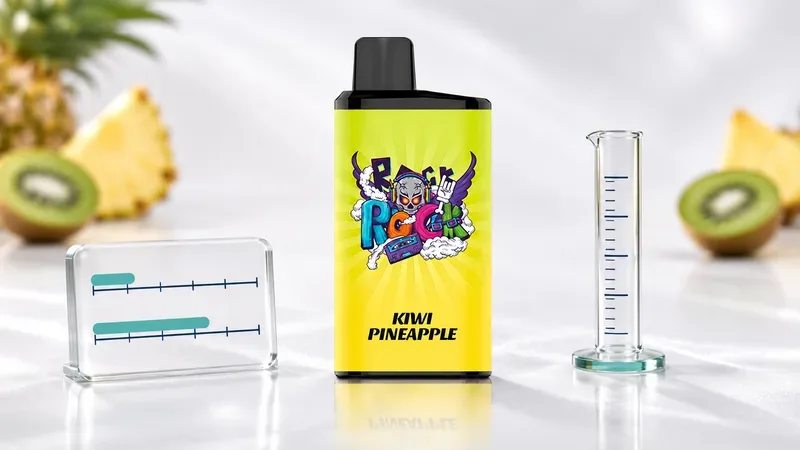
For instance, imagine two people each take 100 draws on separate devices of the same model. One takes mostly one-second draws, while the other takes mostly three-second draws. Both record the same puff count, but the second person spends longer drawing overall. Longer draws can use more liquid and battery energy per puff.
Meanwhile, frequency changes the number of days a device lasts. Imagine two people take draws of similar length, but one uses the device twice as often each day. That person can reach the end of the device’s usable life sooner. As a result, the seller’s 7–12 day estimate remains unverified and gives readers no dependable timetable.
How 5% relates to 50 mg/mL
The retailer pairs 5% nicotine with 50 mg/mL. Specifically, 50 milligrams per millilitre multiplied by 100 millilitres equals 5,000 milligrams, or 5 grams. That makes the figures equivalent when the percentage means 5 grams per 100 millilitres, a mass-per-volume measurement. The 100 mL simply provides a common basis for expressing the concentration.
However, the listing provides no independent test of that concentration in the finished product. The label describes the claimed nicotine concentration in the liquid. To estimate nicotine inhaled per puff, you would need evidence about how much nicotine each draw actually delivers. Dividing the label concentration by the advertised puff count would mix two measurements that answer different questions.
Similarly, calculating the total nicotine in a device would require a reliable liquid volume. Here, the seller gives two different volumes and IGET’s public model page leaves that field open. Therefore, the listing’s figures cannot establish a reliable total nicotine content for an individual unit.
Can Australian pharmacies lawfully supply this exact vape?
Why the disposable Kiwi Pineapple model fails the supply rules
Australian pharmacies cannot lawfully supply this advertised disposable, fruit-flavoured Bar Pro through ordinary pharmacy channels. The Therapeutic Goods Administration, or TGA, prohibits ordinary retail vape sales by non-pharmacy sellers. It also bars disposable single-use vapes from ordinary supply. Furthermore, therapeutic vape flavour choices are limited to mint, menthol and tobacco. See the TGA’s Vapes: information for individuals and patients and Vapes: product standards for therapeutic vapes.
The seller’s claimed 50 mg/mL also exceeds the 20 mg/mL ceiling for eligible adult pharmacist-only supply. That pathway applies where state or territory law permits and where the product and patient meet the applicable conditions. Above 20 mg/mL, an otherwise eligible therapeutic vape requires a prescription. However, a prescription cannot make this disposable Kiwi Pineapple model eligible. See the TGA’s Supplying therapeutic vapes in pharmacies guidance.
For instance, a pharmacist considering an eligible 20 mg/mL therapeutic vape still assesses whether supply is clinically appropriate. State or territory rules can impose additional requirements, including a prescription. Meanwhile, the retailer’s 18+ notice and nationwide delivery claim describe the offer it advertised. Neither statement shows that the shop or this product meets Australian supply rules. See the TGA’s Vapes: prohibited sales guidance.
How to check the TGA notified vape list
Start with the exact name on the packaging or the product information a pharmacy gives you. Then open the TGA notified vape list and use your browser’s Find function to search the page. Search the model and flavour separately if the full phrase produces no match. Specifically, check each relevant row for these details.
- Model: Match the full product name, including identifying words such as Pro, Plus, SE or SE2.
- Flavour and strength: Check the flavour and nicotine concentration on the relevant pod, liquid or pack entry.
- Entry status: Check whether the entry appears in the current list or in the withdrawn section.
For instance, the list includes an IGET Bar Plus SE device and separate entries for compatible pods. It also includes products named IGET Bar Plus SE2. However, a search for Kiwi Pineapple returned no matching entry, and the other IGET entries cover different products. A pharmacy can check the applicable conditions for an exact match. See the TGA’s The notified vape list: vaping goods for lawful supply in Australia.
What the advertised price, delivery and reviews establish
What the two advertised prices tell you
The retailer extract displays $99.99 alongside $49.99. They appear to represent a reference price and a promotional price, respectively. However, the dollar sign alone leaves the currency unconfirmed, and the extract gives no basis for the higher figure. Both amounts document what the listing displayed at the time of capture.
For instance, the difference is $50, but the extract provides no sales history for the higher amount. It also leaves current pricing and stock unknown. A dated capture showing the currency, exact variant and price context would clarify what the seller displayed at a particular time. Stock would still need separate evidence tied to that listing.
What the seller claimed about shipping and returns
The seller advertised nationwide delivery, an express estimate of one to three business days and discreet packaging. Additionally, the extract quotes a 15-day refund or exchange offer for faulty items. However, it supplies no verifiable full return terms, including when the period begins or how the seller handles a claim. Delivery exclusions and actual fulfilment also remain unverified.
A dated shipping or returns policy tied to the exact listing would help resolve those details. For instance, it could show whether remote postcodes had different delivery estimates or whether the seller required proof of purchase. Even a detailed policy describes the seller’s commercial terms. Lawful Australian supply depends on the product and the applicable regulatory requirements.
How to read the testimonials
The extract contains three testimonials within the product description. However, the account of the separate review widget describes it as empty and says the underlying record ends during the second testimonial. With that inconsistency, the empty-widget discrepancy remains reported. The available details establish neither who submitted the quotes nor whether those people bought this exact product.
A retailer can populate description text and a structured review widget separately. For instance, a seller can place a quotation in its product copy without creating a review entry. Therefore, a quotation in the description carries only the evidence the listing provides. Here, the extract gives no verified purchase status or review dates.
How to check Bar Pro packaging for authenticity
What to look for on a box you already have
If you already have the device or its box, start with the identifiers printed on the packaging. IGET’s packaging notice describes two designs associated with different production batches. Therefore, compare the security mark and identifiers before drawing conclusions from the artwork. See IGET’s IGET Bar Pro catalogue and Important Notice Regarding IGET Products’ New Packaging.
- Compare the printed Bar Pro model name and Kiwi Pineapple flavour name with IGET’s catalogue entry.
- Photograph the box and any SKU, model number or batch identifier you can find. Keep the lettering readable.
- Look for the orange authentication mark or the QR or anti-counterfeit code described in IGET’s verification instructions.
Keep the photos together so you can show IGET exactly which box carried the mark. For instance, one image can document the model and flavour, while another captures the batch identifier. If the packaging details conflict, those images give IGET something specific to check.
How IGET’s two verification methods work
For a box with the orange mark, open IGET’s verification page and follow its photo-based check. Meanwhile, for packaging with a QR or anti-counterfeit code, use the scan or code-entry option. If you scan the QR label, check that the destination is IGET’s official domain, igetvape.com. Start from IGET’s own page if you need its linked photo verification service. See IGET’s Product Verification page.
However, a rejected code, an unexpected destination or a repeated-query warning deserves a closer look. Save the result and ask IGET to confirm it using your packaging photos and identifiers. A verification result can help you assess the packaging, while the notification list and supply rules answer the Australian eligibility question.
What CE, RoHS and distributor claims can show
The seller also makes CE, RoHS and distributor claims. Specifically, a declaration or technical document tied to the exact model can support the conformity claim it actually covers. Distributor records can help trace a batch if they identify the supplier and shipment. A logo or seller statement alone cannot authenticate the unit in your hand or establish Australian supply eligibility.
Where to take a used vape with a built-in lithium battery
A used vape can still pose a fire risk if collection equipment crushes or punctures its lithium battery. Therefore, keep the device intact and out of household rubbish and kerbside recycling. Leave the built-in battery inside the casing. If the device leaks or shows damage, ask the collection service how to handle it before taking it anywhere. See the City of Moreton Bay’s E-cigarettes and vapes disposal guidance.
Next, ask your local council or waste authority which e-waste or hazardous-waste location accepts whole vapes. Tell staff the device has a sealed battery so they can direct you to the right collection point. Additionally, confirm opening hours and any limits before you travel. The Victorian Government’s How to dispose of hazardous household chemicals guide directs residents to council or local recycling information.
For instance, City of Moreton Bay residents can drop off domestic quantities of used single-use vapes for free. Participating sites include Bunya Waste Management Facility and Redcliffe Transfer Station. However, the council limits this service to residents and excludes commercial loads. Check your own council’s acceptance rules and ask staff where to hand over the device. See the City of Moreton Bay’s E-cigarettes and vapes drop-off options.
Conclusion
IGET lists the Bar Pro at 10,000 puffs with a 2,000 mAh battery and a 1.2 Ω mesh coil. However, e-liquid volume, charging and refilling details, and the seller’s commercial terms remain unverified. The advertised disposable Kiwi Pineapple model also fails the rules for ordinary Australian retail or pharmacy supply.
Use the TGA’s Notified vape list to check the exact model and flavour of any therapeutic vape. If you already have a used device, keep it intact and ask your council which collection point accepts it.
