
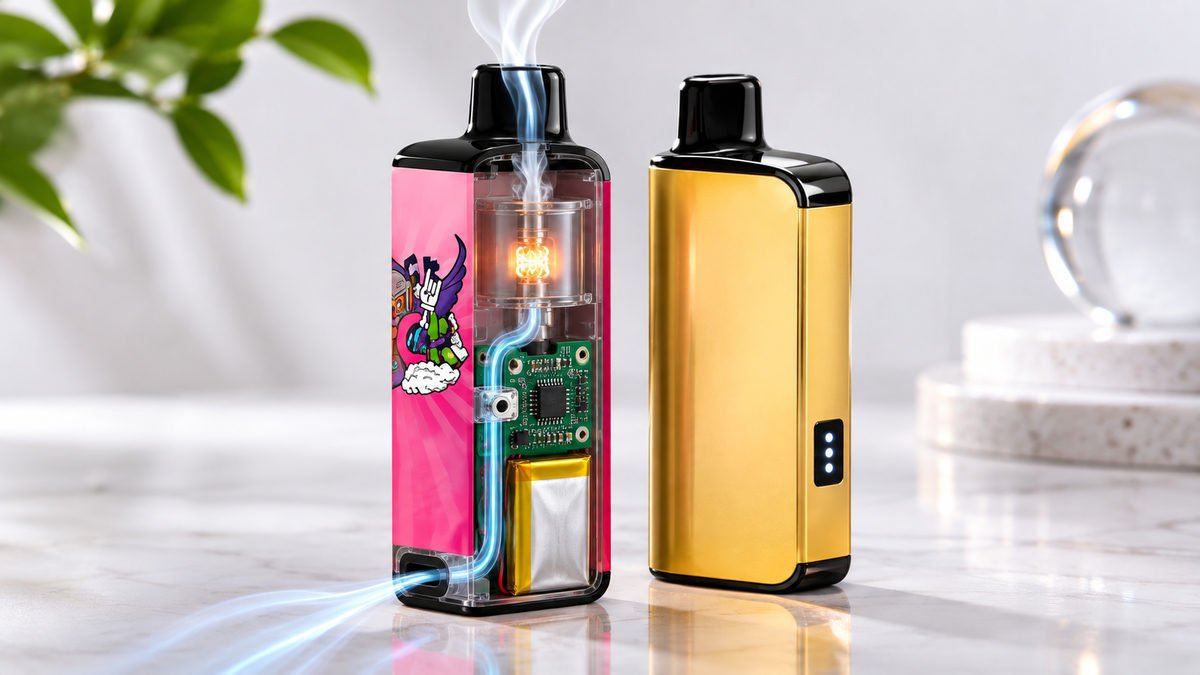
How does an automatic draw sensor work in a vape when there is no button to press? A buttonless device can produce aerosol almost instantly after you inhale. However, it does not recognize your breath or know that you want nicotine. Instead, it detects a physical change within the airflow channel.
That simple action involves several components working together. The sensor reports a pressure or airflow change, while the chipset checks whether conditions appear safe. Therefore, understanding this process can make faults much easier to recognize. It can also help you distinguish a blocked airflow path from a serious electrical problem.
This guide covers sensor designs, activation steps, safety protections, and differences between common vape types. Additionally, it explains safe external checks for weak response, missed puffs, and unintended firing. You will not need technical experience or internal repair tools. Most importantly, you will learn when to stop troubleshooting and retire the device.
1. What Is an Automatic Draw Sensor in a Vape?
An automatic draw sensor lets a buttonless vape detect inhalation through a physical change inside its air path. When you inhale, moving air creates a small pressure difference within the device. The sensor converts that change into an electrical signal. Therefore, the battery does not power the heating coil continuously.
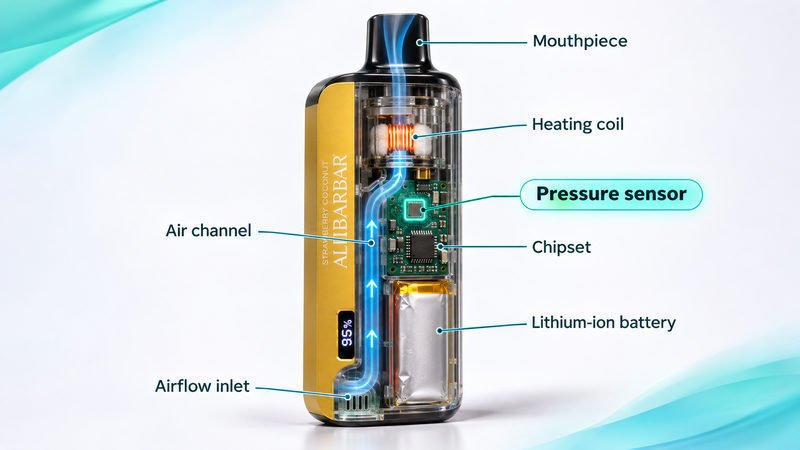
The sensor typically sits near an airflow channel connected to the mouthpiece and external air inlets. However, its exact location varies between disposables, closed pod systems, and refillable pods. Some designs place the sensor within the main body. Others integrate related components into a compact control assembly.
What the sensor actually detects
The sensor does not identify human breath, nicotine demand, or the user’s intention. Instead, it responds to airflow, pressure, or movement within a designed operating range. For instance, inhaling through a clear mouthpiece changes pressure differently from leaving the device untouched. The control circuit interprets that difference as a puff request.
This distinction explains why non-breath events can sometimes trigger a faulty or sensitive device. Specifically, strong air movement, internal condensation, or sudden pressure changes may affect the sensing area. A leaking pod can also carry liquid toward sensitive components. As a result, the device may miss a puff or activate unexpectedly.
The sensor works as part of a system
The draw sensor does not usually send battery power directly to the coil. Instead, it sends a low-level signal to the device’s chipset or control circuit. The chipset then checks battery voltage, puff duration, resistance, and other available inputs. If those checks pass, a switching component delivers controlled power to the coil.
Think of the sensor as a doorbell rather than the person opening the door. Pressing the bell announces a request, but another part decides what happens next. Likewise, the sensor reports airflow while the control circuit authorizes heating. This separation allows manufacturers to include cutoffs and fault protections.
- Sensor: Detects the inhalation-related physical change.
- Chipset: Interprets the signal and checks operating conditions.
- Battery: Supplies electrical energy after authorization.
- Coil: Converts that energy into heat for aerosol production.
2. How Does an Automatic Draw Sensor Work in a Vape?
From inhalation to coil heating
The sequence begins when you place your lips around the mouthpiece and inhale. Air enters through one or more small intake holes. Meanwhile, that moving air changes pressure inside the channel leading toward the sensor. The size and speed of this change depend partly on your draw strength.
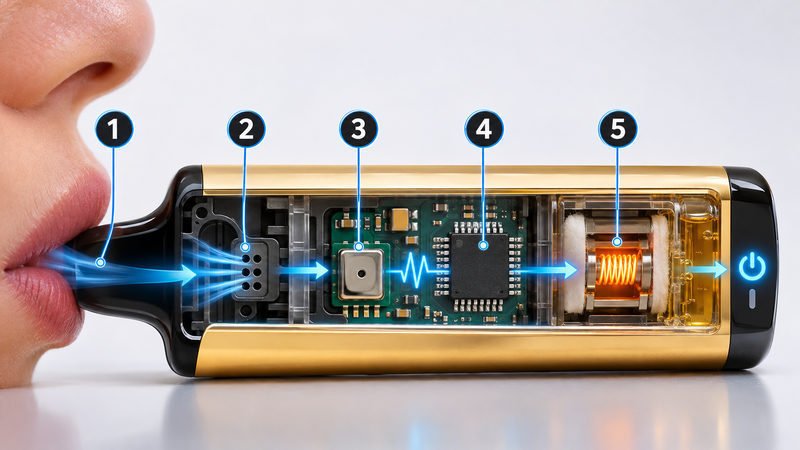
Next, the sensor produces or changes an electrical signal. A pressure sensor may create a measurable output based on diaphragm movement. Alternatively, an airflow switch may change state when air moves through the channel. The chipset continuously watches for the expected signal pattern.
Once the signal reaches its activation threshold, the chipset treats it as a puff request. However, power does not always reach the coil immediately without checks. The circuit may verify acceptable battery voltage and electrical resistance first. It may also confirm that no timeout or short-circuit condition exists.
If conditions appear normal, the chipset activates an electronic switch that connects controlled battery power to the coil. The coil heats the nearby e-liquid held by a wick. Consequently, the liquid forms an aerosol that travels through the chimney and mouthpiece. This entire process can feel almost instantaneous.
Why activation feels immediate
Well-designed systems respond quickly enough that most users notice little delay. However, there is no universal response time for every device. Sensor sensitivity, chipset programming, battery charge, and coil construction all influence the experience. A low-resistance coil may also heat differently from a higher-resistance coil.
For example, imagine two pod devices using different batteries and airflow settings. The first has a sensitive sensor and a warm coil, so vapor begins quickly. Meanwhile, the second uses a weaker battery and a restricted air channel. Its response may feel slower even when the sensor still works.
A very gentle draw may not cross the sensor’s activation threshold. On the other hand, an excessively sharp inhale can pull extra liquid into the air path. Therefore, a steady, moderate puff usually gives the most consistent response. Your device manual may provide more specific draw guidance.
What happens when the puff ends
When you stop inhaling, airflow slows and internal pressure returns toward its resting level. The sensor signal then falls below the activation threshold. As a result, the chipset switches off power to the coil. The coil cools while the wick draws in more e-liquid.
Most regulated devices also impose a maximum firing period. For instance, a cutoff may stop heating after several continuous seconds. Exact limits vary by model, and users should not assume every product behaves identically. This protection helps reduce overheating when a sensor remains active too long.
Additionally, some chipsets use signal filtering to ignore tiny or extremely brief pressure changes. This feature can reduce false activation from movement or environmental changes. However, blocked airways and liquid contamination can distort the signal. Therefore, reliable operation depends on both electronic controls and a clear airflow path.
- You inhale through the mouthpiece.
- Air enters through the intake openings.
- Pressure or airflow changes near the sensor.
- The sensor sends a signal to the chipset.
- The chipset checks available safety conditions.
- The circuit supplies controlled power to the coil.
- Aerosol travels through the mouthpiece.
- Power stops when inhalation ends or a cutoff activates.
3. Pressure Sensors, Airflow Switches, and Other Designs
Manufacturers use several methods to detect changes inside a vape’s air path. However, consumer descriptions do not always use consistent technical terms. A product page may call one component an airflow sensor and another a pressure sensor. In practice, both may respond to the pressure difference created by moving air.

Pressure-based sensors
A pressure-based design detects a small difference between regions inside the device. Inhaling lowers pressure along part of the airflow route. Specifically, that difference may move a flexible diaphragm within the sensor assembly. The resulting movement changes an electrical property that the chipset can measure.
These sensors can offer fast and sensitive activation. Moreover, manufacturers can tune their thresholds for tight or airy draws. Excessive sensitivity, however, may increase unwanted responses to sudden pressure changes. Condensation or e-liquid intrusion can also disrupt accurate pressure detection.
Mechanical airflow switches
Some devices use a small membrane, flap, or switch that reacts to air movement. When inhalation moves the component far enough, it completes or changes a control signal. Therefore, this approach can perform the same practical job as a pressure sensor. The internal mechanism and level of precision may differ.
Mechanical parts can wear, stick, or become contaminated over time. For instance, condensed aerosol may create a film around a moving membrane. The switch may then respond slowly or remain in an incorrect position. However, users should never open a sealed device to clean such components.
Electronic and microphone-style sensing
Some compact products use highly sensitive electronic assemblies sometimes described as microphone-style sensors. They detect pressure fluctuations rather than recording speech or identifying the user. Notably, the marketing term can create confusion about what the component does. Its purpose remains physical puff detection.
Other designs combine sensor input with software filtering. Additionally, the chipset may compare signal strength, duration, and stability before firing. This approach helps reject random disturbances while recognizing normal inhalation. Implementation quality still varies widely among manufacturers and models.
- Pressure sensor: Measures a pressure difference caused by inhalation.
- Airflow switch: Reacts mechanically or electrically to moving air.
- Electronic sensor: Detects small pressure fluctuations and sends a processed signal.
- Hybrid system: Combines sensing hardware with software-based filtering.
Therefore, names alone do not reveal every engineering detail. Two devices labeled “airflow activated” may use different internal methods. Most importantly, users should follow model-specific instructions instead of relying on a generic sensor label.
4. Auto-Draw Versus Button Activation Across Vape Types
Auto-draw systems focus on simplicity. You inhale, and the device handles activation without another movement. Therefore, this design often feels familiar to people moving away from combustible cigarettes. It also reduces the number of visible controls on compact products.
Manual buttons offer more deliberate control. A user can press before inhaling, which may warm the coil slightly earlier. Additionally, a button makes activation less dependent on a precise airflow threshold. However, an exposed button can fire inside a pocket unless the device locks correctly.
Convenience and control
Automatic activation works well for quick, uncomplicated use. However, blocked inlets or weak draws may prevent reliable firing. Button activation can continue working despite some airflow-sensor faults. It still requires a clear air path for safe and comfortable inhalation.
Some refillable devices provide both methods. For example, auto-draw may support casual use while a button provides more predictable control. Additionally, a locking feature can prevent accidental button presses. Users should learn the model’s exact lock sequence before carrying it.
- Auto-draw advantage: Simple operation with no button press.
- Auto-draw limitation: Greater dependence on sensor condition and airflow.
- Button advantage: Deliberate activation and consistent user control.
- Button limitation: Possible pocket activation without a lock.
Differences between device categories
Disposable vapes commonly use auto-draw activation because they prioritize minimal controls. Their battery, sensor, liquid reservoir, and coil usually form one sealed unit. Therefore, users cannot safely replace a failed internal sensor. Persistent faults normally mean replacing and disposing of the entire device correctly.
Closed pod systems use replaceable prefilled pods with a reusable battery section. Condensation can collect where the pod meets the device. As a result, wet contacts or a blocked pod airway may resemble a sensor failure. Removing the pod and cleaning accessible surfaces can sometimes restore normal operation.
Refillable pod devices provide more flexibility but require regular care. Overfilling, worn seals, or thin e-liquid can increase leakage into the pod chamber. Moreover, a flooded coil may create gurgling and inconsistent airflow. These conditions can interfere with automatic activation even when the sensor remains functional.
Reliability depends more on design quality and maintenance than activation style alone. A protected button device may resist accidental firing very well. Likewise, a properly sealed auto-draw system may operate consistently for its intended lifespan. Most importantly, neither design makes battery damage or internal leakage harmless.
5. Draw Sensor Troubleshooting: No Hit or Auto-Firing
When the device produces no aerosol
First, check whether the battery needs charging, if the product supports charging. Use the specified cable, power source, and charging method. Additionally, inspect any indicator light for the pattern described in the manual. Repeated warning flashes may indicate low voltage, a short, or another fault.
Next, examine the visible air inlets and mouthpiece. Pocket lint, packaging film, or condensed liquid can restrict airflow enough to prevent activation. However, never push metal objects deeply into an opening. A metal tool could damage internal parts or create an electrical hazard.
If the device uses a removable pod, remove it only as the manufacturer directs. Wipe accessible contacts and the pod base with a dry, lint-free cloth. Then, allow any remaining surface moisture to evaporate before reassembly. Do not pour cleaners into the chamber or rinse the battery section.
Delayed, weak, or intermittent activation
A delayed response can result from weak battery output, restricted airflow, or sensor contamination. Additionally, a heavily used coil may heat slowly and produce less aerosol. Try a steady, moderate draw after completing safe external cleaning. Forceful inhalation may worsen flooding rather than fix it.
Intermittent firing may point to poor pod contact. Specifically, check whether the pod sits evenly and securely without forcing it. Inspect the pod for cracks, warped edges, or damaged seals. Replace the pod if visible damage or persistent leakage appears.
Weak output does not always mean the sensor has failed. The coil may lack liquid, the battery may be nearly empty, or airflow may remain partly blocked. Moreover, cold conditions can temporarily affect battery performance and liquid flow. Let the device reach a moderate room temperature naturally before testing it again.
When the device fires without inhalation
Auto-firing requires immediate caution. Stop using the device and move it away from flammable materials. If you can do so safely, place it on a stable, noncombustible surface. Do not hold a heating device near your face or put it into a pocket.
Condensation, leaked liquid, a stuck sensor, or damaged electronics can cause unintended activation. However, the user cannot reliably identify every internal cause from outside. A puff cutoff may stop one firing cycle, but it does not repair the fault. Repeated activation means the device is unsafe for continued use.
If a removable pod appears to trigger the problem, detach it only when the device remains cool and stable. Do not touch leaking liquid with bare skin. Additionally, do not dismantle, puncture, squeeze, or modify the battery body. These actions can damage the cell and increase fire risk.
Clear stop-use conditions
- The device activates continuously or repeatedly without inhalation.
- The body becomes unusually hot during use, storage, or charging.
- The battery casing looks swollen, dented, cracked, or punctured.
- Liquid has entered the charging port or internal battery area.
- The device produces a burning smell, smoke, sparks, or unusual sounds.
- The charging cable or port becomes excessively hot.
- External cleaning and proper charging do not correct repeated faults.
In these situations, stop troubleshooting and follow local battery disposal guidance. Do not place a damaged lithium-powered vape into ordinary household waste. Furthermore, never continue using it simply because the indicator light still works. A functioning light does not prove that the battery or protection circuit remains safe.
6. Safety Protections, Care, Lifespan, and FAQs
Common electronic protections
Many regulated vapes include protections that monitor abnormal operating conditions. These may include puff-duration limits, short-circuit detection, low-voltage cutoff, and overcharge control. Additionally, some devices monitor excessive current or temperature. Available protections vary, so check the manual rather than assuming they exist.
A cutoff limits a single firing event after a preset duration. Short-circuit protection can interrupt power when the electrical path appears unsafe. Meanwhile, low-voltage protection stops the battery from discharging beyond a defined level. These safeguards reduce risk, but they cannot correct physical damage or liquid intrusion.
- Puff cutoff: Ends unusually long coil activation.
- Short-circuit protection: Interrupts power during certain electrical faults.
- Low-voltage cutoff: Limits excessive battery discharge.
- Charging protection: Controls charging within the device’s designed limits.
- Overcurrent protection: Restricts unsafe current demand.
- Temperature protection: Responds to excessive heat in supported models.
Care that supports reliable sensing
Keep the mouthpiece and visible intake holes clean and dry. For pod devices, regularly wipe accessible contacts with a dry, lint-free cloth. Moreover, store the vape upright when practical to reduce liquid movement. Keep it away from direct sunlight, hot vehicles, water, children, and pets.
Use only compatible pods, coils, chargers, and cables specified for the device. Additionally, avoid overfilling refillable pods or allowing liquid into the central airflow tube. Replace cracked pods and worn seals promptly. Never attempt to repair a sealed sensor or battery assembly.
How long does an automatic draw sensor last?
There is no universal lifespan because design, usage, and leakage exposure differ. In many products, the sensor should last for the device’s intended service life. However, condensation and repeated liquid intrusion can shorten reliable operation. Physical impact and poor storage can also damage the sensing system.
Can you adjust sensor sensitivity?
Most compact disposables and closed pod devices do not provide sensitivity controls. Some advanced refillable models may offer airflow adjustment, which can change activation behavior indirectly. However, adjusting airflow does not repair a failing sensor. Follow the manual whenever the response suddenly changes.
Can condensation cause auto-firing?
Yes, condensation or leaked liquid can interfere with the sensor area or control electronics. However, users cannot safely confirm deep internal contamination without dismantling the product. Clean only accessible surfaces as directed. Replace the device if unintended firing returns.
Is a blinking light always a sensor fault?
No, blinking can indicate low battery, timeout, poor pod contact, or an electrical fault. Different models use different colors and flash counts. Therefore, compare the pattern with the product manual. Avoid repeatedly inhaling when the device continues showing a warning.
Can you replace the draw sensor?
Users generally cannot replace sensors in sealed or compact devices safely. Opening the housing can puncture the battery or bypass protective components. Furthermore, unauthorized repair may create hidden electrical damage. Replace the affected device unless its manufacturer provides an approved service process.
Conclusion
An automatic draw sensor detects a pressure or airflow change when you inhale. It then signals the chipset, which checks available operating conditions before powering the coil. Therefore, the sensor starts the request but does not control every safety decision. Power stops when inhalation ends or a protective cutoff intervenes.
Clean airflow openings, dry contacts, suitable charging, and careful storage support reliable operation. However, external cleaning cannot repair a damaged sensor, battery, or control circuit. Stop using any device that overheats, leaks internally, or activates continuously. Prompt replacement is safer than repeated testing of an unstable vape.
Finally, check your device manual for model-specific airflow, cleaning, charging, and disposal guidance. Follow local rules for recycling lithium-powered products and nicotine-containing waste. Most importantly, keep a faulty device away from combustible materials while arranging safe disposal. Never dismantle or puncture it to investigate the sensor.
