
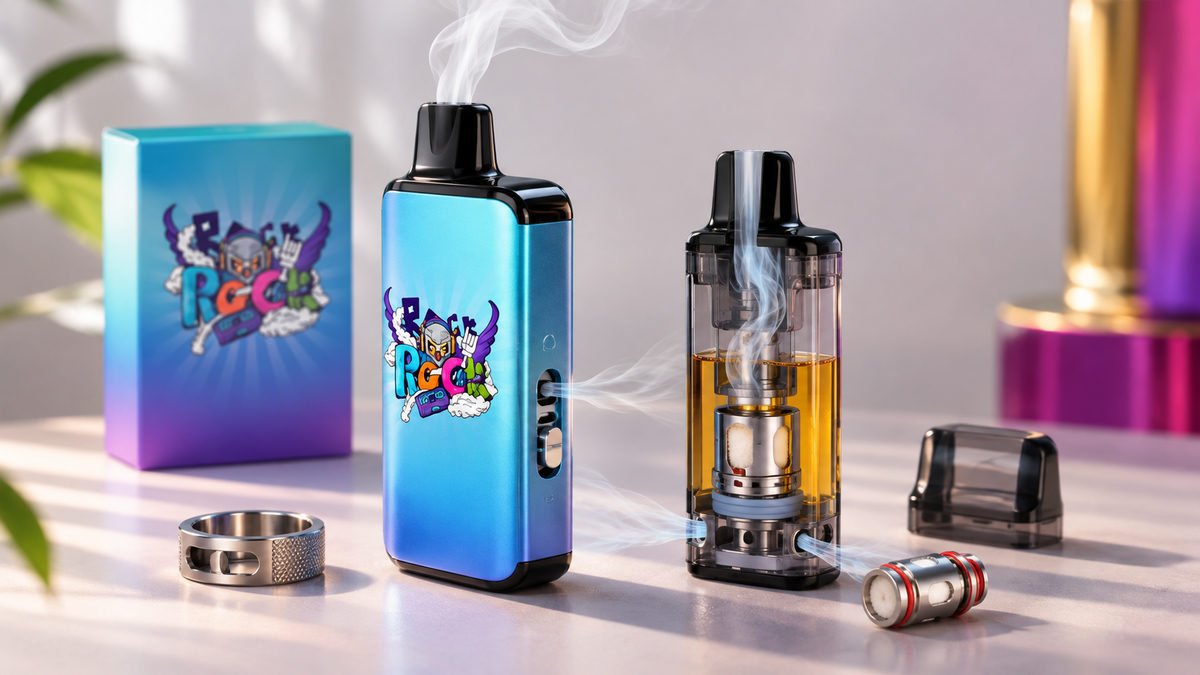
Why can the same vape feel tight and warm, then airy and cool moments later? Understanding How Airflow Systems Work in Vape Devices explains this dramatic change. A small adjustment can alter resistance, flavor, temperature, vapor volume, and even sound. However, the airflow ring tells only part of the story.
Air enters through small openings, travels around the coil, and carries aerosol toward the mouthpiece. Meanwhile, coil position, power, wicking, chamber size, and liquid thickness shape the final result. Poorly matched settings can cause weak flavor, harsh heat, whistling, condensation, or leaking. Therefore, thoughtful adjustments usually work better than simply opening or closing every intake.
This guide follows the complete airflow path through common vape devices. It also compares major inhalation styles, intake locations, and practical adjustment methods. Most importantly, it explains safe cleaning and basic troubleshooting without bypassing protections. Vape aerosol is not harmless, and these products are only for adults of legal age.
1. How Airflow Systems Work in Vape Devices
The complete airflow path
A vape airflow system includes every component that guides air through the device. These parts include intake openings, internal channels, the coil chamber, chimney, and mouthpiece. When you inhale, pressure drops inside this pathway and draws outside air inward. Consequently, air moves toward the heated coil and mixes with the generated aerosol.

The visible intake holes represent only the beginning of that journey. Inside, channels may direct air beneath, beside, or above the coil. Specifically, the chosen route affects how evenly air crosses the coil surface. A narrow chimney can then concentrate the aerosol before it reaches your mouth.
Consider two devices with equally large external openings. One may use short, wide channels that deliver air directly beneath the coil. The other may route air through bends and narrow internal passages. Therefore, their draws can feel completely different despite similar-looking intakes.
What airflow controls
Airflow changes several sensations at once because air performs multiple jobs. First, it controls how much resistance you feel while inhaling. Additionally, moving air cools the coil and surrounding chamber. More incoming air also dilutes the aerosol, which changes flavor intensity and vapor temperature.
- Draw resistance: Narrow passages usually require stronger suction.
- Coil cooling: Faster airflow removes heat more effectively during each puff.
- Flavor concentration: Less dilution can make flavors feel denser or sharper.
- Vapor volume: Greater airflow can support larger output when the coil and power match.
- Noise: Small openings and turbulent channels may whistle, hiss, or gurgle.
Air must reach the active coil surface effectively. If air passes around the chamber without crossing the coil, cooling and flavor may suffer. Conversely, forceful air striking one small area can create turbulence and noise. Good designs balance coil coverage, smooth routing, and suitable chamber pressure.
Furthermore, airflow affects condensation after the aerosol leaves the coil. Warm aerosol can cool against the chimney and mouthpiece, forming small droplets. Some droplets return toward the chamber, while others collect near the mouthpiece. As a result, normal condensation can resemble a leak even when every seal remains intact.
2. Vape Airflow Control and Draw Resistance
How adjustable airflow changes the opening
Vape airflow control usually changes the effective size or number of exposed intake openings. A rotating ring may cover circular holes or a long slot. Pod systems may use a slider, reversible pod, or separate inlet positions. In each case, the mechanism changes how easily outside air enters.

Closing the control reduces the available passage area. Consequently, the user must create a stronger pressure difference to move a similar amount of air. The draw feels tighter, much like drinking through a narrow straw. However, internal channels can limit airflow even when the outside opening looks large.
Opening the control exposes more intake area and reduces resistance. Therefore, air enters with less effort and the draw feels looser. A larger opening may also support a longer or deeper inhale. Still, the coil chamber, chimney, and mouthpiece can remain important bottlenecks.
Why tiny adjustments can feel significant
Airflow controls do not always feel linear. Moving a ring from fully open to three-quarters open may cause little change. Yet the final quarter-turn can suddenly make the draw much tighter. Specifically, small remaining gaps create faster air movement and stronger turbulence.
For instance, imagine a device with three intake holes. Closing one hole removes one-third of the visible intake area. Closing a second leaves only one-third available. Therefore, the second adjustment often feels more dramatic than the first.
Your inhalation strength also changes the result. A gentle draw moves less air and may feel smooth through a restricted opening. Meanwhile, a forceful inhale can make the same opening whistle or feel unusually resistant. Pulling harder can also draw excess liquid toward the coil chamber.
Finding a comfortable resistance
Start with the manufacturer’s suggested airflow range for the installed coil. Then take a normal, unforced puff and notice resistance, temperature, and sound. Additionally, adjust the control in small increments rather than jumping between both extremes. This approach makes each change easier to judge.
- Open the airflow slightly if the draw feels too tight or hot.
- Close it slightly if the draw feels excessively loose or flavorless.
- Reduce inhalation force if the device gurgles or pulls liquid upward.
- Check for blocked openings when adjustments produce no clear difference.
Most importantly, never block air holes with tape or insert objects into internal channels. Such changes can disrupt cooling and damage the device. Furthermore, never alter electrical protections to compensate for an unsuitable draw. Choose a compatible coil or device instead.
3. How Airflow Affects Flavor, Vapor, and Temperature
Flavor concentration and dilution
Airflow changes flavor partly by controlling aerosol dilution. Restricted airflow often produces a denser sensation because less outside air mixes with each puff. However, excessive restriction can overheat the coil or reduce effective coil coverage. The result may taste harsh, muted, or slightly burnt.

More airflow often cools and softens the aerosol. It can also support a larger vapor volume when power and liquid supply remain suitable. On the other hand, excessive air may dilute flavor beyond personal preference. Therefore, maximum airflow does not automatically deliver maximum performance.
Chamber size matters as well. A small chamber concentrates aerosol close to the coil and can emphasize flavor. A larger chamber allows greater expansion and may suit higher vapor output. Notably, careful coil placement can make either design perform well.
Coil resistance and power
Coil resistance and wattage influence how quickly the coil generates heat. Lower-resistance coils often use more power and need substantial cooling airflow. Meanwhile, higher-resistance coils commonly operate at lower power with smaller air passages. Always stay within the operating range printed by the manufacturer.
For example, a high-output coil may feel uncomfortably hot with nearly closed airflow. Opening the intake can improve cooling and make the vapor smoother. Conversely, a low-power coil may produce thin aerosol under extremely open airflow. Slightly restricting the intake can restore warmth and flavor concentration.
Do not raise power automatically when flavor seems weak. First, check airflow, liquid level, coil condition, and wicking. Additionally, confirm that the selected power suits the installed coil. Excessive power can scorch the wick and create an unpleasant taste.
E-liquid, wicking, and inhalation timing
Liquid viscosity affects how quickly the wick replenishes after each puff. Thicker liquid usually moves more slowly through small wicking openings. Therefore, repeated long puffs may dry the wick faster than liquid can replace. Airflow alone cannot correct an incompatible liquid or damaged coil.
Thinner liquid moves more easily and may flood some large-coil systems. A strong restricted inhale can worsen flooding by pulling extra liquid into the chamber. As a result, the device may gurgle, spit, or leak from the intake. Softer inhalation and the correct liquid type can reduce this problem.
- Change only one setting at a time.
- Wait briefly between test puffs.
- Monitor heat around the tank or pod.
- Stop if flavor becomes burnt or unusually harsh.
- Replace a worn coil instead of forcing higher power.
The best setting creates balance rather than an extreme result. It should provide comfortable resistance, stable temperature, clear flavor, and consistent wicking. Moreover, the device should sound smooth rather than whistle or gurgle. Personal preference matters, but safe operating guidance sets the boundaries.
4. MTL, RDL, and DTL Airflow Compared
Mouth-to-lung airflow
Mouth-to-lung vaping, or MTL, draws aerosol into the mouth before inhalation. The motion resembles sipping through a narrow straw. MTL devices usually use smaller openings, lower power, and higher-resistance coils. Consequently, they often create a tighter draw and modest vapor volume.
Restricted airflow can make an MTL puff feel warmer and more concentrated. However, closing the intake too far may create harsh heat or strong whistling. A steady, gentle inhale usually works better than a sharp pull. Additionally, small pods may need brief pauses between repeated puffs.
For example, an MTL user might begin with one small intake fully open. The user can then close it slightly if the draw feels too loose. Therefore, gradual adjustment helps preserve cooling while improving resistance. The coil maker’s recommended power range should remain unchanged unless guidance permits adjustment.
Restricted direct-lung airflow
Restricted direct-lung vaping, or RDL, sends aerosol directly toward the lungs through moderate resistance. It sits between MTL and fully open DTL styles. RDL devices commonly use medium openings and moderate power. As a result, they balance flavor concentration, warmth, and vapor volume.
RDL often suits users who find MTL too tight and DTL too airy. Furthermore, it can provide strong flavor without requiring maximum output. The inhale usually feels smooth and controlled rather than forceful. Still, coil compatibility determines how far the airflow can safely close.
A practical RDL setting may use the intake around halfway open. However, that fraction does not transfer reliably between different devices. One device may have a large slot, while another uses several small holes. Judge the actual draw and temperature instead of relying on ring position alone.
Direct-to-lung airflow
Direct-to-lung vaping, or DTL, uses a deeper inhale with low resistance. DTL systems usually feature larger intakes, wide chimneys, and lower-resistance coils. Moreover, they often operate at higher power than MTL systems. Greater airflow helps cool the coil and carry larger aerosol volumes.
Partly closing a DTL intake can increase warmth and flavor density. Nevertheless, excessive restriction may reduce cooling below the coil’s needs. The tank can become hot, and the wick may struggle during repeated puffs. Therefore, users should follow the coil manufacturer’s airflow and power guidance.
- MTL: Tight draw, smaller airflow, lower power, and shorter vapor volume.
- RDL: Moderate restriction, balanced warmth, and medium vapor output.
- DTL: Open draw, strong cooling, and potentially larger vapor output.
No style ranks as universally best. Preferred resistance depends on breathing comfort, device design, coil choice, and individual taste. Most importantly, never force a device into an inhalation style it cannot support. Use compatible components and remain within all stated operating limits.
5. Bottom, Side, Top, and Pod Vape Airflow Designs
Bottom airflow
Bottom-airflow designs direct incoming air upward beneath the coil. This route can strike the coil directly and provide strong flavor and effective cooling. Additionally, short paths may create a responsive draw. However, liquid collecting in the chamber can escape through low intake openings.
Flooding often makes bottom airflow gurgle before visible leaking appears. Condensation, overfilling, a loose coil, or damaged seals may contribute. Therefore, keeping the device upright can help, but it cannot repair a failed seal. Users should inspect replaceable parts according to the manual.
Side airflow
Side-airflow systems direct air across one or both sides of the coil. Dual-sided designs can cool a broad coil surface evenly. Moreover, side intakes may sit above the chamber floor, helping contain small amounts of excess liquid. Their performance still depends heavily on internal routing.
Coil alignment matters when air arrives from the side. If the coil sits too high or low, air may miss its most active area. In sealed coil heads, the manufacturer fixes this relationship. Therefore, users should install only compatible components rather than improvising replacements.
Top airflow
Top-airflow designs place visible intakes near the upper part of the tank. Internal channels then route air downward or inward toward the coil. Because the openings sit higher, they can better contain liquid inside the lower chamber. However, top airflow does not guarantee leak-free operation.
Longer internal routes may soften the draw or introduce turbulence. On the other hand, careful engineering can provide strong coil coverage and smooth performance. Seals, fill-port condition, chamber pressure, and coil fit still affect leaking. Consequently, intake location represents only one design factor.
Pod airflow systems
Pod devices often hide much of their airflow route inside compact housings. Air may enter through small side holes, a bottom gap, or a sensor channel. Some pods reverse orientation to provide two resistance levels. Others use a slider that narrows an internal opening.
Condensation can collect beneath a removable pod during normal use. A small amount does not always indicate a major leak. Nevertheless, users should wipe accessible contacts and surrounding surfaces with a dry, lint-free material. Never push liquid deeper into electrical areas.
- Coil shape: Round, mesh, and multi-coil structures need different air coverage.
- Chamber size: Compact chambers concentrate aerosol and retain heat differently.
- Seals: Worn seals can cause leaks regardless of intake position.
- Internal routing: Bends and narrow sections change resistance and noise.
- Chimney width: The outlet can limit flow after air passes the coil.
Therefore, visible intake placement cannot predict performance by itself. Two top-airflow tanks may use entirely different internal paths. Likewise, two pods may feel different despite matching hole sizes. The complete design determines cooling, containment, noise, and draw quality.
6. Vape Airflow Troubleshooting, Cleaning, and Adjustment
A safe troubleshooting sequence
Start by identifying the exact symptom before changing anything. Note whether the problem involves tightness, heat, weak flavor, whistling, gurgling, or leaking. Then check the liquid level, airflow position, pod seating, and visible damage. Additionally, confirm that the coil and power setting match manufacturer guidance.
Next, change only one variable and take a short test puff. Open the airflow slightly for excessive heat or resistance. Conversely, reduce inhalation force if gurgling begins after strong pulls. Replace a worn coil when flavor remains burnt, muted, or inconsistent.
- Turn off the device before basic cleaning.
- Remove the pod or tank only when the instructions allow it.
- Wipe accessible condensation with a dry, lint-free cloth.
- Clear external air holes gently without inserting sharp objects.
- Let permitted washable parts dry completely before reassembly.
Never rinse batteries, electronic bodies, sealed pods, or electrical contacts. Furthermore, do not open sealed components or bypass safety systems. Avoid metal tools near contacts and battery areas. The manufacturer’s cleaning instructions take priority because materials and construction vary.
Warning signs that require stopping
Stop using the device if it remains unusually hot after cooling and basic checks. Also stop if the body appears swollen, cracked, wet internally, or electrically unreliable. Specifically, unexpected firing, repeated error messages, or a damaged battery require professional guidance. Do not keep testing a device with these warning signs.
Persistent leaking may indicate damaged seals, a cracked pod, or an incompatible coil. Meanwhile, repeated dry hits may signal poor wicking or unsuitable liquid. Replace user-serviceable parts only with approved components. If problems continue, contact the manufacturer or a qualified retailer.
Conclusion
Airflow determines how easily air reaches the coil and how effectively that coil stays cool. It also shapes resistance, flavor concentration, aerosol temperature, vapor volume, and noise. Moreover, intake location works together with channels, seals, chamber size, and chimney width. No single airflow position suits every device or user.
Matching airflow with inhalation style, coil resistance, power, liquid, and wicking creates a more comfortable result. Therefore, adjust settings gradually and monitor heat, flavor, draw comfort, and vapor output. Basic cleaning can reduce condensation, gurgling, and blocked airflow. However, persistent heat, damage, or unreliable operation requires immediate attention.
Vape aerosol is not harmless, and vaping products are only for adults who meet the applicable legal age. Most importantly, check the device manufacturer’s guidance before making adjustments. Start with the recommended settings, then fine-tune the airflow in small steps. Stop using any device that remains damaged, unusually hot, or unsafe after basic maintenance.
