
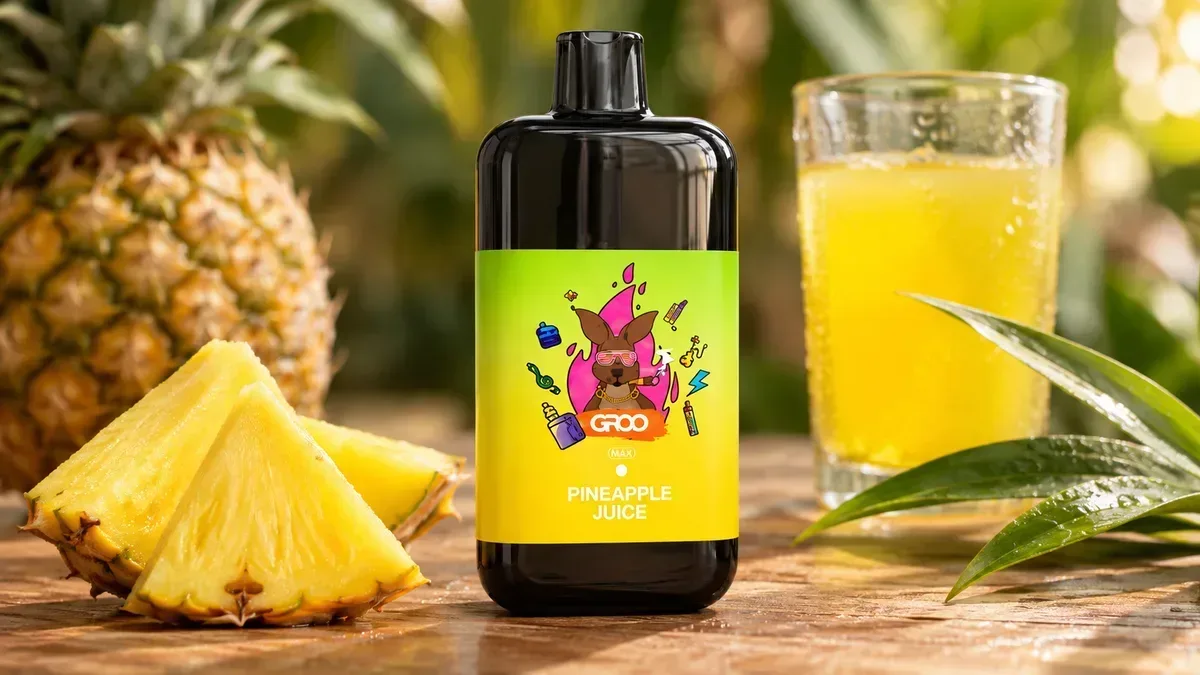
What does “Pineapple Juice” on a vape label suggest to you? Fresh-cut pineapple, pineapple candy, and a chilled fruit drink each set a different expectation. GROO Max 10000 Puffs Pineapple Juice: Understanding Beverage-Inspired Flavour Descriptions starts with how two product listings describe the same flavour. However, the flavour name leaves practical questions about ingredients, cooling, nicotine strength, and how long the device might last.
For adults of legal vaping age, the exact carton and instructions offer the most useful starting point. This guide explains how to read the flavour description and puff estimate, check nicotine labelling, and handle the device safely.
What Does GROO Max 10000 Puffs Pineapple Juice Taste Like?
Groo Vapes describes Pineapple Juice as a sweet pineapple flavour with a cool finish that it attributes to menthol. Meanwhile, the Groo Vape Australia listing emphasises sweet and tangy pineapple, comparing it with freshly squeezed juice. Together, the descriptions suggest pineapple up front, some fruit-like sharpness, and a cooling sensation that may linger.
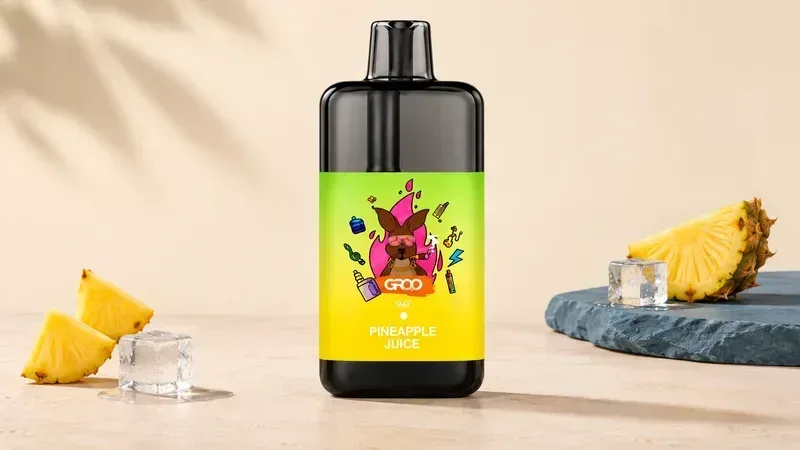
Where sweetness, tang, and cooling fit
Sweetness and tang can sit side by side in the same flavour description. For instance, a glass of pineapple juice can taste sweet while leaving a sharp impression around the edges. In the listing, tangy signals that sharp impression. It gives you a sensory reference without telling you the liquid’s acidity.
Meanwhile, cool finish describes the sensation that lingers after the main pineapple note. Think of how a mint lozenge can leave your mouth feeling cool at room temperature. The comparison illustrates how cooling can feel distinct from aroma or sweetness. However, the listing gives no ingredient quantities or measured cooling level.
The two listings put the emphasis in different places. Specifically, Groo Vapes highlights the cool finish, while Groo Vape Australia leads with sweetness and tang. That difference matters if you expect the word juice to describe the entire experience. The temperature-like sensation is part of the first listing’s description even though the flavour name omits it.
Why the same label can produce different impressions
One person might notice the pineapple aroma first and remember the tang. Meanwhile, someone more sensitive to cooling might remember the finish most clearly. Familiar foods shape expectations too. For instance, someone picturing canned juice may interpret sweet pineapple differently from someone picturing a slice of tart fresh fruit.
The device can also affect the impression. For example, differences in heating or airflow can change how much aerosol reaches the mouth during a draw. Flavour can also change as a device nears the end of its usable life. If a unit suddenly tastes burnt or behaves unusually, stop using it and check the instructions.
Overall, the public descriptions give you a shared vocabulary for sweetness, tang, and cooling. They leave room for personal differences in which sensation stands out and how long it seems to linger.
What Beverage-Inspired Pineapple Flavour Means
A chilled pineapple drink gives the name a familiar reference for fruit aroma, sweetness, a little tang, and a cool finish. Specifically, juice suggests the rounded pineapple impression you might expect from a drink. The Groo Vapes description reinforces that idea by comparing the flavour with chilled tropical juice.
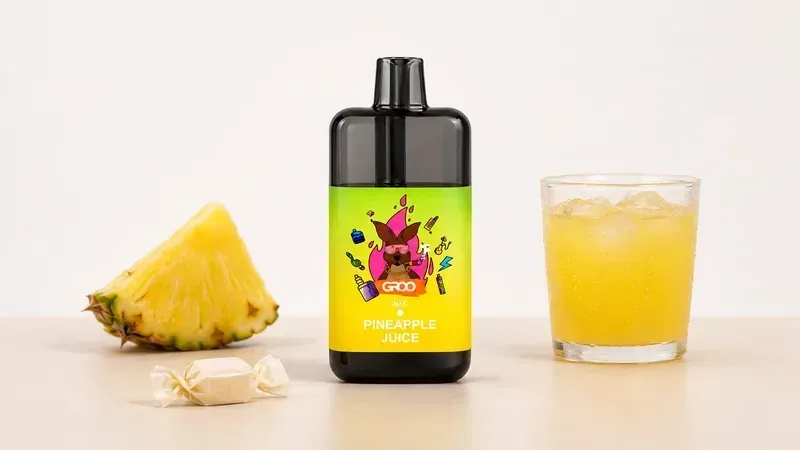
Why the drink comparison fits
Picture pouring pineapple juice into a glass and smelling the fruit before taking a sip. Next comes the sweetness, followed by a sharper edge that can linger briefly. Meanwhile, the chill is a separate sensation you can feel even after the strongest flavour fades. That sequence helps explain what the listing means by a cool finish.
Fresh-cut pineapple offers a slightly different reference. For example, a ripe slice can have a floral aroma, a fibrous texture, and tartness that varies from bite to bite. Pineapple candy often brings syrupy sweetness to mind. By comparison, a pineapple drink suggests a blended fruit impression without the texture of the fruit.
Can the name tell you whether it contains real juice?
The two listings leave the presence of real pineapple juice unconfirmed. In particular, a comparison with freshly squeezed juice describes the flavour the seller wants readers to imagine. The phrase alone cannot establish whether the formula contains pineapple juice, fruit extract, or other flavouring ingredients.
To check what the exact unit contains, look for documentation that matches its model, market, and batch where possible. Useful records include:
- The ingredient declaration on the sealed carton or in the enclosed leaflet.
- A manufacturer’s ingredient statement that identifies the exact formulation and clarifies broad terms such as flavourings.
- A regulatory filing that identifies the formulation, where the relevant authority makes those details public.
However, an ingredient list that only says flavourings may leave the pineapple question open. Ask the manufacturer or listed importer for clarification if you need to identify a particular ingredient. Most importantly, the safety of drinking a familiar ingredient tells you little about inhaling its aerosol after heating.
How Pineapple Juice Compares With Other Tropical Flavours
Pineapple Juice, Coconut Pineapple, and Blood Orange Mango point to different combinations of familiar fruit notes. Meanwhile, Banana Ice shows how a name can draw attention to a separate cooling sensation. These names are useful examples of flavour vocabulary. The comparisons below explain what each label suggests in ordinary language.
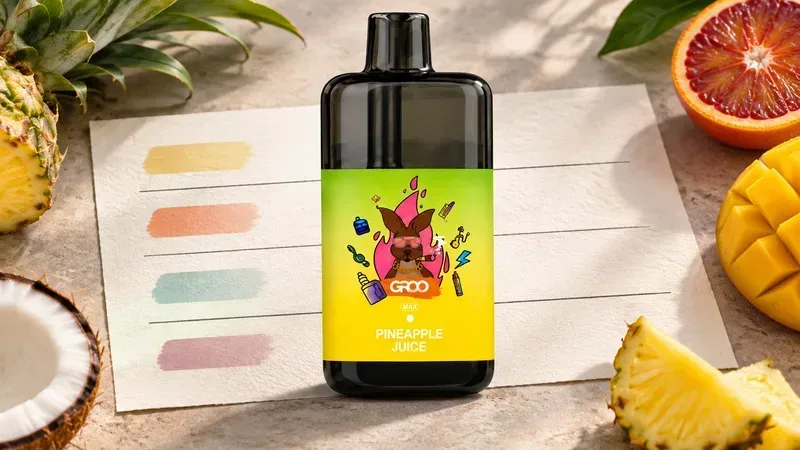
Fruit aroma and perceived sweetness
Fruit aroma describes which fruit a smell or flavour brings to mind first. For instance, Pineapple Juice points to one main fruit, while Coconut Pineapple adds the idea of a softer coconut note. Similarly, Blood Orange Mango suggests a pairing of citrus aroma and ripe mango. The names leave the balance between those notes open.
Perceived sweetness describes how sweet the overall flavour seems. For example, the smell of ripe banana can suggest sweetness before you taste it. Likewise, the word mango might bring ripe fruit to mind, even when the label also mentions citrus. A sweetness description cannot establish whether the formula contains sugar or a particular sweetener.
Tang and cooling
Tang refers to the sharp impression you might associate with pineapple, lime, or another tart fruit. For example, Blood Orange Mango suggests a possible citrus edge alongside the mango. Conversely, Coconut Pineapple may call to mind a rounder fruit blend. Those associations illustrate the wording and leave the actual intensity open.
Cooling describes a sensation that can sit alongside the fruit notes. For instance, the word Ice in Banana Ice explicitly signals that effect. Meanwhile, Pineapple Juice signals cooling through the Groo Vapes description, even though the product name leaves it implicit. Neither wording identifies the cooling agent or its concentration by itself.
In practice, read all four dimensions separately. A label can suggest ripe fruit and a sharp finish at the same time. Likewise, a cooler finish may draw your attention away from the aroma without telling you how much flavouring the liquid contains.
What the 10000-Puff Claim Means in Practice
Both product listings advertise up to 10,000 puffs for GROO Max Pineapple Juice. The phrase up to presents an upper estimate under the conditions behind the claim. However, the listings give too little testing detail to turn that figure into a universal count or a reliable number of days.
Why two users may get different counts
Imagine two people each take 100 draws from separate units of the same model. One person takes mostly one-second draws, while the other takes mostly three-second draws. In that simplified example, their cumulative draw times are 100 seconds and 300 seconds. They have counted the same number of puffs despite drawing for very different lengths of time.
Longer draws generally keep the heater active for more time, which can use more liquid and battery energy per draw. Additionally, airflow and the interval between draws can affect how a device behaves. The example shows why the count can vary. It cannot predict a precise result for either person.
Battery behaviour adds another variable. For example, a battery may stop powering the heater while liquid remains in the reservoir. Conversely, a device that supports charging may still stop producing usable aerosol when its liquid runs low. How a tester defines the end of device life therefore matters as much as the number on the carton.
What makes a puff-count comparison fair?
To compare two advertised counts, look for a shared test method. Specifically, check whether both tests used the same draw length, airflow, rest interval, and battery or charging conditions. Also look for the point when counting stopped, such as battery cutoff or loss of usable aerosol.
In practice, comparable test results can help you compare device life under those particular conditions. Without a published method, a 10,000-puff figure gives you the scale of the seller’s claim. It cannot tell you how many puffs your own unit will deliver. It also cannot tell you how much nicotine you would absorb in a draw.
Which Specifications and Nicotine Labels Should You Check?
The two public listings agree on three claims for GROO Max Pineapple Juice:
- Puff estimate of up to 10,000 draws.
- Prefilled liquid volume of 12 mL.
- Advertised nicotine strength of 5%, which Groo Vape Australia also expresses as 50 mg/mL.
Both pages describe a disposable format that does not require refilling. However, their agreement establishes what the listings advertise. The carton and instructions for your exact unit are the place to begin checking which claims apply.
Where the charging and hardware claims conflict
Groo Vape Australia lists a 650 mAh battery and USB Type-C charging. Meanwhile, Groo Vapes describes the same named product as requiring no charging. Those descriptions give conflicting guidance on whether recharging belongs in normal use. The listings leave the reason for that difference unclear.
Therefore, match the exact model and any version identifier on the carton, device, and leaflet. Look for an explicit statement that the unit supports charging, together with instructions for that model. If the instructions are missing or conflict with the carton, contact the manufacturer or importer before attempting to charge it. A connector-shaped opening alone gives you too little information.
Likewise, a battery capacity rating tells you how much electric charge a battery can store under specified conditions. It gives you no fixed runtime or puff count. Keep the model identifier handy when asking about hardware, especially if a seller uses the same photo for several versions.
How to read the nicotine statement
Look for the nicotine warning and the concentration on the side or back of the carton. Specifically, mg/mL means milligrams of nicotine per millilitre of liquid. For example, the 50 mg/mL listing describes the concentration in the reservoir liquid. It gives no measured nicotine dose for an individual puff.
The percentage format deserves a closer look if the package uses different wording from the listing. In particular, use the stated mg/mL figure when available and check how the manufacturer defines the percentage. Also keep liquid volume separate from concentration. A 12 mL reservoir tells you how much liquid the listing claims the device holds.
Finally, leave the unit unused if its nicotine label is missing, unreadable, or inconsistent with accompanying paperwork. Note the batch number and ask the manufacturer or importer to confirm the formulation for that unit.
Nicotine Risks, Product Authenticity, and Local Rules
Nicotine is highly addictive. According to the U.S. Centers for Disease Control and Prevention, vaping carries particular risks for youth, young adults, and pregnant people. Adults who have never used tobacco products should avoid starting. Additionally, vape aerosol can contain harmful substances, so a nicotine-free label addresses only one part of the risk.
Liquid nicotine poses a poisoning risk if someone swallows it or gets it on their skin or in their eyes. If you suspect exposure, promptly contact your local poison information service for instructions. Call emergency services if the person has trouble breathing, collapses, or has a seizure.
How to check product identity
Start by matching the brand, model, and flavour printed on the device with the information on its carton. Additionally, check the seal, batch or lot number, nicotine warning, and manufacturer or importer details. If the manufacturer offers a verification code, enter it through a manufacturer site you have independently identified.
However, a code or a convincing box has limits. Labels and codes can be copied. If the package details conflict or the manufacturer cannot confirm the batch, keep the device unused while you seek clarification.
Which rules apply where you live?
Check the relevant health or tobacco regulator for minimum age, permitted products, and restrictions on sales or imports. Likewise, consult the rules at your destination if you plan to travel with a vape. Online listings may remain visible even where local law prohibits supply.
For example, Australia’s Therapeutic Goods Administration says Australian law bans the sale of disposable vapes, including nicotine-free versions. Other jurisdictions set their own requirements. Depending on the location, those may cover flavour restrictions, nicotine concentration, product authorisation, or where adults can legally use a device.
Safe Storage, Battery Handling, and Disposable Vape Disposal
Store the device in a cool, dry place out of the sight and reach of children and pets. For example, choose a secure cupboard away from food, drinks, direct sunlight, and heaters. Additionally, keep the package or leaflet nearby so you can find the nicotine statement and handling instructions.
What to do if the device looks damaged
Check the casing for cracks, swelling, or leaks. If the device becomes unusually hot or shows damage, stop using it and keep it off the charger. Avoid touching leaked liquid or taking the case apart. For smoke or fire, move away and call emergency services.
Only charge a device if its exact instructions explicitly support charging. Furthermore, follow the manufacturer’s instructions for the power supply and cable. The U.S. Food and Drug Administration advises charging on a stable surface where you can see the device. Keep it away from flammable materials and extreme temperatures.
Where to take an intact disposable vape
An apparently empty vape can still contain liquid residue and a battery. Therefore, keep the device intact and out of household rubbish and curbside recycling. The U.S. Environmental Protection Agency recommends household hazardous waste collection for e-cigarettes because nicotine residue and damaged batteries pose risks.
Start with your council or municipal waste authority and ask which site accepts whole disposable vapes. Specifically, tell the collection service the device has a built-in battery and may contain nicotine residue. Confirm its drop-off hours and transport instructions before visiting. If the device leaks or has battery damage, ask the service how to handle it before moving it.
Conclusion
Pineapple Juice evokes a sweet tropical drink, and the Groo Vapes listing describes a cool finish. However, the name leaves the ingredients unconfirmed, and different people may notice different notes. Likewise, 10,000 puffs is an advertised upper estimate, and your device may deliver fewer.
Start with the exact package and leaflet to check the nicotine warning, ingredient information, and charging support. Then confirm local rules with the relevant regulator. Finally, ask your local waste authority where you can take an intact disposable vape for collection.
