
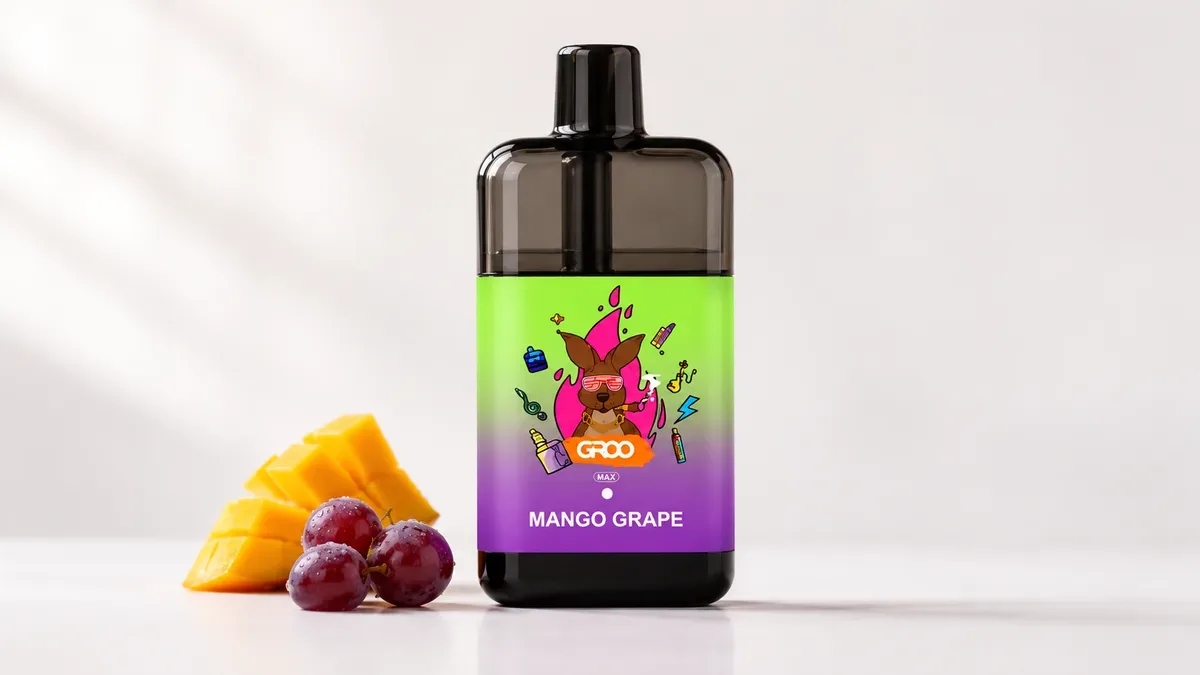
A box says “Mango Grape” and “10000 Puffs,” but what do those claims actually confirm? GROO Max 10000 Puffs Mango Grape: Tropical Fruit Flavour Labelling requires more than reading the largest words. The flavour name and puff figure do not reveal every ingredient, nicotine level, or legal detail. Therefore, you must examine the exact package, device, leaflet, and market-specific documentation.
Retailer listings can also differ from the physical product. For instance, a listing may omit a puff qualifier or display photographs from another market. Moreover, regulations can affect warnings, flavour presentation, device design, and sale eligibility. This guide explains how to record each claim and investigate any difference before use, listing, or distribution.
1. GROO Max 10000 Puffs Mango Grape and Tropical Fruit Flavour Labelling
How to read the product name
Start by separating the name into distinct claims. GROO Max appears to identify the product line, while Mango Grape names the flavour. Meanwhile, 10000 Puffs communicates a stated puff-count claim. Each part serves a different purpose and should not substitute for technical or safety information.
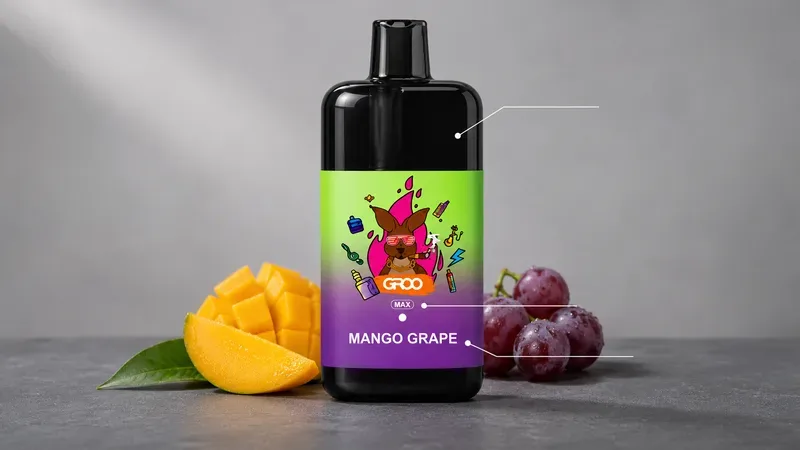
Next, inspect every panel of the outer carton. Specifically, look for separate fields covering nicotine strength, ingredients, warnings, liquid volume, battery information, and responsible business details. Additionally, check the device and any enclosed leaflet for matching information. A bold front-panel name never confirms details that should appear elsewhere.
Exact specifications can vary between markets or product versions. Therefore, record the wording from the unit in front of you instead of relying on memory. Note punctuation, qualifiers, units, and nearby symbols. Even a small difference, such as “up to,” can materially change a claim.
What Mango Grape describes
Mango Grape is best treated as a mango-and-grape flavour designation. It describes the intended flavour identity rather than a verified ingredient formula. In fact, fruit terminology alone does not prove the presence of fruit, juice, puree, extracts, or natural flavourings. It also provides no evidence of vitamins or nutritional value.
Check the ingredient panel before describing what creates the flavour. Moreover, quote the exact flavour wording only after comparing the carton, device, leaflet, and verified listing. Do not add claims about sweetness, cooling, aroma, or aftertaste without reliable supporting information. Personal impressions should never become factual package descriptions.
Images require similar care. For instance, pictures of mangoes or grapes may be subject to specific presentation rules. Therefore, businesses should confirm whether the product contains the represented ingredient or flavouring where local rules require that connection. The named flavour alone cannot answer that question.
2. What the 10000-Puff Claim Means in Practice
How to interpret the number
A puff total usually represents an estimate produced under particular operating or test conditions. It should not automatically become a promise that every user receives exactly 10,000 draws. Therefore, check whether the package says “up to,” “approximately,” or another qualifier. Preserve that wording whenever you record or publish the claim.
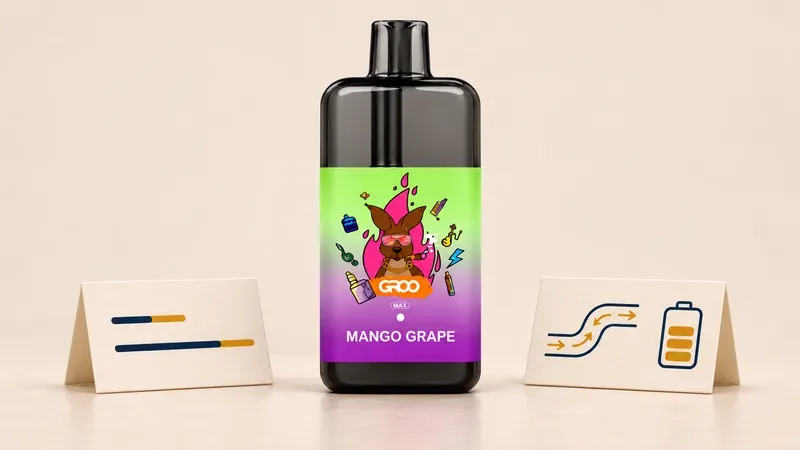
Next, look for a published test method from the responsible manufacturer or importer. Useful documentation may identify puff duration, intervals between puffs, airflow settings, and the point when testing ends. However, such information may not appear on the retail carton. If no reliable method is available, report that documentation gap instead of presenting the figure as guaranteed.
Consider a simple comparison. One person may take brief one-second puffs, while another takes longer three-second puffs. The second pattern can consume more liquid and battery energy per draw. As a result, both users may receive noticeably different puff totals from otherwise similar units.
Why delivered puff counts vary
Puff duration and frequency directly affect product use. Moreover, airflow, temperature, battery behaviour, and automatic cutoff settings may influence each draw. Manufacturing tolerances can also create variation between units. Therefore, an advertised maximum cannot predict every user’s experience.
Several factors may affect the delivered count:
- Puff duration: Longer draws can use more liquid and energy.
- Puff frequency: Rapid use can affect heating and battery performance.
- Airflow: Different airflow behaviour can change vapour production.
- Battery condition: Charging performance and power management may affect operation.
- Production variation: Components can differ within permitted manufacturing tolerances.
Most importantly, keep the puff figure separate from other specifications. Liquid volume and battery capacity require their own independently stated values and units. Never calculate either value from “10000 Puffs.” Without verified specifications and testing data, such estimates can mislead readers.
Likewise, a large puff number does not establish device type or legal status. A rechargeable product may still fail another local requirement for reuse. Conversely, a prominent puff claim says nothing about product authorisation. Review the complete design and documentation for the destination market.
3. Where to Find Ingredients, Nicotine Strength and Warnings
Ingredient disclosure
Begin with the ingredient panel on the outer packaging. Additionally, inspect the leaflet because it may contain information omitted from the main display panels. Record every listed ingredient exactly, including collective terms such as “flavourings.” Avoid expanding broad categories into specific substances without supporting documents.
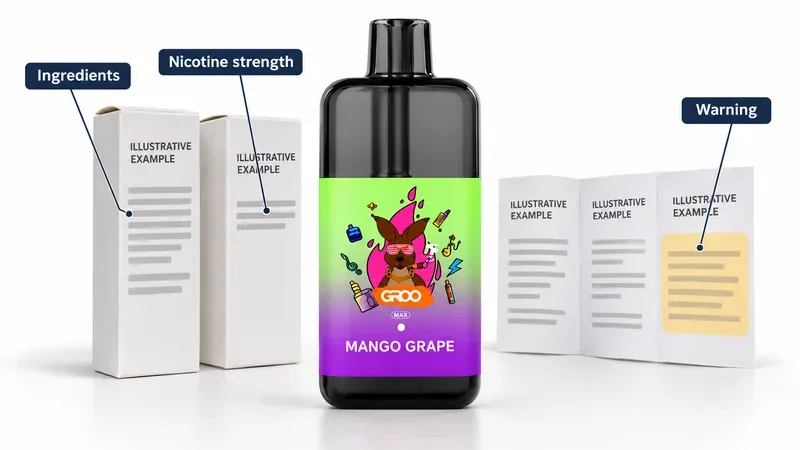
Some labels may list base liquids, nicotine, and flavourings as grouped categories. However, the required level of detail depends on the relevant jurisdiction and product classification. Compare the disclosure with local requirements for the exact variant. Where available, request supporting documentation from the responsible supplier, manufacturer, or importer.
Completeness cannot be judged from visual neatness alone. For instance, a well-designed panel may still omit information required in its intended market. Therefore, confirm the market version, product identifier, and applicable rules. A retailer description should not replace the package disclosure.
Nicotine concentration and units
Look for a dedicated nicotine-strength field on the carton or unit packaging. Specifically, record both the printed number and its unit, such as mg/mL or a percentage. Then compare that entry with the leaflet and a verified market-specific listing. Any mismatch deserves investigation before use or sale.
Nicotine concentration and total nicotine are separate measurements. Concentration describes nicotine relative to a stated liquid volume. Total nicotine depends on both concentration and the amount of liquid present. Therefore, one measurement should not be presented as the other.
A missing strength field does not prove that a product contains no nicotine. Moreover, flavour wording and puff totals provide no reliable answer about nicotine content. Treat the omission as unresolved until a responsible source confirms the product’s status. Never infer “nicotine-free” from silence.
Warnings and age notices
Check the front, back, sides, and any leaflet for nicotine warnings. Moreover, examine the warning’s wording, visibility, placement, and presentation against local requirements. Look for notices about children, accidental exposure, and safe storage. Vaping carries risks, and nicotine can cause dependence.
Legal purchase ages and point-of-sale duties vary between markets. Therefore, confirm the rules where the product will actually be sold. Package age symbols may not satisfy every retail obligation. Online sellers should also verify any required age notices and age-verification controls.
For a jurisdiction-specific example, consult the UK tobacco and related products regulations. These rules include packaging and leaflet obligations for relevant products. However, applicability depends on the product, territory, and current legal framework. Businesses should seek competent advice when classification remains uncertain.
Finally, compare warnings across every available source. The carton, device, leaflet, and listing should not contradict one another. As a result, conflicting nicotine or safety statements require prompt escalation. Photograph each panel before contacting the responsible business.
4. How Flavour Names and Vape Listings Are Regulated
Packaging rules and sale eligibility
Packaging rules can cover names, imagery, warnings, health claims, and presentation. Additionally, age restrictions and product-notification systems may apply. Check the rules for the intended destination rather than the seller’s location alone. A package acceptable in one market may not satisfy another market’s requirements.
The MHRA guidance on names and presentation explains the approach in Great Britain. Notably, misleading safety, health, lifestyle, and environmental claims can create problems. Food imagery also requires careful review. Therefore, businesses should assess both words and visual features.
Packaging compliance and sale eligibility are different questions. A carton might carry warnings yet remain ineligible because of product design, flavour restrictions, or authorisation requirements. For example, the UK guidance on single-use vapes explains restrictions on selling or supplying single-use devices. Confirm whether the exact GROO Max variant meets the destination market’s definition of a reusable product.
What retailers should publish
Retailers should match listing titles, descriptions, photographs, and variant fields to verified packaging. Moreover, structured product data should carry the same flavour, model, nicotine value, and market version. Preserve qualifiers attached to puff counts. Never turn an estimated maximum into an unconditional promise.
A reliable listing review should cover:
- The exact product-line and flavour wording.
- The market-specific nicotine strength and unit.
- The complete puff-count qualifier.
- Applicable warnings and age information.
- Current photographs of the actual package.
- Verified ingredient statements without unsupported additions.
Avoid health claims, youth-oriented language, and playful imagery that may breach local rules. Furthermore, do not imply that fruit flavouring provides nutritional or wellness benefits. The FDA overview of e-cigarette regulation provides relevant information for the United States. Retailers must still review federal, state, and local requirements for online presentation and sale.
5. Authenticity Checks and a Practical Label Review
Verify the exact unit
Inspect the package before opening it. Look for torn seals, altered labels, damaged print, or signs that panels were replaced. Additionally, identify the manufacturer, importer, or other responsible business where required. Confirm that contact information appears credible and matches reliable documentation.
Next, record batch, lot, serial, or product identifiers where present. Compare markings on the device with those on the carton and leaflet. However, not every identifier will appear in all three places. The important question is whether the available details form a consistent product record.
If the package provides a security code, use an independently confirmed manufacturer channel. Do not trust a verification address merely because it appears on a suspicious label. Moreover, check seller authorisation where a dependable programme exists. A successful code result should support other checks, not replace them.
Run a label-review checklist
A written checklist makes differences easier to spot. Specifically, record the model, flavour, intended market, lot, and package language. Then photograph all sides under clear lighting. Retailers should retain supplier documents beside these images.
- Confirm the exact model and Mango Grape flavour wording.
- Record the puff claim and every accompanying qualifier.
- Copy the nicotine value and unit exactly.
- Review the ingredient panel and enclosed leaflet.
- Check nicotine warnings, age notices, and exposure warnings.
- Identify responsible business and contact details.
- Record batch, lot, serial, or security identifiers.
- Review storage, battery, safety, and disposal directions.
- Compare the evidence with the online listing.
For retailers and distributors, keep dated pack images and supplier documentation. Furthermore, reconcile those records whenever packaging or specifications change. Do not silently reuse photographs from a different nicotine strength or market. Accurate records help resolve customer questions and regulatory checks.
Handle missing or conflicting information
When information conflicts, record the difference without guessing. For instance, photograph a carton showing one nicotine strength beside a leaflet showing another. Note the seller, purchase date, lot, and market. Therefore, the responsible supplier can investigate a clearly documented case.
Readers should avoid using a unit when essential safety or identity details remain unresolved. Meanwhile, retailers should hold the affected listing or stock rather than improvising an explanation. Contact the manufacturer, importer, or responsible supplier through a verified route. Consult the relevant local authority when necessary.
Do not cover an incorrect label with an informal sticker unless the applicable rules permit a controlled correction. Additionally, never combine documents from different variants to fill missing information. That approach can create a misleading record. Resolve the exact unit on its own evidence.
6. Battery Handling, Storage and Vape Disposal
What to look for on the pack or leaflet
Check the package and leaflet for storage, battery, leakage, exposure, and disposal instructions. Report only the directions that appear on the relevant market-specific unit. However, several general precautions remain sensible while you investigate. Keep the device away from excessive heat and out of reach of children and pets.
Do not use a device that leaks, overheats, swells, cracks, or shows battery damage. Moreover, stop using it if operation becomes unusual. Avoid touching leaked liquid with bare skin. Follow official poison-control or emergency guidance after suspected ingestion, significant skin exposure, or concerning symptoms.
Storage conditions can affect safety and performance. Therefore, protect the unit from direct sunlight, moisture, crushing, and extreme temperatures. Do not leave it inside a hot vehicle. Additionally, follow the supplied charging instructions if the exact device supports charging.
Never assume a charging port proves full reusability. Market definitions may also consider refillability and replaceable components. Furthermore, use only compatible charging equipment described by reliable instructions. A damaged device should not be charged.
Where to take a used device
A used vape may contain a battery and residual e-liquid. Consequently, it needs a suitable local collection route. Ask your local waste authority about battery, electrical equipment, or household hazardous-waste services. Retail take-back programmes may also operate in some locations.
In the United States, the EPA guidance on safe e-cigarette disposal directs households to hazardous-waste collection. It advises against putting e-cigarettes in household trash or curbside recycling. Lithium batteries can cause fires when compacted or damaged. Meanwhile, nicotine residue can endanger workers and the environment.
Do not dismantle the device or remove an embedded battery unless official instructions specifically require safe user removal. Moreover, do not puncture, crush, or burn the unit. Keep damaged devices isolated from heat and combustible materials while seeking local advice. Follow any transport directions supplied by the collection service.
7. Frequently Asked Questions About GROO Max Mango Grape Labelling
Does Mango Grape mean the product contains real fruit?
No. Mango Grape communicates a flavour designation, not proof of fruit content. Therefore, check the ingredient panel and any enclosed leaflet for documented ingredients. Request reliable supporting information before claiming that the formula contains juice, extracts, or natural flavourings.
Will every unit deliver 10000 puffs?
No puff total should automatically be treated as guaranteed. Puff duration, frequency, airflow, battery behaviour, and manufacturing tolerances can change actual delivery. Moreover, check whether the label says “up to” and whether a test method exists. Preserve every qualifier when quoting the figure.
Where do I find nicotine strength and age notices?
Check the outer carton, unit packaging, and enclosed leaflet. Specifically, record the nicotine value with its printed unit and compare all sources. Age notices may appear on packaging or at the point of sale. However, you must confirm legal-age and retail requirements for the relevant market.
How can I check a suspicious or inconsistent box?
Compare the carton, device, leaflet, and verified listing. Additionally, photograph conflicting details and record the batch or serial identifiers. Verify any security code through an independently confirmed official channel. Seek confirmation from the responsible supplier before using or selling the unit.
What if the packaging has no disposal instructions?
Contact your local waste authority and ask about battery or hazardous-waste collection. Do not place the device in ordinary rubbish or curbside recycling without local confirmation. In the United States, follow the EPA guidance on safe e-cigarette disposal. Additionally, avoid dismantling a device with an embedded battery.
Can the same flavour name be used in every market?
Not necessarily. Naming, imagery, presentation, product design, and sale eligibility can face different rules across markets. Therefore, review the destination market before importing or publishing a listing. The MHRA guidance on names and presentation offers a market-specific example for Great Britain.
Conclusion
Mango Grape identifies the named flavour, while the 10000-puff figure communicates a separate estimated performance claim. However, neither statement confirms nicotine strength, ingredients, battery capacity, liquid volume, or sale eligibility. Those details require individual checks. The exact package and leaflet for the intended market provide the starting point.
Compare the physical pack, device, leaflet, and retailer listing using the checklist above. Additionally, preserve puff qualifiers and record nicotine values with their units. If essential details remain missing or inconsistent, document the issue clearly. Confirm it with the responsible supplier, manufacturer, importer, or local authority before using, listing, or distributing the product.
