

Does the box in front of you say Blackberry Pomegranate Cherry, or does only the online listing use that name? GROO Max 10000 Puffs Blackberry Pomegranate Cherry: Product Naming and Packaging Identification starts with the words you can actually read. However, a shortened title or a small device label can leave one important detail unclear. Compare each part of the name before assigning the variant to a catalog record.
Start with the box and note where each identifier appears. Then compare the device markings, product photos, and any record tied to the item’s barcode or SKU. A comma in a number is easy to resolve. A missing fruit name takes more evidence.
GROO Max 10000 Puffs Blackberry Pomegranate Cherry: Full Product Identification
The complete name
Use GROO Max 10000 Puffs Blackberry Pomegranate Cherry as the full variant name when the item’s labels support it. The GROO product page names the Max flavor Blackberry Pomegranate Cherry and lists an estimate of up to 10,000 puffs. However, that page establishes the catalog wording for the variant. You still need to check that the package in your hands matches it.
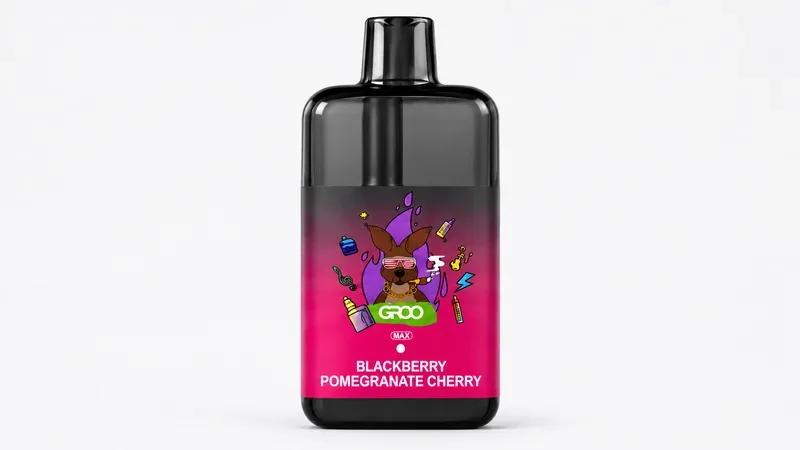
The complete wording may occupy several lines or panels. For instance, the front might display GROO Max prominently, with the flavor on a smaller label elsewhere. Read the whole package before deciding a word is missing. Then record which panel supplies each piece of the name.
Why the complete wording matters
“GROO Max 10000 Puffs” identifies a line and a puff tier but leaves the flavor open. Likewise, “GROO Blackberry Pomegranate Cherry” leaves the line and tier open. Both titles sound specific enough to enter into a catalog. However, either could lead someone to attach photos or stock details to the wrong record.
Fruit names can be especially easy to overlook when two listings sit side by side. For example, GROO also lists a Max flavor called Cherry Pomegranate. Those two words overlap with the three-part flavor under review. Therefore, check the complete phrase before treating both titles as references to the same item.
Identification versus product claims
For identification, treat 10000 Puffs as the stated puff-count designation. It gives you a label to compare across the box, the listing, and the catalog. However, a matching designation does not establish how many puffs an individual device will deliver. GROO describes the figure as an upper estimate that depends on use.
Exact-match checklist
Find all four elements across the evidence you can tie to the item. Specifically, note the source for each word or number. A clear label photo can help someone else repeat the check without relying on your memory.
- GROO identifies the brand.
- Max identifies the product line.
- 10000 Puffs identifies the stated puff tier.
- Blackberry Pomegranate Cherry identifies the full flavor variant.
Once you have all four elements, look for any competing wording on the device or box. If the evidence agrees, the full name belongs in the catalog. However, if a label explicitly names a different variant, pause the update and keep both readings for review.
How Each Part of the GROO Max Product Name Works
Brand identifier
GROO is the brand name. A retailer may print it as “Groo” in a title, while the box may use uppercase lettering. However, capitalization affects the presentation more than the identity when the spelling is the same. Store GROO in the brand field so readers can find it without sorting through flavor names.
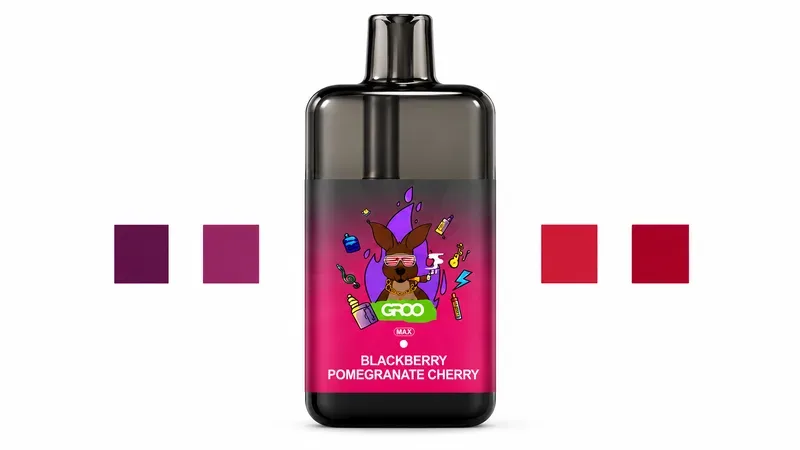
Product-line identifier
Max tells you which GROO line the item belongs to. It matters when similar flavor wording turns up in searches that cover several products. For instance, a title containing GROO and the three fruits still leaves the line unresolved. Look for Max on the item or in a record that clearly identifies that item.
Puff-count designation
10000 Puffs describes the stated puff tier associated with this name. Secondary listings may show the number as “10000,” “10,000,” or “10K.” However, “10K” works as an equivalent only when the surrounding text clearly refers to puffs. If the number appears without context, compare it with the box before entering it.
Keep the printed wording when it gives you more context. For example, “up to 10,000 puffs” can support the same tier while preserving the qualification in your notes. Similarly, a title with “10,000” can match “10000” when both refer to the puff designation.
Flavor identifier
Blackberry Pomegranate Cherry is the full flavor name. Read it one word at a time, especially if the label wraps onto two lines. In fact, “Blackberry Pomegranate” still leaves cherry unconfirmed, even if the picture shows red fruit. A confirmed record should account for all three words in the published flavor name.
Check the sequence as well as the spelling. For instance, a listing might rearrange the names to “Cherry Blackberry Pomegranate.” The three words give you a reason to investigate the match. However, use the supported packaging or brand wording for the catalog title.
Structured catalog fields
Store the brand, line, puff designation, and flavor separately while keeping the full display name. Then use those four fields to compare incoming records. A search for Max can find the whole line, while a flavor filter can isolate the specific variant. Moreover, a blank field makes missing evidence visible at a glance.
Preserve the source spelling beside the standardized values. For instance, a photo might show “GROO MAX” and “10,000 PUFFS,” while your title uses “GROO Max 10000 Puffs.” Both entries serve a purpose. The title stays consistent, and the notes let a reviewer trace it back to the label.
Wording to Look for on the Box and Device
Front-panel text
Begin with a straight-on view of the box under even light. Look for GROO, Max, the puff designation, and the full phrase Blackberry Pomegranate Cherry. However, read the smaller print too, since the largest text may identify only the line. Take one picture of the entire front and a close-up if the flavor is hard to read.

Notice where you see each word. For example, if the flavor appears on a sticker below the main design, capture both in the same frame. That wider view shows which box carries the sticker. Then take a second photo that makes the label easy to transcribe.
Side, back, and bottom panels
If the front leaves a detail open, rotate the package and check the remaining panels. Pay particular attention to the area around the barcode and any small stickers. Also, check the bottom flap and regulatory panels for product identifiers or company details. Transcribe each code exactly, including any leading zeroes.
- Capture the barcode and the digits printed beneath it.
- Record any labeled SKU, model reference, and batch or lot code.
- Note manufacturer or distributor details and their location on the box.
Keep the codes in separate fields if the label gives them separate names. For instance, a lot number can tie the box to a batch, while a SKU can tie it to a catalog entry. However, a code with no label may need confirmation from the supplier or brand before you assign it a role.
Device markings
If the device is available for inspection, read the body, base, and area near the mouthpiece. Then check any visible protective label for printed or engraved text. Look for the brand, line, puff designation, and flavor. A compact marking may show only some of those details, so record exactly what appears.
For instance, a device that reads “GROO MAX” agrees with those two words on the box. Its markings leave the flavor and puff tier to other evidence. However, a device that spells out a different flavor creates a conflict. Photograph that text in context so the reviewer can see which unit carries it.
Using verified images
When you only have images, look for clear photos from the brand or a traceable supplier record. Confirm that the photo caption, visible label, and associated product record refer to the same variant. Moreover, ask for images of the actual item if the listing uses a generic promotional render. A front photo and barcode close-up can resolve different gaps.
Image limitations
Color, fruit graphics, and device finish can help you locate a relevant image. However, lighting, filters, and reused product photos can make those cues unreliable. For instance, a dark berry illustration gives you little evidence about the exact flavor wording. Base the final match on readable identifiers tied to the item.
Matching an Abbreviated Listing to the Packaging
Start with the product hierarchy
Compare the listing against the package in the same order every time. Start with GROO, then look for Max. Next, check the stated puff tier and read the flavor from beginning to end. By the time you reach the last field, you can see exactly which words the listing leaves open.
Suppose the title reads “Groo Max 10K Blackberry Pomegranate Cherry.” The brand, line, and flavor align with the full name. However, confirm that “10K” refers to puffs by checking the listing details or the associated package. Then compare any code shown in both places.
Recognize harmless formatting differences
Ignore capitalization, extra spaces, and purely decorative punctuation during the comparison. For example, “GROO MAX 10,000 PUFFS – BLACKBERRY POMEGRANATE CHERRY” can match a package that uses separate lines. Similarly, a hyphen between the line name and the puff tier may simply divide the title. Preserve the original wording in your notes.
Once the formatting differences fall away, compare the remaining words and digits. “10000” and “10,000” express the same value. However, “12000” expresses a different one. A comma can disappear during cleanup, but a change in digits calls for another look.
Do not infer a missing flavor
A listing titled “GROO Max 10000 Puffs” can describe several flavors in the same range. For example, it might use one page with a flavor selector and a shared product image. Check which flavor the selected option names and whether its code matches the box. If the page leaves that link unclear, keep the flavor unresolved.
Test abbreviated flavor wording
A stock label reading “BPC” could be consistent with Blackberry Pomegranate Cherry. However, those initials need a reliable connection to the full wording. Look for the same SKU on a package with the complete flavor name or in a traceable catalog. Apply the same check to “Blackberry Pomegranate” before adding cherry to the title.
Example comparison workflow
Imagine a listing says “Groo Max 10K BPC.” Meanwhile, the box shows all three fruits, and a supplier record connects that box’s SKU to the listing. First, standardize the capitalization and check the puff tier. Then use the tied SKU to confirm that the initials expand to the flavor on the box.
- Exact match. All four identifiers agree, including any shorthand resolved through supporting evidence.
- Probable match. The available evidence points to the variant, but one detail still needs confirmation.
- Ambiguous. The listing leaves enough information open for multiple variants to fit.
- Conflict. Two sources tied to the item give incompatible identifiers.
Without the SKU link in the example, the physical box may still establish its own identity. However, the listing remains a separate question. Keep the link between the listing and that box provisional until you can confirm it.
Resolving Conflicts Between Box, Device, and Listing Labels
Establish an evidence order
Start with readable text on the physical box and device. Next, compare a verified SKU or barcode record that identifies the same unit or variant. Then consult the retailer title and description for context. Give unverified marketplace wording the least weight, especially when the page shows several flavors.
For a GS1 barcode, use the Verified by GS1 service to check the number printed under the bars. GS1 can identify the company that assigned the number and provide product details when its database has them. However, a company-level result may leave the flavor open. Record the level of detail the lookup actually returns.
Separate formatting variation from substantive conflict
“BLACKBERRY POMEGRANATE CHERRY” and “Blackberry Pomegranate Cherry” carry the same words in the same order. Likewise, “10,000 Puffs” and “10000 Puffs” give the same stated count. However, a device label that explicitly says “Cherry Pomegranate” needs investigation if the box names all three fruits. A different puff count needs the same attention.
Distinguish a label that uses a short code from one that names a competing variant. For instance, “BPC” leaves room for confirmation against a SKU record. A fully spelled-out flavor with different wording gives you something specific to investigate. In either case, retain the exact text so the next reviewer can judge it directly.
Check whether components were mixed
Ask where the box and device came from and whether they were together when received. For example, someone may have returned a display unit to a similar box. Meanwhile, a retailer might reuse photos or copy details between variants. These possibilities help you decide what to inspect next while the mismatch remains open.
Photograph the box and device together, then take close-ups of the conflicting markings. If you only have listing photos, ask for a fresh image of the label on the actual item. Moreover, compare the new photo with the same SKU or barcode in your notes. That gives you a way to trace the correction.
Record identifying evidence
- Transcribe the exact box and device wording, including the location of each label.
- Record the barcode digits, SKU, and any batch or lot code in labeled fields.
- Capture the manufacturer details, image source, and inspection date.
- Describe each discrepancy and identify the sources that disagree.
Avoid unsupported corrections
Mark the record for review when the box and device disagree. Then note what evidence would settle the issue, such as a readable device photo or a supplier record for the barcode. Keep both source readings visible while you check. Once you resolve the discrepancy, document what changed and which evidence supports the final name.
A Reliable Catalog Entry and Verification Checklist
Recommended display name
Use GROO Max 10000 Puffs Blackberry Pomegranate Cherry when the evidence supports all four naming elements. A single display name gives readers a consistent way to find the verified variant. However, keep it provisional while any material discrepancy remains open. An exact-looking title can hide how much of the record still needs checking.
Required catalog fields
- Brand — GROO
- Product line — Max
- Puff-count designation — 10000 Puffs
- Flavor — Blackberry Pomegranate Cherry
Attach the full display name and any supporting codes to those fields. Then record which source confirms the flavor, especially when the device carries only the brand and line. A short note such as “full flavor on bottom sticker” helps someone verify the entry later.
Verification checklist
- Confirm the photos show readable wording on the relevant box and any available device.
- Check that the evidence supports blackberry, pomegranate, and cherry in the full flavor name.
- Verify that any “10K” or “10,000” wording refers to the same stated puff tier.
- Check that the brand, product line, and any model identifiers agree across sources.
- Compare any SKU or barcode with a record that identifies the product or variant.
- Confirm that attached images show the physical item associated with the record.
Editorial notes
Keep the package spelling, capitalization, spacing, and punctuation in the source notes. Meanwhile, apply your house style consistently to the customer-facing title. For instance, the notes can preserve “10,000 PUFFS” while the display name uses “10000 Puffs.” This makes the source easy to audit when someone reviews another shipment.
Final decision rules
Publish the full name once the evidence supports every field. Otherwise, mark the record incomplete if you lack a required detail, or ambiguous if multiple variants still fit. Use conflicting when sources tied to the item give different identifiers. Then request the specific photo or code record that could settle the question.
Conclusion
“GROO Max 10000 Puffs” leaves the flavor open. To identify the exact variant, compare GROO, Max, 10000 Puffs, and Blackberry Pomegranate Cherry across the box, device, images, and catalog record. However, give differences in wording more attention than differences in capitalization or comma placement. Record missing or conflicting identifiers and resolve them before naming the variant.
Before you publish or stock the item, photograph every readable label and record its SKU or barcode. Then verify all four naming elements against the physical packaging. If one label raises a question, keep that label with the record until you can confirm the match.
