

Whether you smoke, vape, or use another nicotine product, trustworthy help may already be within reach. So, how can Australians access free nicotine cessation resources without getting lost among changing rules and costs? Free counselling, apps, planning tools, and health services offer several practical starting points. However, nicotine replacement products and prescription medicines may still involve charges.
Australia offers many ways to get support, yet availability differs between locations and programs. Additionally, eligibility, funding, referral rules, and medicine costs can change over time. The following guidance explains where to begin and which questions to ask. It also separates genuinely free support from treatments that may require payment.
1. How Australians Can Access Free Nicotine Cessation Resources
Start with support that is widely free
Free help usually begins with counselling rather than medication. Quitline, quit-planning resources, recognised apps, and government health information generally cost nothing. Additionally, some community health consultations and public health programs provide free support. A GP or pharmacist may also offer brief advice during another consultation.
However, free advice does not always include free nicotine replacement therapy, known as NRT. Patches, gum, lozenges, sprays, and inhalers often carry standard pharmacy prices. Prescription medicines may involve consultation fees, prescription costs, or Pharmaceutical Benefits Scheme co-payments. Therefore, ask about every possible charge before starting treatment.
A simple pathway for getting started
First, identify every nicotine product you currently use. Include cigarettes, vapes, pouches, shisha, or other products in that discussion. Specifically, record when you use nicotine and what usually triggers it. This information helps a counsellor or clinician understand your level of dependence.
- Contact Quitline on 13 7848 and discuss your nicotine use.
- Create a practical plan for cravings, triggers, and withdrawal.
- Discuss suitable treatments with a qualified health professional.
- Choose a realistic quit date or planned reduction schedule.
- Arrange follow-up support before difficult moments occur.
For instance, someone who vapes soon after waking may need stronger craving support than an occasional user. A clinician can consider that pattern alongside health conditions and current medicines. Meanwhile, Quitline can help prepare strategies for work breaks, social events, or stressful evenings. Together, these steps create a more personalised plan.
Use recognised sources such as Quit.org.au, Australian Government health information, and state or territory health services. Moreover, seek advice from qualified doctors, pharmacists, nurses, and trained cessation counsellors. Avoid unapproved nicotine products and methods supported mainly by promotional claims. Most importantly, confirm current eligibility, opening hours, referral requirements, and costs directly with each service.
2. Quitline Australia: Free Support for Smoking and Vaping
How to contact Quitline
Quitline provides confidential, evidence-based counselling for people across Australia. You can call 13 7848, which spells 13 QUIT on a telephone keypad. Additionally, online callback requests are available through participating jurisdictional services. A GP, pharmacist, nurse, or other health worker can also arrange a referral.
Counselling itself is free, although telephone call charges may depend on your provider and connection method. Operating hours also differ between states and territories. Therefore, check the current hours for your jurisdiction before planning a call. If the service is closed, use recognised online resources while waiting to reconnect.
What a counsellor can help you change
Quitline supports people who want to stop smoking cigarettes, quit vaping, or address another form of nicotine dependence. Counsellors can help whether you feel ready today or remain uncertain. In fact, you do not need a perfect plan before calling. The first conversation can focus simply on your concerns and possible next steps.
A counsellor may explore your motivation, daily nicotine use, previous attempts, and strongest triggers. Moreover, they can explain cravings, withdrawal, treatment options, quit dates, and relapse prevention. They can help you prepare for predictable challenges, such as driving or drinking alcohol. Follow-up conversations can then adjust the plan as your experience changes.
Imagine that Sam always vapes during the afternoon commute. Specifically, a counsellor might suggest removing spare devices and preparing water or sugar-free gum. Sam could also call a friend before leaving work. These small changes reduce automatic behaviour without relying on willpower alone.
Accessible and culturally safe assistance
Aboriginal and Torres Strait Islander callers can request support from Aboriginal Quitline counsellors. Additionally, culturally safe conversations can reflect family, community, and personal circumstances. Interpreter access and multilingual resources can help callers who prefer another language. People with hearing or speech impairments can connect through the National Relay Service.
Relatives and friends may also contact Quitline for guidance. For instance, a counsellor can explain how to listen, encourage progress, and respond calmly after a lapse. Supporters should avoid criticism, threats, or constant monitoring. Instead, they can celebrate progress and ask what kind of help feels useful.
3. Free Apps, Online Tools and Quit-Planning Resources
Reliable digital support
Quit.org.au offers practical information for quitting smoking or vaping. It covers cravings, withdrawal, treatment choices, motivation, and common challenges. Additionally, the website can direct users toward relevant state or territory services. Its guidance can support a plan before, during, and after a quit attempt.
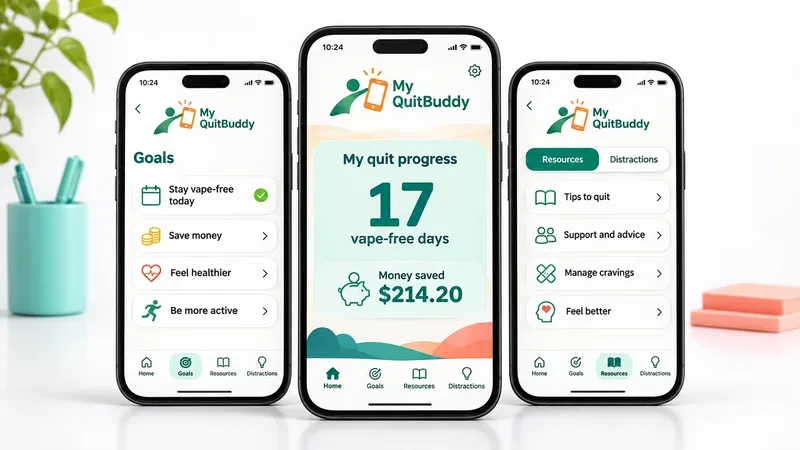
My QuitBuddy is a free app designed for smoking and vaping cessation. Users can set goals, receive personalised reminders, monitor progress, and track money saved. Moreover, the app includes activities for managing sudden cravings. These features can make progress more visible during difficult days.
Build a plan before the quit date
A useful plan begins with personal reasons for quitting. For example, someone might want easier breathing, lower spending, better fitness, or freedom from constant vaping. Next, record when and where nicotine use happens. Patterns often appear within several days.
- Choose a quit date that allows time to prepare.
- Remove cigarettes, vapes, chargers, liquids, and related supplies.
- Tell supportive people what help you would appreciate.
- Plan alternatives for regular smoking or vaping situations.
- Arrange professional support before withdrawal begins.
Cravings usually rise and fall rather than remaining at full strength. Therefore, delay acting, breathe deeply, and drink water while the feeling passes. Additionally, change activities, take a short walk, or contact a support person. A five-minute distraction can create enough space to choose differently.
Digital help for younger people
Teenagers and young adults who vape can also use Quitline and My QuitBuddy. Moreover, reputable online information can help them understand nicotine dependence without judgement. School wellbeing teams, youth health services, and trusted clinicians may offer extra support. A trusted adult can help arrange appointments or remove vaping supplies.
However, young people should obtain age-appropriate advice before using cessation medicines. Privacy also deserves attention when using any digital tool. Specifically, review what personal information an app collects and how it handles that information. Choose recognised Australian health resources instead of anonymous advice or promotional apps.
4. Free and Subsidised Nicotine Replacement Therapy in Australia
Understanding available NRT products
NRT supplies nicotine without the harmful smoke produced by burning tobacco. Available forms include patches, gum, lozenges, oral sprays, and inhalers. However, pharmacies may not stock every product or strength. Personal health needs can also affect which option suits you.
Patches release nicotine slowly over several hours. In contrast, gum, lozenges, sprays, and inhalers act more quickly during breakthrough cravings. A clinician may recommend combining a long-acting patch with a faster-acting product. This approach can provide steady coverage while addressing sudden urges.
For instance, Priya might use a patch for her workday and gum after lunch. That combination may suit her regular cravings better than either product alone. However, dose and timing still need careful consideration. A pharmacist, doctor, or other qualified professional can explain correct use.
What PBS subsidy actually means
Eligible people may access subsidised nicotine patches and certain prescription smoking-cessation medicines through the Pharmaceutical Benefits Scheme. Access can involve a prescription, treatment limits, counselling requirements, and other conditions. Additionally, standard or concessional co-payments may apply. A subsidy therefore does not always mean the product costs nothing.
Over-the-counter NRT often carries the pharmacy’s normal retail price. Moreover, products such as sprays, gum, or inhalers may not receive the same subsidy as prescribed patches. Prices can vary between pharmacies and package sizes. Ask the pharmacist to compare subsidised and non-subsidised options clearly.
Some states, health services, and community programs supply free combination NRT to eligible participants. However, these offers may depend on funding cycles and participating providers. Programs may focus on particular communities or health circumstances. Therefore, never assume that an offer remains available indefinitely.
Support for Aboriginal and Torres Strait Islander people
Aboriginal and Torres Strait Islander people may qualify for reduced medicine costs through applicable Closing the Gap arrangements. Additionally, local initiatives may provide free NRT or tailored cessation support. Aboriginal Community Controlled Health Services can explain local options in a culturally safe setting. They can also coordinate counselling, clinical advice, and follow-up care.
Before applying, call Quitline or contact the relevant state health department. Furthermore, ask a participating service whether residency, age, concession, or referral rules apply. A pharmacist can check current PBS requirements and likely co-payments. These checks prevent unexpected costs or delays.
NRT for quitting vaping
NRT may help some people manage nicotine dependence related to vaping. However, vaping patterns can make nicotine intake difficult to estimate. Product strength, frequency, and inhalation habits all matter. Therefore, discuss the dose and product choice with an appropriately qualified health professional.
Therapeutic vaping generally does not represent the first treatment option. Instead, a clinician should first discuss established approaches, including counselling and approved cessation medicines. Therapeutic vaping should only proceed with qualified clinical guidance when appropriate. Avoid buying unapproved products from informal retailers or unknown online sources.
5. State and Territory Pathways to Local Quit Services
Where to begin in each jurisdiction
In the Australian Capital Territory and New South Wales, start with Quitline or the relevant government health service. Ask about current counselling, referral pathways, and any free-NRT initiative. Additionally, check whether a local community health centre participates. Availability may differ even between nearby areas.
In the Northern Territory and Queensland, Quitline can explain locally available services. Public health providers may also offer cessation support or referrals. Moreover, Aboriginal Community Controlled Health Services provide an important pathway for culturally safe care. Remote residents should ask whether telephone consultations or medicine delivery options exist.
In South Australia and Tasmania, contact Quitline and the relevant state health service. Specifically, ask which programs currently accept participants and which providers take referrals. Staff can explain eligibility rules, program length, and treatment availability. They can also identify options for people who smoke, vape, or use both.
In Victoria and Western Australia, Quitline remains a practical first contact. Recognised jurisdictional services can provide counselling and medication guidance. Furthermore, they can confirm whether funded NRT offers operate in your area. A pharmacist or community health provider may help with enrolment requirements.
Why local programs vary
Programs differ because governments and health services set local priorities. Funding cycles, target populations, participating providers, and referral rules can all change. Additionally, one program may supply patches while another offers combination NRT. Some programs provide several weeks of treatment, while others offer a shorter starter supply.
Before joining, prepare a short list of questions. This saves time and helps you compare options accurately. Most importantly, ask staff to explain costs in plain language. Confirm whether any pharmacy or dispensing charge remains.
- Do residency or age requirements apply?
- Do I need a concession card or Medicare card?
- Does the program prioritise particular population groups?
- Must a clinician or health worker refer me?
- How long does the program provide support?
- Which products and strengths does it supply?
- Could pharmacy, consultation, or prescription charges apply?
Old webpages, brochures, and social posts may describe programs that have ended. Therefore, verify the information directly before making treatment plans. Quitline or the relevant government health service can confirm the current pathway. A quick call may prevent an unnecessary journey or unexpected bill.
6. Clinical, Culturally Safe and Life-Stage Support
Professional and community care
GPs, pharmacists, nurses, and health workers can assess nicotine dependence and review your medical history. Additionally, they can recommend suitable treatments and explain correct use. They may provide follow-up care or connect you with another service. Community health centres can offer another accessible local pathway.
Aboriginal Community Controlled Health Services combine clinical knowledge with culturally safe support. Moreover, staff may know about local initiatives unavailable through general advertising. Culturally and linguistically diverse communities can request interpreters and translated resources. Counselling can then reflect cultural circumstances, family roles, and preferred communication styles.
Pregnancy, health conditions, and younger users
Pregnant or breastfeeding people should seek individual guidance before using cessation medicines. A GP, midwife, obstetric clinician, pharmacist, or Quitline counsellor can discuss appropriate options. Likewise, people with complex conditions need a clinical review. This review can identify possible medicine interactions or treatment precautions.
Young people should receive age-appropriate support, especially before using medicines. Quitline, youth health services, GPs, pharmacists, school wellbeing staff, and trusted adults can help. Furthermore, support should remain calm and non-judgemental. Fear or punishment can make honest conversations more difficult.
General advice may be free, yet related care can still cost money. Appointment fees, prescriptions, medicines, and pharmacy dispensing charges may apply. Therefore, ask whether bulk billing, concession arrangements, or funded programs are available. Confirming costs early makes the plan easier to maintain.
7. Nicotine Withdrawal, Lapses and Long-Term Quit Support
Preparing for withdrawal
Nicotine withdrawal can cause cravings, irritability, restlessness, low mood, or anxiety. Some people also experience disturbed sleep, poor concentration, or increased appetite. However, the intensity and duration vary between individuals. Knowing what may happen can make symptoms feel less surprising.
Counselling, apps, and online tools help users anticipate triggers and practise coping techniques. Additionally, they provide reminders when motivation drops. A plan can change when a strategy does not work. Flexible plans often survive real life better than rigid rules.
Behavioural support can complement evidence-based cessation treatment when clinically appropriate. For instance, medication may reduce withdrawal while counselling addresses habits and triggers. Neither option needs to carry the entire effort alone. A clinician can help decide which combination fits your needs.
Responding to a lapse
Smoking one cigarette or taking several puffs does not erase earlier progress. Instead, treat the lapse as useful information. Identify the trigger, remove any remaining supplies, and resume the plan promptly. Additionally, contact Quitline or a health professional before the lapse becomes a full return.
Repeated attempts are common, and each attempt can teach something valuable. You may discover a hidden trigger or recognise that extra treatment support is needed. Therefore, keep using counselling and follow-up care rather than viewing difficulty as failure. Progress can continue after a setback.
Seek prompt healthcare advice if withdrawal, mood changes, or medicine side effects become severe or concerning. Moreover, do not change prescribed treatment without appropriate guidance. An urgent health service can assess immediate concerns. Your regular clinician can then help revise the longer-term plan.
Conclusion
Australians can access free, confidential counselling through Quitline and practical tools through Quit.org.au and My QuitBuddy. Health professionals and community services can add tailored clinical or culturally safe support. However, NRT and prescription medicines are only free or subsidised for some eligible people. Always confirm current costs, funding, and program rules.
Call Quitline on 13 7848 or visit Quit.org.au to begin a quit plan. Then, ask a GP, pharmacist, or local health service which free or subsidised treatments you currently qualify for. Most importantly, keep seeking support if an earlier attempt did not last. Every informed attempt can move you closer to becoming nicotine-free.
