
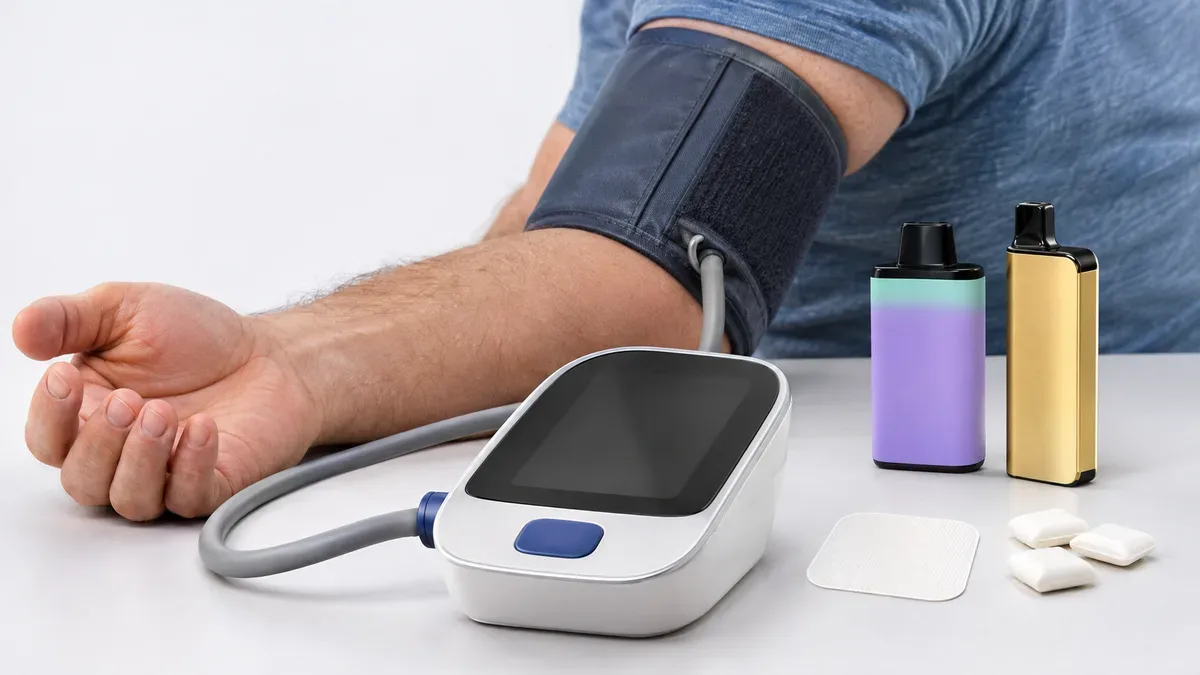
Did your blood pressure reading climb after a cigarette, vape session, or nicotine pouch? Does Nicotine Affect Blood Pressure? Yes—nicotine can raise blood pressure and heart rate, even without tobacco smoke. However, a temporary increase and ongoing hypertension require different interpretations.
A higher reading after nicotine use deserves attention, but one measurement cannot explain your overall cardiovascular health. Moreover, smoking introduces harmful substances that extend well beyond nicotine. Understanding these differences helps you measure accurately, compare products, and discuss quitting with your clinician.
1. Does Nicotine Affect Blood Pressure? How It Works
Nicotine itself can temporarily increase blood pressure. You do not need to inhale burning tobacco for this effect. Specifically, nicotine stimulates your sympathetic nervous system, which controls your body’s “fight or flight” response.

As a result, your body releases chemical messengers, including adrenaline. These signals can make your heart beat faster and more forcefully. Additionally, nicotine can narrow blood vessels, increasing resistance as blood moves through them.
Blood pressure and heart rate measure different things
Blood pressure describes the force of blood against artery walls. Your heart rate counts how many times your heart beats each minute. However, these measurements do not always rise or fall together.
- Systolic pressure: The upper number measures pressure when your heart contracts.
- Diastolic pressure: The lower number measures pressure between heartbeats.
- Heart rate: Your pulse measures beats per minute, rather than pressure.
For instance, a faster pulse does not automatically mean you have hypertension. Likewise, someone can have high blood pressure without noticing a racing heart. Most importantly, symptoms alone cannot reliably reveal either measurement.
A temporary increase does not establish hypertension
Your blood pressure naturally changes throughout the day. Exercise, stress, pain, caffeine, and nicotine can influence individual readings. Therefore, clinicians usually assess repeated measurements and your broader health history before diagnosing hypertension.
However, temporary effects still matter, particularly when nicotine use happens repeatedly. Frequent dosing may expose your cardiovascular system to recurring stimulation. People with existing heart or blood vessel disease may need particular caution.
Additionally, feeling calmer after nicotine does not prove your circulation has relaxed. Nicotine may relieve withdrawal discomfort while still stimulating your heart and blood vessels. Consequently, your sense of relaxation and your blood pressure reading can tell different stories.
2. How Much and How Long Does Nicotine Raise Blood Pressure?
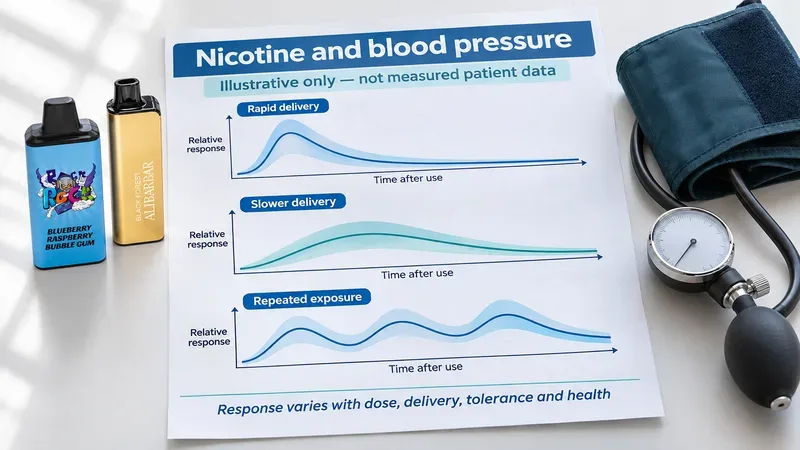
There is no single increase or countdown that applies to everyone. The amount absorbed, delivery speed, tolerance, and existing health conditions all matter. Moreover, the timing of your measurement can substantially change what you see.
How much can blood pressure increase?
Research has reported acute blood pressure increases around 5–10 mm Hg after smoking or certain nicotine exposures. Heart rate increases can reach roughly 10–15 beats per minute. However, these figures describe research observations, rather than guaranteed changes for every user.
Some studies find smaller changes, while others show little measurable response under particular conditions. Additionally, researchers study different products, doses, and populations. Therefore, you cannot reliably predict your response from a package label alone.
For instance, imagine a reading changing from 124/78 to 133/83 after nicotine use. That example illustrates a possible fluctuation, rather than an expected result. Importantly, it would not prove nicotine caused the entire difference.
Other influences might include walking upstairs, drinking coffee, or using an incorrectly sized cuff. Likewise, a familiar nicotine user may respond differently from someone without tolerance. Tolerance does not establish cardiovascular safety.
When do the effects begin and fade?
Inhaled nicotine reaches the circulation quickly, so cardiovascular effects can begin within minutes. Oral products usually deliver nicotine more gradually. Meanwhile, patches provide sustained exposure through the skin rather than a brief inhaled dose.
After a cigarette, pressure may begin moving toward its earlier level over the following tens of minutes. However, there is no dependable deadline for every person or product. Continued vaping, another cigarette, or a pouch can extend exposure.
Furthermore, a measurement taken immediately after use answers a different question from a carefully standardized resting measurement. Both can provide useful information when you record the circumstances. Neither should replace evaluation of repeatedly elevated readings.
Absorption, effects, and clearance follow different clocks
Absorption describes nicotine entering your bloodstream. Clearance describes your body removing it, mainly through liver metabolism. In contrast, blood pressure reflects your cardiovascular response at a particular moment.
Nicotine’s average elimination half-life is approximately two hours. Specifically, that means its blood concentration falls by about half during that period after absorption ends. It does not mean nicotine disappears completely after two hours.
Similarly, nicotine’s half-life does not predict exactly when your blood pressure will return to baseline. Its breakdown product, cotinine, remains detectable longer. Consequently, a positive nicotine exposure test cannot establish that nicotine currently explains a high reading.
Source: Cardiovascular Toxicity of Nicotine: Implications for Electronic Cigarette Use, PubMed Central, https://pmc.ncbi.nlm.nih.gov/articles/4958544/.
3. Smoking, Vaping, Pouches, Gum and Patches Compared
Nicotine products differ in how quickly they deliver nicotine and what else enters your body. However, those differences do not create a universal ranking of blood pressure effects. Dose, technique, frequency, and individual response can change the comparison.

How common products deliver nicotine
| Product | Delivery route | Absorption pattern | Combustion exposure | Evidence limitations |
|---|---|---|---|---|
| Cigarettes | Inhalation through the lungs | Rapid rises with repeated puffs | Yes; smoke includes carbon monoxide and many toxic substances | Strong cardiovascular harm evidence; separating nicotine from smoke effects remains difficult |
| Nicotine vapes | Inhaled aerosol | Often rapid; varies with device, liquid, and puffing | No tobacco combustion during normal operation; aerosol still contains harmful substances | Changing products and limited long-term cardiovascular outcome data |
| Nicotine pouches | Absorption through the mouth lining | Usually slower than inhalation; depends on formulation and use duration | No combustion | Limited long-term cardiovascular evidence; products vary considerably |
| Nicotine gum | Absorption through the mouth lining | Intermittent, generally gradual delivery with correct technique | No combustion | More established cessation evidence; individual blood pressure responses vary |
| Nicotine patches | Absorption through the skin | Slow, sustained delivery over hours | No combustion | More established cessation evidence; steady delivery does not guarantee no cardiovascular effects |
Why delivery speed matters
Rapid delivery can produce sharper nicotine peaks and reinforce repeated use. Meanwhile, a patch generally avoids the repeated peaks associated with cigarettes. However, slower delivery can still produce substantial exposure when doses are high or products overlap.
For instance, two pouches labeled with the same nicotine amount may not deliver identical amounts into your bloodstream. Formulation and time in the mouth influence absorption. Similarly, two people using the same vape can absorb different doses.
Therefore, comparing milligrams across cigarettes, liquids, pouches, and patches can mislead readers. A label may describe nicotine content, concentration, or delivery over time. Those measurements do not necessarily represent equivalent absorbed doses.
Blood pressure effects do not capture every risk
Smoking adds carbon monoxide, particles, and other chemicals that damage the cardiovascular system. Consequently, similar blood pressure changes do not mean two products carry similar overall risks. A modest reading after smoking does not establish safety.
Additionally, “tobacco-free” does not mean nicotine-free or harmless. Nicotine pouches can contain substantial nicotine without containing tobacco leaf. Synthetic nicotine can still stimulate your cardiovascular system.
However, nicotine pouches differ from approved nicotine replacement medicines. In the United States, the FDA has not approved pouches as smoking cessation aids. Marketing authorization for a tobacco product does not establish approval as a medicine.
Most importantly, switching products while continuing to smoke can preserve substantial smoking-related harm. Discuss a plan that supports complete smoking cessation and avoids unplanned nicotine overlap. People who do not use nicotine should not start for perceived cardiovascular benefits.
Sources: CDC, Nicotine Pouches, https://www.cdc.gov/tobacco/nicotine-pouches/index.html; FDA, Other Tobacco Products, https://www.fda.gov/tobacco-products/tobacco-products-ingredients-components/other-tobacco-products.
4. Can People With Hypertension Use Nicotine Replacement Therapy?
Many people with hypertension can use nicotine replacement therapy with appropriate guidance. High blood pressure does not automatically rule it out. However, treatment should account for blood pressure control, current symptoms, and cardiovascular history.
Compare treatment with the risks of continued smoking
Nicotine replacement therapy, or NRT, reduces withdrawal symptoms while helping people stop smoking. It supplies nicotine without cigarette smoke and its many toxic substances. Consequently, clinicians generally consider NRT substantially safer than continued smoking.
However, NRT can still cause side effects, including palpitations or changes in blood pressure. Its stronger safety record does not mean every person should use every formulation. Your clinician or pharmacist can help match treatment to your situation.
For instance, someone with controlled hypertension may have different needs from someone with severe, uncontrolled readings. Likewise, recent heart problems can change the level of supervision needed. A treatment discussion should consider the following:
- Your usual blood pressure readings and prescribed medicines.
- Any recent heart attack, particularly within the previous two weeks.
- Serious heart rhythm problems or worsening chest pain.
- Your current nicotine intake and previous quitting experiences.
- Pregnancy, breastfeeding, or other factors affecting treatment choices.
Build a practical cessation plan
Sometimes clinicians recommend a patch alongside gum or lozenges for breakthrough cravings. This planned combination differs from casually stacking several nicotine products. Therefore, follow the recommended schedule and discuss unexpected symptoms promptly.
Additionally, ask whether non-nicotine cessation medicines suit your medical history. Counseling and follow-up can help you manage triggers and adjust treatment. Avoid changing blood pressure medicines yourself when starting or stopping nicotine.
Most importantly, do not abandon quitting because you worry about nicotine replacement. Instead, arrange a treatment review that balances your cardiovascular needs against continued smoking. Seek urgent assessment for concerning symptoms rather than assuming treatment explains them.
Source: American Cancer Society, Nicotine Replacement Therapy to Help You Quit Tobacco, https://www.cancer.org/cancer/risk-prevention/tobacco/guide-quitting-smoking/nicotine-replacement-therapy.html.
5. Quitting Nicotine and Blood Pressure: What May Change
Stopping smoking benefits your heart even when your blood pressure does not immediately change. You stop inhaling carbon monoxide and other harmful combustion products. Additionally, quitting reduces ongoing injury associated with smoke exposure.
Stopping smoking and stopping nicotine are different changes
Someone who stops cigarettes while using a nicotine patch has stopped smoking but still receives nicotine. Consequently, nicotine-related stimulation may continue during treatment. That does not erase the substantial benefit of removing cigarette smoke.
In contrast, stopping all nicotine removes that source of cardiovascular stimulation. Some people notice a slower resting pulse or lower readings. However, nobody can promise a specific pressure reduction or recovery timeline.
Your longer-term blood pressure also reflects factors beyond nicotine. These include genetics, kidney health, sleep, activity, alcohol intake, and prescribed treatment. Therefore, quitting does not replace ongoing hypertension care.
Expect some variation while routines change
Withdrawal can bring irritability, disrupted sleep, and difficulty concentrating. Meanwhile, anxiety about quitting or checking your pressure can influence individual measurements. These experiences do not prove that quitting harms your heart.
Additionally, caffeine lasts longer in your body after you stop smoking. Your usual coffee intake may suddenly feel stronger. Consider reducing caffeine if you develop jitteriness or sleep difficulties, and discuss persistent symptoms.
For instance, someone may quit cigarettes but keep drinking several large coffees daily. Their sleep and pulse may change despite removing smoke exposure. Recording these changes helps their clinician interpret the pattern.
Furthermore, appetite and weight can change after quitting. Sustainable meals, regular activity, and support can help you manage these changes. Avoid treating possible weight gain as a reason to continue smoking.
Most importantly, assess progress through consistent measurements and follow-up rather than one disappointing number. Keep taking prescribed blood pressure medication unless your clinician changes it. Continued high readings deserve evaluation, even after successful smoking cessation.
Sources: NHLBI, Smoking and Your Heart, https://www.nhlbi.nih.gov/health/heart/smoking/risks; CDC, Common Withdrawal Symptoms, https://www.cdc.gov/tobacco/campaign/tips/quit-smoking/7-common-withdrawal-symptoms/index.html.
6. Measuring Blood Pressure After Nicotine Use and Knowing When to Seek Help
A useful blood pressure log starts with consistent technique. Otherwise, posture, recent activity, and nicotine timing can make comparisons difficult. However, never delay urgent care to obtain a perfectly standardized reading.
A practical measurement checklist
- Choose a suitable monitor. Use a validated automatic upper-arm device with the correct cuff size.
- Prepare beforehand. Avoid smoking, caffeine, and exercise for at least 30 minutes before routine measurements.
- Discuss other nicotine products. Ask about measurement timing around vaping, pouches, gum, or prescribed nicotine treatment.
- Keep treatment consistent. Do not remove a prescribed patch or change medicines simply to improve your reading.
- Empty your bladder. Then sit quietly for at least five minutes before measuring.
- Position yourself correctly. Support your back, keep feet flat, and leave your legs uncrossed.
- Support your arm. Place the cuff on bare skin and keep your arm at heart level.
- Stay quiet. Avoid talking, texting, and moving during measurement.
- Take two readings. Wait one minute between them and record both results.
- Record the context. Include time, pulse, symptoms, medicines, and the nicotine product used most recently.
Additionally, use similar measurement times each day according to your clinician’s instructions. Bring your monitor to an appointment to check technique and accuracy. A consistent record gives your clinician more information than scattered readings.
However, the 30-minute preparation interval does not guarantee nicotine has cleared or its effects have ended. Note recent use honestly instead of trying to produce a reassuring number. Avoid repeated checking every few minutes unless a clinician directs you.
Urgent-care decision box
Call emergency services immediately for chest pain, severe breathing difficulty, or possible stroke symptoms. These include new weakness, facial drooping, or difficulty speaking. Do this even if your blood pressure does not exceed the threshold below.
- Above 180 systolic and/or above 120 diastolic with concerning symptoms: Call emergency services immediately. Symptoms can include chest or back pain, breathlessness, weakness, numbness, vision changes, or speech difficulty.
- Above 180 systolic and/or above 120 diastolic without symptoms: Wait at least one minute and measure again. If it remains this high, contact a healthcare professional immediately.
- Repeated readings above your agreed target: Arrange clinical review and share your log. Do not wait for symptoms before discussing persistent elevations.
Do not dismiss severe readings or symptoms as “just nicotine.” Likewise, do not wait for nicotine to wear off during a possible emergency. In the United States, call 911; elsewhere, use your local emergency number.
Finally, one elevated reading cannot diagnose hypertension, but repeated elevations warrant attention. Your clinician may recommend home monitoring or a wearable blood pressure monitor. These approaches help distinguish temporary fluctuations from an ongoing problem.
Source: American Heart Association, Home Blood Pressure Monitoring, https://www.heart.org/en/health-topics/high-blood-pressure/understanding-blood-pressure-readings/monitoring-your-blood-pressure-at-home.
Conclusion
Nicotine can temporarily raise blood pressure and heart rate without tobacco smoke. However, product delivery, dose, and repeated use affect exposure. Persistent hypertension requires repeated measurements and clinical evaluation rather than assumptions about nicotine.
Moreover, smoking adds substantial cardiovascular harm beyond nicotine’s immediate effects. Appropriate cessation treatment can support quitting while accounting for your blood pressure and medical history. Keep a properly measured log, record nicotine use, and discuss a cessation plan with your clinician.
Publication note: Obtain clinical review before publication, particularly for treatment advice, numerical claims, and emergency guidance.
