

Coughing, wheezing, or feeling chest tightness after vaping? Can Vaping Trigger Asthma Symptoms? Yes, vaping can trigger or worsen asthma symptoms in some people, including a potentially serious asthma attack. However, temporary irritation, worsening asthma, and other breathing problems can feel similar.
Seek emergency help immediately for severe breathing difficulty, trouble speaking, confusion, or prescribed reliever treatment that is not helping. Meanwhile, stop vaping and move away from aerosol exposure. Follow your personal asthma action plan while arranging help.
Understanding your symptoms can help you explain what happened and get appropriate care. Additionally, reducing exposure protects people who share your home, car, or workplace. The guidance below separates established concerns from questions researchers continue investigating.
1. Can Vaping Trigger Asthma Symptoms or an Asthma Attack?
Vaping can aggravate sensitive airways
Yes, vaping can trigger coughing, wheezing, breathlessness, or chest tightness in someone with asthma. In some cases, symptoms can develop into an asthma attack. However, individual responses vary, so another person’s experience cannot predict yours.

Asthma makes the airways sensitive to certain exposures. During an attack, airway muscles tighten, the lining swells, and mucus can restrict airflow. Consequently, breathing may become harder even when the initial exposure seemed minor.
Asthma + Lung UK identifies vaping among potential asthma triggers. Similarly, NICE guidance includes vaping when clinicians assess factors contributing to poor asthma control. These recommendations support taking symptoms after vaping seriously.
Past tolerance does not guarantee future comfort
Previously vaping without obvious symptoms does not guarantee that future exposure will feel harmless. For instance, a respiratory infection or poorly controlled asthma may leave your airways more sensitive. Changes in products, settings, or exposure may also change your response.
Imagine someone who occasionally vapes without noticing problems. Later, they develop chest tightness after vaping while recovering from a cold. Although this timing suggests a possible trigger, a clinician still needs to assess other explanations.
Most importantly, do not deliberately vape again to test your reaction. Repeated exposure could provoke more serious symptoms. Instead, record what happened and discuss it with your asthma clinician.
Research linking vaping with asthma symptoms does not answer every question about cause and effect. Specifically, some studies rely on self-reported symptoms and cannot fully separate smoking or other exposures. Therefore, researchers cannot calculate one reliable attack risk for every person or product.
Nevertheless, uncertainty does not mean you should ignore a breathing change. New symptoms, nighttime waking, or increasing reliever use deserve assessment. Your clinician can review both your exposures and your underlying asthma control.
2. Why Vape Aerosol Can Irritate Sensitive Airways
What you inhale goes beyond water vapor
A vape heats liquid into an aerosol containing tiny airborne droplets and particles. Although people often call it vapor, it is not simply water. The mixture varies with the liquid, device, heating conditions, and how someone uses it.

According to the CDC, vape aerosol can contain potentially harmful substances. Examples include:
- Nicotine, which can cause dependence.
- Fine particles that can travel deep into the lungs.
- Volatile organic compounds and certain cancer-causing chemicals.
- Metals, including nickel, tin, and lead.
- Flavoring chemicals with potential respiratory risks.
However, every product does not contain identical substances or amounts. Finding a chemical also does not establish the exact harm from one exposure. Risk depends on the substance, concentration, exposure pattern, and individual susceptibility.
Additionally, a pleasant taste does not establish inhalation safety. A substance suitable for food may behave differently when heated and inhaled. Your lungs handle exposure differently from your digestive system.
What researchers know about airway effects
Researchers investigate whether aerosol affects airway inflammation, mucus production, protective cells, and responses to infection. Specifically, laboratory studies can identify biological changes that might help explain irritation. However, laboratory findings cannot predict precisely how one person will respond.
For someone with asthma, irritation may contribute to coughing or airway narrowing. Meanwhile, existing inflammation may increase sensitivity to an exposure that another person barely notices. Symptoms still require assessment rather than assumptions about one ingredient.
Nicotine-free vaping does not remove the aerosol or all potential irritants. Similarly, changing flavors does not establish that a product is safe for asthma. There is no reliable flavor or device choice that guarantees symptom-free use.
Most importantly, avoid interpreting a smoother sensation as evidence of lower lung risk. Sensation alone cannot measure chemical exposure or airway effects. Reducing inhaled irritants offers a more practical approach than experimenting with products.
Evidence about long-term effects continues developing as products change. Therefore, distinguish documented chemical exposure from mechanisms researchers still investigate. Neither uncertainty nor fewer chemicals than cigarette smoke makes vaping harmless.
3. Symptoms to Watch For After Vaping
Notice changes in breathing and daily activity
Asthma symptoms can appear during exposure or become noticeable afterward. However, the timing and severity vary between people. Watch for changes from your usual breathing, including:
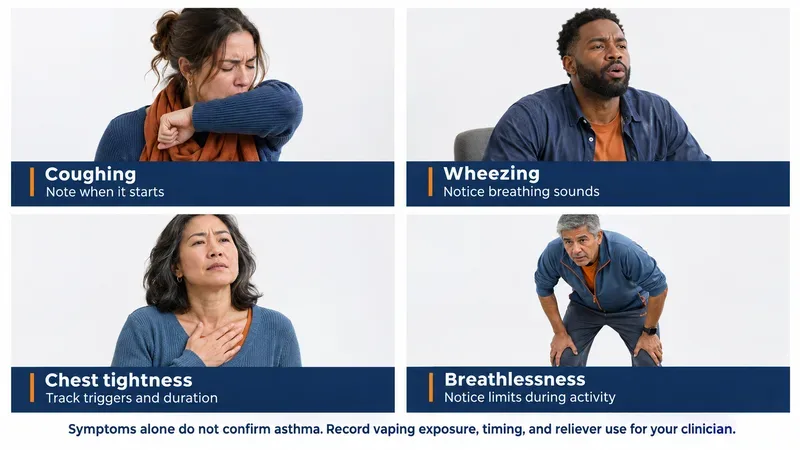
- Coughing that persists, returns, or interrupts sleep.
- Wheezing, often heard as a whistling sound.
- Chest tightness or difficulty taking a comfortable breath.
- Breathlessness during activities you normally manage easily.
- Needing prescribed reliever treatment more often than usual.
For instance, climbing your usual staircase may suddenly require a pause. Alternatively, coughing may wake you after an evening around vaping. These changes matter even when you do not hear wheezing.
Nevertheless, symptoms alone cannot confirm asthma or identify vaping as the cause. Infections, upper-airway problems, and other heart or lung conditions can produce similar complaints. A clinician may recommend breathing tests or other assessment.
Keep a useful record without delaying care
If symptoms remain mild and you can record details safely, note what happened. Specifically, useful information includes:
- When exposure occurred and when symptoms began.
- Whether you vaped directly or inhaled someone else’s aerosol.
- The product type, ingredients, and any THC or cannabis content.
- How symptoms affected sleep, speech, exercise, or ordinary activities.
- Which prescribed medicine you used and whether it helped.
- Other possible triggers, such as illness, smoke, pollen, or cleaning sprays.
Additionally, record peak flow if your clinician already includes it in your action plan. Compare readings with your personal instructions. Do not wait to measure anything when breathing feels seriously difficult.
Fever, chest pain, vomiting, or worsening breathlessness also deserve attention after vaping. The FDA describes breathing difficulty and chest pain among reported vaping-related lung injury symptoms. Therefore, avoid assuming every new breathing problem is simply your usual asthma.
4. Secondhand Vape and Asthma: Reducing Exposure
Shared air means shared exposure
People nearby can inhale aerosol that someone exhales while vaping. According to the Environmental Protection Agency, this aerosol can contain potentially harmful substances. Therefore, a visible cloud disappearing does not prove that exposure has ended.
Someone with sensitive airways may notice coughing, irritation, or other symptoms around secondhand aerosol. However, researchers still have questions about exposure levels and long-term effects. Evidence does not establish a safe indoor exposure threshold for every person with asthma.
For instance, a child may cough during car journeys when another passenger vapes. That pattern deserves discussion with their clinician. Meanwhile, removing the exposure offers a practical step without deliberately repeating the journey as a test.
Make homes and cars vape-free
The clearest household rule is simple: nobody smokes or vapes inside the home or car. Additionally, explain the rule to visitors before gatherings. A shared rule helps caregivers avoid repeated negotiations during exposure.
- Ask people to vape outdoors, away from others.
- Keep vaping away from open doors, windows, and ventilation intakes.
- Choose smoke-free and vape-free childcare and indoor gathering spaces.
- Tell schools or employers when aerosol appears to trigger symptoms.
- Keep prescribed asthma medicines accessible during outings.
However, opening a window or running a fan cannot reliably eliminate exposure. Air cleaners also cannot remove every aerosol component. Consequently, ventilation should not replace preventing indoor vaping.
Caregivers can use direct, calm language: “Aerosol seems to affect her breathing, so please vape outside.” Similarly, adults can request a different seat or leave an exposed area. You do not need to identify a particular chemical before requesting cleaner air.
Most importantly, do not expect someone with asthma to manage shared exposure by taking extra medicine. Follow their prescribed treatment plan and reduce the trigger. If symptoms continue despite avoiding aerosol, arrange a review for other contributing factors.
5. What to Do If Breathing Symptoms Start After Vaping
Recognize when emergency help comes first
Call your local emergency number immediately if breathing becomes severe or prescribed reliever treatment is not helping. Follow your action plan while help is coming. Do not drive yourself when you are seriously breathless.
Emergency warning signs include:
- Severe breathlessness or rapid worsening.
- Difficulty speaking full sentences because of breathing.
- Blue, gray, or unusually pale lips or skin.
- Confusion, unusual drowsiness, collapse, or extreme exhaustion.
- Prescribed reliever treatment providing little or no improvement.
Importantly, the absence of loud wheezing does not establish safety. Someone with severe airflow restriction may struggle to move enough air to wheeze. Trust serious breathing difficulty and seek help.
Stop exposure and follow your personal plan
First, stop vaping and move away from aerosol if you can do so safely. Sit upright and avoid unnecessary activity. If someone is nearby, tell them you are having breathing symptoms.
Next, use your prescribed reliever according to your asthma action plan. Different plans use different inhalers and instructions. Therefore, a universal puff count would not suit every reader.
Some people use a separate quick-relief inhaler. Others use a prescribed combination inhaler for both maintenance and relief. Most importantly, know which medicine your clinician has designated for symptoms.
If your plan specifies a spacer, use it as instructed. However, do not delay emergency help while searching for equipment. Follow the emergency dispatcher’s instructions while awaiting assistance.
Do not substitute steam, essential oils, caffeine, or breathing exercises for prescribed treatment. Similarly, do not take extra medication beyond your plan without clinical advice. Home remedies cannot reliably treat an asthma attack.
Arrange assessment even when symptoms improve
New wheezing, persistent chest tightness, or recurring breathlessness needs prompt medical assessment. Additionally, seek urgent advice when you need your reliever more often or symptoms return quickly. Improvement after stopping exposure does not establish the diagnosis.
If you have no asthma diagnosis, do not borrow someone else’s inhaler. A clinician needs to assess the cause and appropriate treatment. Severe symptoms still require emergency help immediately.
After an asthma attack, arrange prompt follow-up even if you feel better. NHS guidance recommends review within two days. Your clinician can check inhaler technique, preventive treatment, and possible triggers.
Finally, ask for a written action plan or update your existing one. Review which symptoms require urgent contact and which require emergency services. Keep a copy available to family members, caregivers, or school staff.
Publication note: A qualified clinician must review these emergency and action-plan instructions before publication. This draft has not undergone that review.
6. Vaping Versus Smoking With Asthma and Support for Quitting
Understand relative harm without overlooking symptoms
Smoking damages health and can worsen asthma control. However, comparing vaping with smoking requires care. A less harmful alternative to cigarettes can still expose sensitive airways to irritants.
The NHS describes nicotine vaping as less harmful than smoking for adults who switch completely. Cigarettes burn tobacco and produce many toxic substances. Nevertheless, this comparison does not establish that vaping is safe for someone with asthma.
Similarly, using cigarettes and vapes together does not remove smoking-related risks. NICE advises people using vaping to quit smoking to stop tobacco completely. If vaping triggers symptoms, discuss another quitting approach with a clinician.
Most importantly, do not return to cigarettes because vaping causes coughing or wheezing. You can seek support that addresses nicotine dependence and breathing symptoms together. People who do not smoke should not start vaping.
Build a quitting plan around your circumstances
Nicotine dependence can make quitting difficult, even when you strongly want better breathing. Additionally, withdrawal may bring cravings, irritability, or difficulty concentrating. Support helps you prepare for those challenges.
A clinician, pharmacist, or cessation adviser can help you:
- Choose a quit date and identify situations linked with use.
- Discuss suitable smoking-cessation medicines, including nicotine replacement where appropriate.
- Find counseling, telephone support, or other behavioral help.
- Plan alternatives for breaks, stress, driving, or social situations.
- Review asthma treatment and inhaler technique alongside quitting.
For smoking cessation, the CDC reports that combining medication with counseling improves the likelihood of quitting. However, medicines and recommendations for quitting vaping vary by age and location. Ask which options suit your situation rather than copying someone else’s treatment.
Meanwhile, continue prescribed asthma preventer treatment unless your clinician changes it. Quitting does not replace managing underlying airway inflammation. Persistent symptoms still need assessment.
Recovery also varies between people. Some notice fewer symptoms after removing exposure, while others need further treatment or investigation. Therefore, avoid promises that lungs will recover completely within a fixed number of days.
7. Frequently Asked Questions About Vaping and Asthma
Can nicotine-free vaping trigger asthma symptoms?
Yes, nicotine-free aerosol can still contain substances that irritate sensitive airways. Additionally, removing nicotine does not remove heated liquid droplets or every potentially harmful chemical. No nicotine label guarantees asthma safety.
Can vaping cause asthma if I never had it?
Research links vaping with asthma diagnoses and respiratory symptoms, but association does not prove causation. However, new wheezing or breathlessness needs assessment. Your clinician can investigate asthma and other possible causes.
Can secondhand vape cause symptoms without a strong smell?
Yes, smell does not reliably measure aerosol exposure or individual sensitivity. Therefore, request vape-free shared air even when an odor seems faint. Describe any recurring symptoms to your clinician.
How quickly can symptoms start?
Some people notice irritation during exposure or soon afterward. However, timing varies, and symptoms appearing later may have several causes. Record the pattern without deliberately exposing yourself again.
Will quitting vaping cure my asthma?
Removing a trigger may improve symptoms, but it does not guarantee that asthma will disappear. Additionally, recovery depends on other exposures and underlying asthma control. Continue prescribed treatment and arrange follow-up.
Should I change my inhaler if vaping makes me wheeze?
Follow your existing action plan and seek a medication review. Most importantly, do not increase treatment simply to tolerate continued vaping. Severe symptoms or ineffective prescribed relief require emergency help.
Conclusion
Vaping can trigger or worsen asthma symptoms, sometimes seriously. Additionally, nicotine-free products and secondhand aerosol are not risk-free. New breathing symptoms need assessment, and improvement after quitting varies.
Review your asthma action plan, reduce aerosol exposure, and discuss quitting support with a clinician. Most importantly, seek immediate emergency help for severe breathing difficulty or prescribed reliever treatment that is not helping.
