
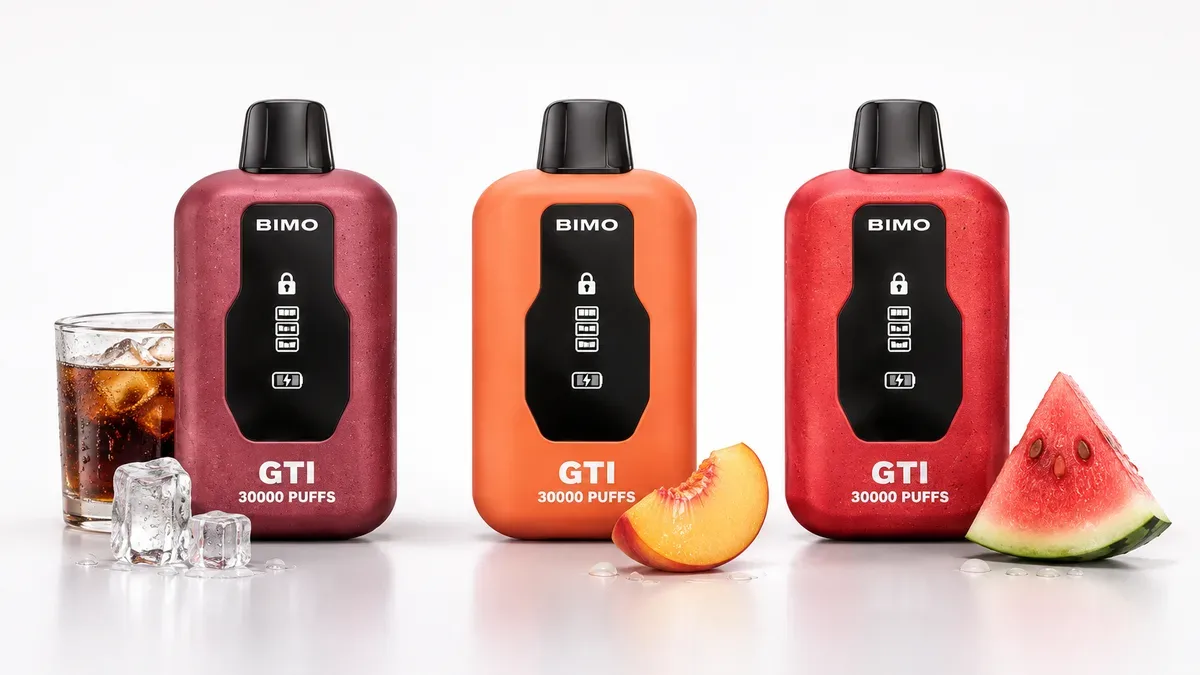
If one flavour says Freeze and two say Ice, can you tell which will feel colder just by reading the names? “BIMO GTI 40000 Puffs Freeze Cola, Summer Peach Ice and Watermelon Ice: Cooling Flavour Terminology” starts with that question. For adults of legal vaping age comparing these labels, the names give a clue about cooling and identify a base taste. However, cooling strength, mint flavour and menthol content each need their own evidence.
What Freeze and Ice Mean in BIMO GTI 40000 Puffs Flavour Names
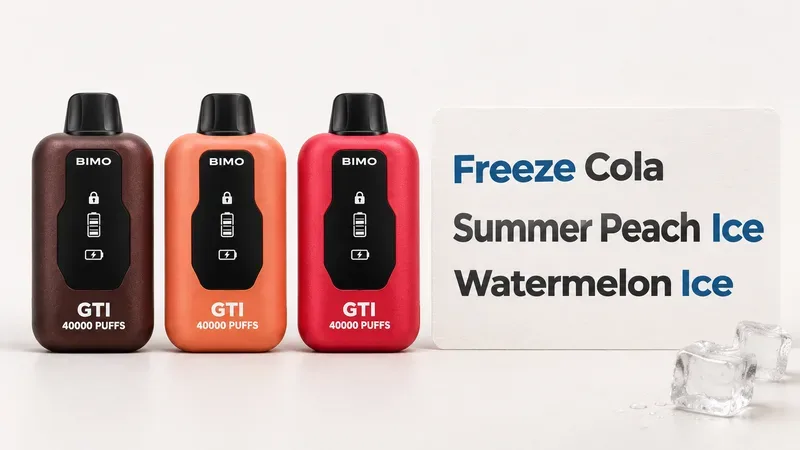
In these three names, Freeze and Ice suggest a cooling sensation alongside the named base flavour. Think of each label as answering two questions. What taste does the name point to, and what sensation does it suggest? For instance, Freeze Cola points to cola for the taste and uses Freeze to suggest cooling.
Find the base flavour and the cooling cue
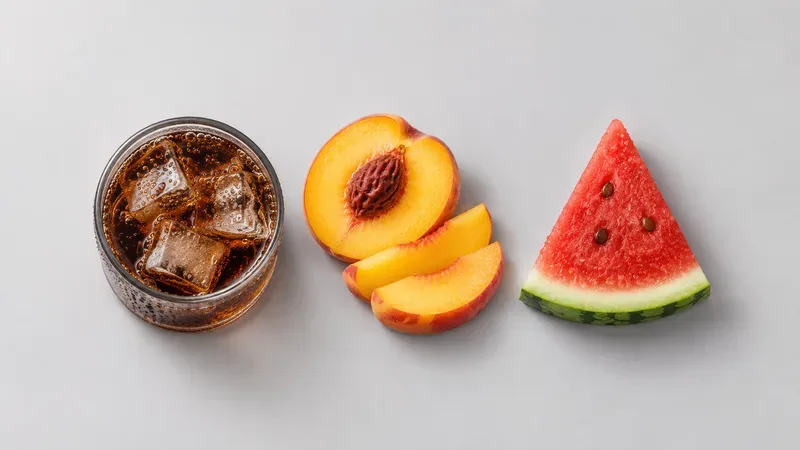
The base flavour is the main taste the name calls to mind. For Freeze Cola, that word is Cola, even though it comes after the cooling cue. Meanwhile, Peach and Watermelon identify the base flavours in the two names that end with Ice. The word order changes, but each name pairs a taste cue with a cooling cue.
- Freeze Cola: Cola names the base flavour, and Freeze suggests cooling.
- Summer Peach Ice: Peach names the base flavour, and Ice suggests cooling.
- Watermelon Ice: Watermelon names the base flavour, and Ice suggests cooling.
Summer Peach Ice has one extra word to account for. Here, Summer frames the peach flavour with a seasonal association. However, the name leaves the peach variety and detailed taste profile open. If you want to know how the manufacturer describes the peach note, look for the full flavour name.
Read the flavour name and ingredient information separately
A flavour name gives you a quick sense of the taste the product references. For instance, Watermelon Ice combines a familiar fruit name with a word associated with cold. That pairing helps you understand the idea behind the label at a glance. However, it leaves open how the product creates the sensation and how strong you might find it.
Likewise, cola, peach and watermelon identify stated tastes. Ingredient information answers a different question by naming substances in the formulation. Therefore, use the front label to identify which flavour you have before looking for a description or ingredient list. Keep the entire name handy, since dropping a word can lead you to a different product listing.
Freeze Cola, Summer Peach Ice and Watermelon Ice Compared
All three labels pair a familiar base flavour with a cue for cooling. The table shows what each name states and which details to verify for the exact product.
| Full flavour name | Stated base flavour | Cooling descriptor | Details to verify |
|---|---|---|---|
| Freeze Cola | Cola | Freeze | Any sweetness or fizz-like tasting notes, cooling strength, mint notes and menthol content |
| Summer Peach Ice | Peach | Ice | Any peach tasting notes, cooling strength, mint notes and menthol content |
| Watermelon Ice | Watermelon | Ice | Any watermelon tasting notes, cooling strength, mint notes and menthol content |
What the cola and fruit names tell you about taste
Freeze Cola draws on the familiar taste category of cola. For instance, one reader might picture a fountain drink, while another might think of cola sweets. Those associations come from the reader’s experience with cola. However, the manufacturer’s description would need to specify whether it intends any particular sweetness, spice or fizz-like impression.
The word fizz deserves a close read if you find it in a description. In a tasting note, it may describe an impression that reminds someone of a fizzy drink. Specifically, look at the exact wording before deciding what the manufacturer claims. The word Cola in Freeze Cola establishes the base flavour by itself.
Meanwhile, Summer Peach Ice identifies peach as the fruit reference. The name might bring ripe fruit to mind, depending on what you associate with summer peaches. However, that association leaves plenty of room for interpretation. A manufacturer description could clarify whether the intended profile leans sweet, tart or somewhere between them.
Watermelon Ice works the same way at the label level. It gives you watermelon as the reference point and adds a cue for cooling. For instance, someone might associate watermelon with fresh fruit, while someone else might recall a watermelon sweet. An exact flavour description is where you would look for either of those finer distinctions.
Compare the words the labels actually share
Summer Peach Ice and Watermelon Ice share the word Ice. However, the two names point to different fruit flavours. If you are checking whether they share a tasting note, look for that note in each product description. Finding a detail on the peach page gives you evidence for the peach variant.
Likewise, a description may confirm one detail and leave another unanswered. Imagine the manufacturer describes a flavour as tart and offers no further tasting notes. That supports calling the intended profile tart. However, you would still need separate information about any mint note or the strength of the cooling sensation.
Does Freeze Mean Stronger Cooling Than Ice?
Freeze may sound more intense than Ice in everyday English. Freeze calls to mind the act of freezing, while Ice evokes something already cold. However, that difference in wording cannot establish a cooling ranking for BIMO GTI flavours. The names give both words a similar job by signalling cooling alongside a base flavour.
What would support a stronger cooling claim?
To compare Freeze Cola with either fruit flavour, look for information that puts both variants on the same scale. For instance, imagine the manufacturer publishes a cooling scale from one to five. If it gives two exact flavours different scores, you have a direct comparison using that scale. Check what the scale describes and which variants it covers.
Conversely, separate descriptions can be harder to compare when they use different adjectives. Imagine one description says “sharp cooling” and another says “long-lasting cooling.” The first describes the character of the sensation, while the second describes duration. Therefore, those two descriptions would leave the question of relative strength open.
You may also care about when the cooling becomes noticeable. For instance, you might want to know whether it feels immediate or builds after the main flavour comes through. The words Freeze and Ice leave that timing unspecified. If timing matters to you, include it as a separate question when checking the description.
Can two Ice flavours feel different?
Yes, Summer Peach Ice and Watermelon Ice can have different perceived cooling intensities. Their shared suffix signals the same general type of sensation. However, the suffix gives you no measurement of the sensation for either flavour. It also gives you no way to predict which of the two a particular person would find colder.
For instance, imagine two adults trying to describe the same cooling sensation. One calls it strong, while the other calls it moderate. Their accounts describe what each person noticed and how they chose to express it. As a result, a personal impression and a manufacturer’s rating answer slightly different questions.
If your question is whether Freeze Cola ranks above both Ice flavours, look for a comparison that names all three. Likewise, if you only care about the two fruit flavours, ask about those two specifically. A reply that calls both “cooling” would confirm the general cue. A shared scale or explicit comparison would address the difference in strength.
Does Ice Mean Mint Flavour or Menthol?
Ice suggests a cooling sensation. However, cooling describes how something feels, while mint describes a recognisable flavour note. You can ask whether a flavour feels cool and separately ask whether it tastes minty. With Summer Peach Ice or Watermelon Ice, the part of the name that identifies a taste points to fruit.
Separate the sensation from the taste
Mint can be easy to associate with cooling because people encounter both sensations together in familiar products. For instance, a peppermint sweet may have a mint taste and leave a cool feeling in the mouth. You could describe those two qualities separately. Likewise, a BIMO GTI label can cue cooling while naming cola, peach or watermelon as the main taste.
If you want to know whether you might recognise a mint note, look for an explicit tasting description. Specifically, see whether the manufacturer names mint as part of the intended flavour. A description could identify the main taste and a secondary note in the same sentence. Read both details, since the name on the front may only highlight the main taste.
Conversely, a description that mentions a “cool finish” describes a sensation at the end of the taste experience. That wording would leave the mint question open. If the manufacturer describes a “mint finish,” it has made a different claim about a taste. That small wording change matters when deciding which question the description answers.
Treat menthol as an ingredient question
Ice alone cannot establish whether menthol is present or absent. Menthol is a specific substance that can produce a cooling effect. However, experimental research on e-liquids also found that a non-menthol coolant could produce cooling. A study indexed by PubMed Central, “Comparing the Sensory Effects of Menthol and Synthetic Coolants in e-Liquids,” examined those ingredients directly.
That finding explains why a word about sensation leaves the ingredient question open. Specifically, you need information that applies to the exact BIMO GTI flavour you have in mind. Ask whether its formulation contains menthol and check whether the manufacturer’s answer identifies the product variant. The same question applies if you are reading Freeze on the cola label.
For instance, suppose a flavour description mentions peach and a cool finish. You now have a description of the main taste and how the finish should feel. However, you still need ingredient information to answer the menthol question. If you also care about mint taste, ask about that note separately so the reply covers both details.
Where to Verify BIMO GTI Flavour Descriptions and Ingredients
Start with the manufacturer’s description for your exact BIMO GTI 40000 Puffs flavour. Copy the full wording from the package before searching. For instance, keep “Summer” when checking Summer Peach Ice. A similar peach name elsewhere in a catalogue could refer to a different flavour or product line.
Match the information to the question
Use the flavour description to check taste notes and any cooling language the manufacturer provides. Specifically, look for words that answer your question about sweetness, tartness, fizz, mint or cooling intensity. If the description refers to a rating, read the scale as well. Its definition tells you what the rating covers.
Meanwhile, check the package and any enclosed leaflet when you need ingredient information. Look on the sides or back of the box if the front only shows the flavour name. For instance, if you find an ingredient statement, check whether it refers to the whole product line or the exact variant. Keep that distinction in mind when comparing products.
The information may answer some questions more clearly than others. An ingredient statement that names menthol supplies direct evidence for its presence in the product it covers. However, a general phrase about flavourings or cooling may leave the identity of individual substances unclear. When the materials leave that detail open, take the exact wording with you when contacting the manufacturer.
Send a question the manufacturer can answer directly
Use the manufacturer contact details on the package or the contact channel listed on its official site. Include the exact flavour name and product line in the message. Additionally, include the market and any batch or lot code printed on the box if available. A photo of the package can help identify the version you are asking about.
- Taste: “Does the manufacturer describe Freeze Cola as having a fizz-like tasting note?”
- Strength: “Do you rate Summer Peach Ice and Watermelon Ice on the same cooling scale?”
- Ingredients: “Does this Watermelon Ice variant contain menthol?”
Once you get a reply, check which variant and question it addresses. For instance, an answer describing an icy finish addresses the sensation you can expect. If your question concerned menthol, follow up by asking whether the formulation contains it. Keeping the two questions separate makes it easier to see what the reply confirms.
How to Read Freeze and Ice on a Flavour Label
Read the name once for the base flavour, then again for the cooling cue. For instance, in Freeze Cola, the familiar taste word comes last. In Summer Peach Ice and Watermelon Ice, it comes before Ice. Therefore, use what each word means to identify its role, wherever it appears on the label.
Use three quick steps
- Identify the base flavour. Find the word that names the taste, such as cola, peach or watermelon.
- Identify the cooling cue. Look for Freeze or Ice and record it as a description of the intended sensation.
- Write down the unanswered detail. Decide whether you want to verify taste, cooling strength or an ingredient.
Try the method with Freeze Cola. You can put cola in the taste column and Freeze in the cooling column. However, if what you really want to know is whether the cola tastes tart, write that question separately. Then search for the manufacturer’s description using the full name and look specifically for a tartness note.
Turn a broad impression into a precise lookup
Suppose you are comparing the fruit flavours and wondering which will feel colder. Specifically, ask whether the manufacturer rates Summer Peach Ice and Watermelon Ice differently under the same cooling scale. If it offers a direct comparison, check what the rating measures. That gives you more information than comparing the identical Ice suffixes.
Likewise, if you wonder whether Watermelon Ice tastes minty, look for mint in its tasting description. If your question is whether it contains menthol, check the ingredient information for that same variant. You can use both sources for the same label because each answers a different question. When you contact the manufacturer, keep the wording just as specific.
Finally, retain any detail that helps you match the source to the package. The full flavour name is the starting point, and the batch code can help when a question concerns a particular box. With those details in hand, you can ask a short question that the manufacturer can tie to the product you mean.
Conclusion
Freeze Cola names a cola base, Summer Peach Ice names a peach base, and Watermelon Ice names a watermelon base. In all three names, Freeze and Ice suggest cooling. However, cooling strength, mint notes and menthol content each require separate evidence.
Match the exact flavour name on your package to the manufacturer’s description or ingredient information to verify the detail you care about.
