

Australia aims to bring daily smoking down to 5% or less by 2030. How do tobacco laws, youth prevention and quitting services help the country reach that goal? What Is the National Tobacco Strategy in Australia? It’s the shared plan that connects those efforts and sets targets for measuring progress.
You might see a graphic warning on a cigarette pack, hear about pharmacy vape rules or spot a Quitline ad. Each addresses a different part of the same problem. Together, the strategy’s 11 priorities aim to prevent people from starting, make it easier to quit and reduce exposure to tobacco smoke.
What Is the National Tobacco Strategy in Australia?
What the strategy covers
The National Tobacco Strategy 2023–2030 is Australia’s coordinated policy framework for reducing tobacco use and the harm it causes. All Australian health ministers endorsed it, and the Australian Government released it on 2 May 2023. It gives federal, state and territory governments shared goals while supporting action in local communities. Australian Government National Tobacco Strategy overview

In practice, the framework connects decisions that affect different parts of daily life. For instance, a national law can set cigarette packaging requirements, while a state can regulate where people smoke. Meanwhile, a local health service can offer counselling when someone decides to quit.
Why Australia introduced it
Smoking causes preventable disease and premature deaths, including deaths from cancer, heart disease and respiratory illness. However, the burden falls unevenly across communities, and access to quitting support varies. A drop in the national smoking rate can therefore coexist with persistent health gaps.
Moreover, buying tobacco regularly leaves households with less money for other expenses. Treating tobacco-related disease also adds costs to the health system. Meanwhile, discarded cigarette butts create litter and can enter waterways. Reducing tobacco use can therefore improve health, ease costs, narrow health gaps and reduce waste. Official National Tobacco Strategy
How it fits into national policy
The tobacco strategy sits under the National Drug Strategy, which takes a harm-minimisation approach to alcohol, tobacco and other drugs. In practice, that means reducing demand, limiting supply and reducing harms. For tobacco, those goals translate into measures such as education, retail controls and protection from second-hand smoke.
Additionally, the tobacco strategy complements the National Preventive Health Strategy, which focuses on keeping people healthy and reducing health inequities. Shared targets help governments measure whether prevention reaches communities facing the greatest burden. Australian Government policy overview
Australia’s Daily Smoking Targets and Progress
The 2030 targets
Australia aims for a national daily smoking rate of 5% or less by 2030. It also aims for a rate of 27% or less among First Nations people aged 15 and over. Earlier, the strategy set a national milestone of below 10% by 2025. Official strategy and targets

Daily smoking prevalence means the share of a population who report smoking tobacco every day. For instance, someone who smokes only on weekends counts as an occasional smoker. Meanwhile, researchers track vaping separately because someone can vape, smoke tobacco or use both. These measures show how each behaviour changes over time.
National progress
The Australian Institute of Health and Welfare (AIHW) reported that daily smoking fell to 5.6% in 2025. The National Drug Strategy Household Survey measured that figure among people aged 14 and over. The table shows the change between two rounds of the same survey. AIHW national survey release
| Survey period | Population | Daily smoking |
|---|---|---|
| 2022–2023 | People aged 14 and over | 8.3% |
| 2025 | People aged 14 and over | 5.6% |
That’s a decline of 2.7 percentage points between survey rounds. The 2025 estimate came in below the interim threshold of 10%. However, it remained 0.6 percentage points above the 2030 target of 5%. Future survey rounds will show how much further the rate falls.
First Nations progress
The Australian Bureau of Statistics (ABS) measures First Nations daily smoking in the National Aboriginal and Torres Strait Islander Health Survey. Its 2018–19 survey found that 37% of First Nations people aged 15 and over smoked daily. In the 2022–23 round of that survey, 29% of First Nations people aged 15 and over smoked daily. AIHW First Nations evidence summary
The 2022–23 result was about two percentage points above the First Nations target. However, the national household survey and the ABS First Nations health survey cover different populations and age groups. They also use different survey designs. Therefore, the national decline alone cannot establish whether First Nations people have reached their separate target.
The 11 Priority Areas and the Tobacco Laws That Support Them
Policy integrity and public education
Priority 1 protects public health policy from tobacco industry interference and other vested interests. Article 5.3 of the World Health Organization’s Framework Convention on Tobacco Control guides this work. Specifically, governments should limit industry contact to what regulation requires and make those interactions transparent. Official strategy and policy safeguards
Priority 2 uses evidence-based campaigns to discourage people from starting, encourage quit attempts and help people stay smoke-free. For instance, a campaign can show how smoking affects everyday health and give viewers a number to call. Moreover, seeing a practical next step can help someone act when they feel ready to quit. National Tobacco Campaign
Price, marketing, products and supply
The Public Health (Tobacco and Other Products) Act 2023 brings major Commonwealth tobacco controls together. For example, plain packaging limits the use of branding, while graphic health warnings make the risks visible at purchase. Other measures influence the price of tobacco, what suppliers can sell and how retailers make it available.
- Priority 3 − Affordability. Tobacco excise raises the cost of legal tobacco. Higher prices make regular purchases less affordable and can discourage people from starting.
- Priority 6 − Marketing. Restrictions curb tobacco advertising, promotion and sponsorship. They limit opportunities for companies to promote tobacco or associate their brands with popular events.
- Priority 7 − Products and disclosures. Product standards govern what suppliers can sell, including requirements on ingredients. Disclosure rules determine what information suppliers must report about products and their contents.
- Priority 8 − Supply. Retail and supply controls aim to reduce access to tobacco. For instance, licensing rules can help enforcement teams identify sellers and check compliance where those rules apply.
Additionally, tobacco retailers must follow the rules in their own state or territory. Those rules can cover matters such as licensing, product displays and sales to minors. Australian Government tobacco control guidance
Equity, emerging products, smoke-free spaces and quitting
- Priority 4 − First Nations partnerships. Expand prevention and quitting efforts with Aboriginal and Torres Strait Islander communities, supporting local leadership and culturally safe care.
- Priority 5 − Tailored action. Focus resources on other populations with higher smoking rates or greater exposure to tobacco-related harm.
- Priority 9 − Vapes and emerging products. Strengthen regulation of e-cigarettes and respond as new nicotine products reach consumers.
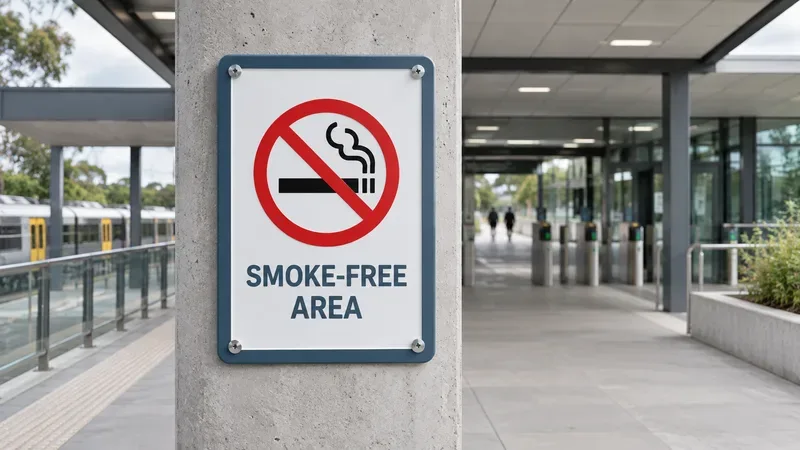
- Priority 10 − Smoke-free settings. Remove exceptions to smoke-free rules in workplaces, public places and other settings so more people avoid second-hand smoke.
- Priority 11 − Quitting support. Expand access to evidence-based help for people who want to stop using tobacco, vapes or emerging nicotine products.
For example, smoke-free workplace rules reduce exposure for hospitality staff who spend an entire shift near customers. However, local rules can vary for outdoor dining, playgrounds and building entrances. Together, smoke-free measures and accessible counselling protect people from exposure and support those who want to quit. Official strategy and priority actions
How Australia Addresses Vaping and Prevents Youth Nicotine Use
Prevention and social norms
A teenager might first encounter vaping through friends, online posts or products they see in their neighbourhood. Age-based access controls reduce opportunities to obtain vapes through legal channels. Meanwhile, marketing restrictions limit commercial messages that can make vaping look appealing or routine.
Additionally, public campaigns and resources for schools and families explain nicotine dependence in plain language. For instance, a school can discuss peer pressure, while a parent can ask what students see in their social feeds. Together, these measures aim to make vaping less visible and less socially accepted. They focus on young people and others who have never smoked. Australian Government smoking and vaping resources
Vaping laws and therapeutic access
Australia regulates vapes as therapeutic goods and permits lawful retail supply through participating pharmacies. The pharmacy pathway serves people seeking help to quit smoking or manage nicotine dependence. Additionally, pharmacists discuss treatment options, risks and appropriate use before supplying a therapeutic vape.
Adults aged 18 and over may access eligible therapeutic vapes containing up to 20 mg/mL of nicotine without a prescription. However, state or territory law may still require one. A person under 18 or anyone who needs a concentration above 20 mg/mL needs a prescription, subject to local law.
The Therapeutic Goods Administration places therapeutic vapes after first-line treatments, such as approved nicotine replacement therapies. For some people who have struggled to quit using approved treatments, a health practitioner may consider a therapeutic vape. This approach preserves a clinical pathway while limiting young people’s exposure and access. TGA guidance for individuals and patients
Emerging nicotine products
Nicotine pouches show how quickly habits can change when products appear in new forms. For instance, someone can use a pouch without producing smoke or vapour. Therefore, researchers track smoking, vaping and other nicotine products separately to see how people use them alone or together. Regulators also monitor marketing and changes in who uses these products, especially when they may appeal to younger people. AIHW nicotine use findings
Priority Populations and Support to Quit Smoking or Vaping
First Nations-led tobacco control
The strategy supports Aboriginal and Torres Strait Islander communities to lead tobacco prevention and quitting efforts. Aboriginal Community Controlled Health Organisations can build support around local needs, relationships and cultural practices. Moreover, partnerships with governments and health services can help communities deliver sustained support.
For example, the Tackling Indigenous Smoking program supports locally designed activities that encourage smoke-free environments and connect people with quitting services. An Aboriginal health worker might start that conversation during a routine visit and arrange follow-up. These efforts support the First Nations target of 27% or less by 2030 and contribute to Closing the Gap. Official strategy and First Nations priorities
Tailored support for other populations
Cost, geography and service availability can shape what quitting support someone can use. For instance, a person in a remote town may face a long trip for an appointment. Meanwhile, someone experiencing financial hardship may need help finding affordable treatment and follow-up that fits their work schedule.
- Primary care can help people experiencing financial hardship or living far from specialist services find affordable treatment and phone-based support.
- Mental health services can work quitting support into regular care for people living with mental health conditions.
- Maternity services can offer advice and referrals during pregnancy and involve family members who want support.
- Custodial health services can offer quitting support during custody and help people connect with follow-up care after release.
Furthermore, offering a referral during a visit someone already attends can save them another trip. A follow-up conversation can also reveal practical barriers, such as transport costs or difficulty scheduling a call. Official strategy and tailored support actions
Where to get help
Call Quitline on 13 78 48 for support to quit smoking or vaping. A counsellor can help you build a plan, prepare for cravings and arrange follow-up. Additionally, you can ask for an interpreter or culturally tailored support through Aboriginal and Torres Strait Islander Quitline services.
For instance, if you usually vape on your way home, a counsellor can help you plan for that moment. If you slip, follow-up gives you a chance to adjust your plan and prepare for the next craving. Meanwhile, a GP or pharmacist can discuss appropriate treatment options and help you decide how to use them. You can also find quitting tools and request a callback at Quit.org.au.
Who Implements the Strategy and How Australia Tracks Results
Responsibilities across Australia
The Australian Government coordinates national action, manages tobacco excise and administers Commonwealth regulation. States and territories implement and enforce rules for smoke-free settings and tobacco retailing. They also plan and fund local services, so the support people encounter can vary across jurisdictions.
Meanwhile, health services turn policy into practical care by asking about tobacco use, offering support and providing referrals. Community organisations can design and deliver programs that suit local languages, needs and routines. Additionally, researchers evaluate which approaches reach people and how outcomes change over time.
For example, a quit campaign might run nationally while a community organisation adapts its message for local audiences. A health service can then track referrals and follow-up to see whether the campaign connects people with care. This division of work gives communities room to respond to local needs within a shared national plan. Official strategy and implementation responsibilities
Monitoring, evaluation and reporting
AIHW and ABS surveys track tobacco and nicotine use across Australia. Surveys estimate how common each behaviour is, while program reporting shows who services reach and what support they deliver. Additionally, research can help explain why outcomes differ by age, location or access to care.
For instance, rising referrals can show that a program is reaching more people. Follow-up can show whether people received counselling and how their quit attempts went. Meanwhile, survey results help assess whether smoking rates are changing across priority populations. Reading these measures together gives reviewers a fuller picture of progress.
The strategy schedules a 2026–27 midpoint review to assess progress across its priority actions. It also specifies an end-point review to assess achievements and guide the next strategy. For updates, check the official strategy and AIHW smoking and e-cigarette data.
Implementation challenges
Illicit tobacco can undermine price and access controls by making cheaper products available outside regulated channels. AIHW found that recent illicit tobacco use among people who currently smoke rose from 17% in 2022–2023 to 34% in 2025. Specifically, the measure includes people who recently bought illicit tobacco or currently smoke it. AIHW alcohol, tobacco and other drugs data
Meanwhile, new nicotine products and fast-moving online marketing can strain enforcement. For instance, regulators may need to assess new product claims while tracking promotions across platforms. Tobacco industry interference can also slow action, which makes transparent contact with industry important.
Finally, gaps in quitting support can slow progress even where the national rate is falling. Someone may see a campaign and want to quit but struggle to find affordable treatment or timely follow-up. Tracking access alongside smoking rates helps governments see where people face those barriers and where support needs to improve.
Conclusion
Australia’s National Tobacco Strategy combines prevention, regulation and quitting support to reduce daily smoking and tobacco-related harm. By 2030, it aims for 5% or less nationally and 27% or less among First Nations people. The national rate reached 5.6% in the 2025 household survey. Progress across populations also matters because each target measures a different group.
Read the official National Tobacco Strategy 2023–2030 for its actions and review milestones. If you want help to quit smoking or vaping, call Quitline on 13 78 48. You can also find quitting tools or request a callback through Quit.
