
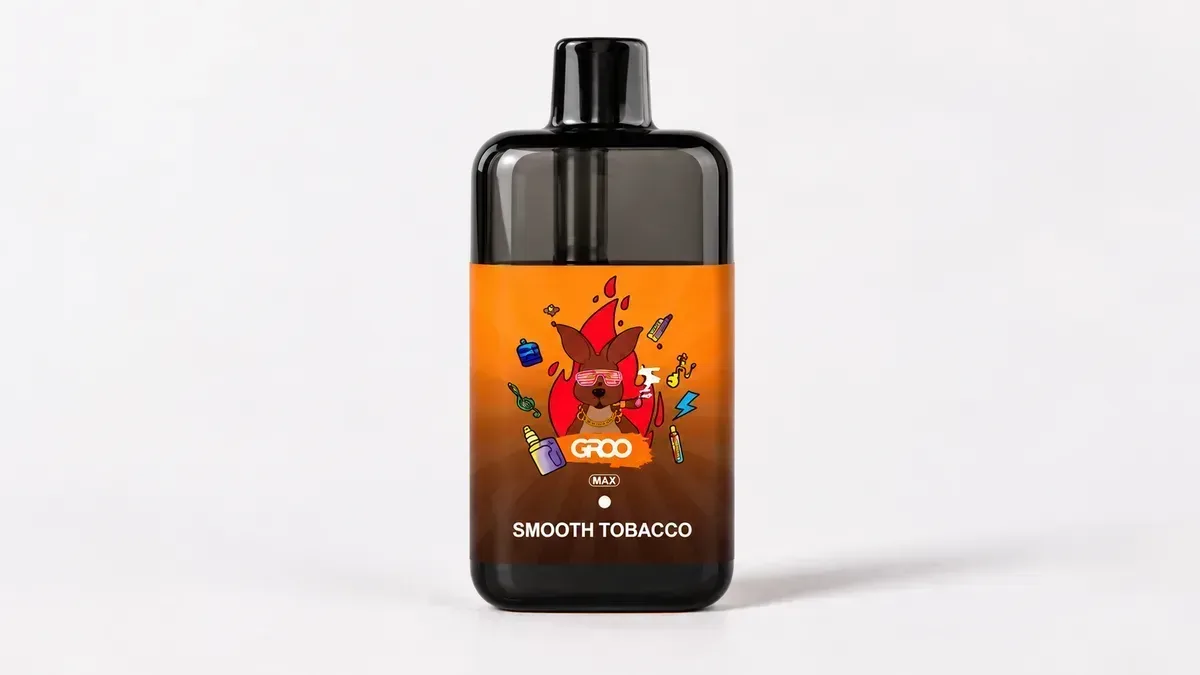
Is “Smooth Tobacco” simply a flavour name, or does it tell you what’s inside a GROO Max device? GROO Max 10000 Puffs Smooth Tobacco: Tobacco Flavour Naming and Product Information starts with that distinction. A retailer might show one nicotine strength in the specifications and a different one in the product photo. So, before relying on either, check which details describe the exact unit you have.
The product line, flavour name, and puff rating each answer a different question. However, you’ll need the package and matching documentation to confirm the contents, nicotine strength, and version intended for your market. Start with the wording you can see, then follow the identifiers that connect the package to its specifications.
GROO Max 10000 Puffs Smooth Tobacco Product Information at a Glance
Read the product name in three parts
GROO Max identifies the product line. 10000 Puffs refers to the advertised usage rating. Meanwhile, Smooth Tobacco names the flavour variant within the line. Together, those details help you identify the advertised product when you compare a package with a retail listing.
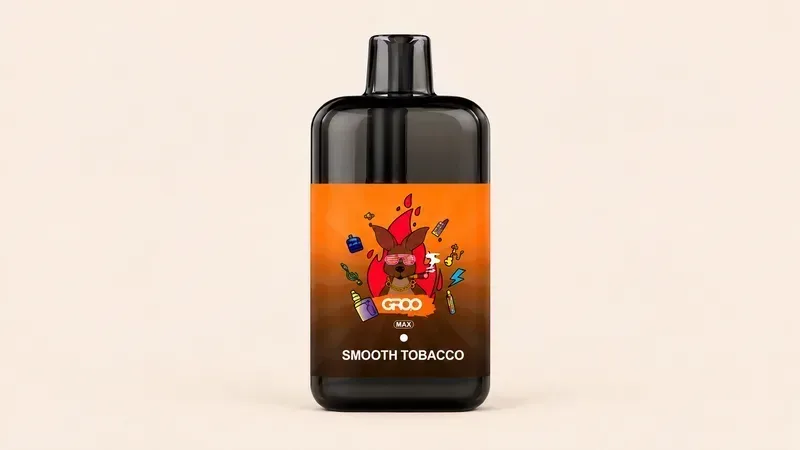
However, the full name gives you only part of the product information. The nicotine concentration, ingredient declaration, and e-liquid capacity each need their own documentation. Likewise, the puff number cannot establish battery capacity, charging features, or the version intended for a particular country. Look for separate statements covering any of those details that matter to you.
For example, imagine two shops list “GROO Max 10000 Puffs Smooth Tobacco” in their page titles. One shop includes a close-up of the batch panel, while the other shares a photo showing only the front. Both titles identify the advertised flavour. However, only the first photo lets you begin matching the pictured package to a specific production batch.
What to check on the exact unit
Start with the carton in your hand or clear photos of the unit the seller will supply. Turn the package over and check the smaller print, including any label applied for the destination market. Specifically, make a note of the following details before comparing them with a product page.
- Flavour wording. Copy “Smooth Tobacco” exactly as it appears, including any additional wording beside it.
- Nicotine statement. Record the full value and unit, such as mg/mL or a percentage.
- Model and batch. Capture both identifiers when present, since they help answer different questions about the unit.
- Warnings and market details. Read the warnings and note any manufacturer or importer information printed nearby.
- Seller description. Compare the selected flavour and specifications with the package shown in the listing.
Also, keep the context for each detail you copy. A number next to a barcode may serve a different purpose from a number printed beside a batch label. If a listing places several values together, check their labels before deciding what each one refers to.
What Does the Smooth Tobacco Flavour Name Mean?
What “smooth” suggests about the taste
“Smooth Tobacco” presents the variant as tobacco-style, with “smooth” suggesting a softer flavour impression. For instance, a reader might expect a less pronounced taste than a flavour labelled “Bold Tobacco.” However, those names leave plenty of room for interpretation. Different people may describe the same flavour in different ways.

Similarly, words such as classic, rich, and bold express how a brand chooses to describe a flavour. They have no standard scale that lets you compare intensity across products. Therefore, a “smooth” variant from one product line could taste stronger to you than another brand’s “classic” variant. The wording also tells you little about the aftertaste.
For example, two people might use “smooth” to describe different qualities. One might mean the flavour feels less sharp, while the other might mean the taste fades quickly. Moreover, neither person’s description establishes a recipe, a measured intensity, or a product specification. Use the term as an indication of flavour positioning.
When specific tasting notes belong in a description
A listing might describe a tobacco-style flavour with notes of sweetness, wood, nuts, caramel, or smoke. However, attribute those notes to GROO Max Smooth Tobacco only when official materials name them for the exact variant and market. The flavour name alone leaves those details open. A description of another tobacco variant offers little help here.
Suppose a shop describes “Classic Tobacco” as woody, then uses the same paragraph beneath “Smooth Tobacco.” The shared wording could come from a page template or a combined listing. Therefore, look for an official description that names Smooth Tobacco and matches the model or package you’re checking. If you find none, stick with “tobacco-style” when describing it.
What a flavour name can tell you about contents
A sensory description and an ingredient declaration answer different questions. For instance, the word “caramel” in a verified tasting note would describe a perceived flavour. The ingredient declaration is where you would look for a substance listed by name. Likewise, “Tobacco” in a flavour name cannot establish that the liquid contains tobacco leaf or tobacco-derived ingredients.
The same distinction applies to nicotine. Specifically, “Smooth Tobacco” leaves both nicotine presence and concentration unconfirmed. You need a separate nicotine statement for the relevant unit to answer those questions. Even when two packages share the same flavour name, read each package’s own strength statement and match it with the correct documentation.
Does Smooth Tobacco Mean the Product Contains Tobacco or Nicotine?
Find the documents that describe the contents
Start by looking for three pieces of information with distinct purposes. The flavour name describes the intended taste. Meanwhile, the ingredient declaration names components within the scope of that disclosure. The nicotine statement tells you what the packaging declares about nicotine content, including a concentration when one appears.
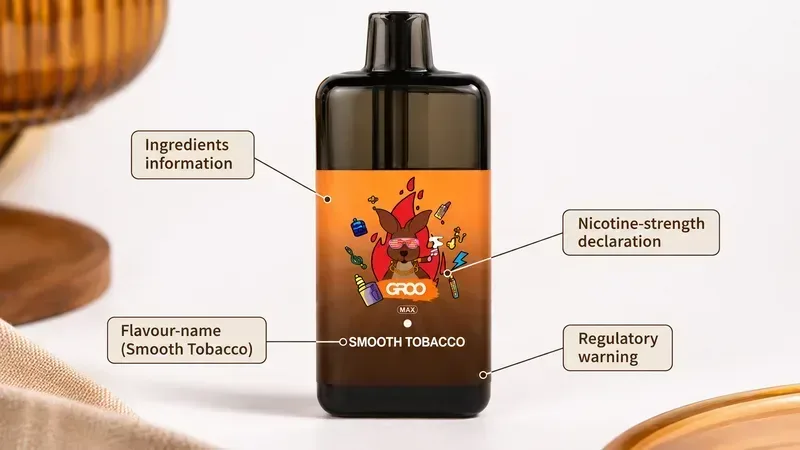
To verify tobacco content, read the ingredient information on the carton, label, or enclosed leaflet. Additionally, check manufacturer documentation or legally required disclosures for the matching market and version. If the published details leave the origin of an ingredient unclear, ask the manufacturer about that specific ingredient. A broad description such as “tobacco flavouring” may leave the source unanswered.
For example, a disclosure might name nicotine and leave its origin unstated. That tells you nicotine appears in the disclosure, while the source remains a separate question. Likewise, a warning can identify a nicotine concern without giving the concentration. Find the actual strength statement when you need to confirm the number.
Read the nicotine value with its unit
A nicotine strength in mg/mL describes milligrams of nicotine per millilitre of liquid. For instance, a label stating 20 mg/mL declares a concentration of 20 milligrams per millilitre. A percentage is another format you may encounter. However, check the stated measurement basis before comparing percentages with mg/mL values.
Also, watch for a value that gives the total nicotine in a container. A total in milligrams and a concentration in milligrams per millilitre describe different quantities. If a listing says only “20 mg,” ask what that value represents. Copying the number without its unit or context can create a conflict where none exists.
Market rules can affect which strengths are available, how packages display them, and which warnings appear. For example, the UK Medicines and Healthcare products Regulatory Agency’s retailer guidance gives a 20 mg/mL limit for covered nicotine liquids. That figure illustrates a market rule. Use the package and matching records to establish what this particular unit declares.
Finally, treat incomplete, damaged, or contradictory labelling as an unresolved question. An unreadable panel gives you no basis to infer zero nicotine or assume a common strength. If the package and the official documentation disagree, retain both sets of details and seek confirmation before using the device.
What the Advertised 10,000-Puff Rating Means
A count depends on how someone measures a puff
The advertised 10,000-puff rating estimates how many draws a device may deliver under particular usage or testing assumptions. To interpret it, you need to know how the test defined a puff and when the test ended. However, the number on the front of a package rarely answers those questions on its own. It gives no guarantee of your individual draw count.
For example, imagine one set of 100 draws lasting one second each. A second set contains 100 draws lasting three seconds each. Both sets contain the same number of draws, yet the second involves three times the total draw duration. That simple illustration explains why equal counts can represent very different use.
However, the illustration does not predict a threefold change in the device’s lifespan. Actual output depends on how the device responds while it operates. Research published under the title Electronic Cigarette Topography in the Natural Environment found that users varied in draw duration, airflow, and timing. Those differences make the conditions behind a puff estimate important.
Why a device can stop delivering usable output
Draw intensity and airflow can influence device activation and aerosol output, depending on the design. Similarly, frequent draws reduce the time between activations, which can affect heating and liquid delivery. Power behaviour also matters because the device may change its output as the battery condition changes. Device condition adds another variable, especially if airflow becomes restricted or a component stops working properly.
In practice, usable output can end when the available liquid runs out, when battery performance falls, or when another component reaches its limit. For example, remaining liquid offers little practical information if the device can no longer power its heater. Conversely, available battery power cannot replace depleted liquid. When checking specifications, look for verified details about each system separately.
Compare ratings using the same conditions
When comparing two advertised ratings, look for the draw duration, airflow, interval between draws, and criteria for ending the test. Also, check the verified liquid capacity, battery specifications, and any operating mode that applies to the rated model. If those details differ or remain undisclosed, treat the numbers as separate advertising estimates.
For instance, suppose one listing quotes 10,000 puffs and another quotes 8,000. The first number is larger, but the listings alone cannot tell you which device would last longer in the same conditions. Therefore, use comparable tests and exact-model specifications before drawing that conclusion. Keep the rating separate from any estimate of nicotine exposure.
How to Confirm the GROO Max Smooth Tobacco Variant
Match the carton to the listing
Start by reading the product-line name, flavour wording, and puff claim on the package. Then, check the nicotine statement and market warnings, which may appear on a side or rear panel. Finally, record the barcode and any model or batch identifiers. Clear photos of these panels let you compare details later without relying on memory.
Next, check the retail listing from the point where you select the flavour. A product page can display a general title while the selector changes the version you would receive. Therefore, confirm each part of the listing that might describe the selected unit.
- Page title. Check that it identifies the GROO Max line and the advertised puff rating.
- Selected flavour. Confirm that the selector displays the full wording “Smooth Tobacco.”
- Product photos. Look for an image that shows the selected flavour and its readable package details.
- Specifications table. Check whether the nicotine value and model apply to Smooth Tobacco or the whole listing.
- Checkout selection. Confirm that the cart or order summary retains the exact flavour and any selected strength.
For example, a listing might switch the flavour selector to Smooth Tobacco while keeping a photo of another carton. That can happen when a shop uses shared photos across options. However, a sharp image still provides weak evidence if it depicts a different variant. Ask for a photo of the carton the seller intends to supply.
Check the market, generation, and verification features
Compare packaging from the same country or region and the same product generation. Specifically, check the package design, nicotine format, market warnings, and printed model information together. A new package design or different unit format can explain a visible difference. However, you need confirmation before attributing a discrepancy to a market change or redesign.
Also, compare identifiers according to what they represent. A retailer’s stock code helps the shop identify a listing or option, while a batch code helps identify a production run. Both can help support staff investigate a discrepancy. Keep them separate when you take notes or send photos.
If the manufacturer documents an authenticity check, follow the instructions through its official verification feature or authorized support channel. Specifically, confirm that the instructions apply to your package and that the manufacturer recognizes the code type. A barcode match or familiar design helps you compare products. Appearance alone cannot establish authenticity, even when every visible detail looks familiar.
Where to Verify Specifications and Resolve Conflicting Listings
Start with the source closest to the exact unit
First, use intact packaging to establish what the unit actually declares. Next, find official product information for the same market, flavour, and model. Then, consult an authorized retailer’s details for the specific stock item. If the evidence still conflicts, ask the manufacturer’s official support team to confirm the version.
Give the most weight to documentation that matches the exact unit. For instance, a matching model sheet offers stronger evidence than a marketplace title describing several versions. Similarly, a search snippet can omit a unit, and copied retail text can carry over another product’s specifications. Several shops repeating one claim may all be using the same description.
Record enough information for someone else to verify your comparison. In particular, save the package details and the seller’s reference together.
- The exact flavour wording and advertised puff rating.
- The nicotine value, its unit, and the warning text.
- The model identifier, batch code, and barcode.
- The seller’s stock-keeping unit, selected option, and stated destination market.
Ask a question the seller or manufacturer can answer
Suppose the specifications say 20 mg/mL, but the package in the listing shows another value. Ask the seller whether the photo depicts the unit they will ship and whether that unit is Smooth Tobacco. Additionally, ask them to confirm the strength with its unit, the destination market, and whether the page combines several versions.
When contacting the manufacturer, include clear pictures of the front, warning panel, barcode, and model or batch details. Then, quote the conflicting claim and identify where you saw it. A specific question about which strength belongs to the photographed package makes the discrepancy easier to investigate. Keep the reply with your notes so you can trace the confirmation.
Finally, avoid using the device while essential details remain unresolved. That includes missing nicotine information, absent required warnings, damaged seals, or contradictory specifications for the exact unit. Ask the retailer or manufacturer to clarify the discrepancy before relying on the label or listing.
Conclusion
Smooth Tobacco identifies the GROO Max flavour variant. Meanwhile, 10,000 puffs is an advertised estimate, and the count can vary with draw habits and device performance. Those labels leave the ingredients, tobacco content, nicotine presence, and nicotine strength to be confirmed through separate product information.
Compare the flavour wording, nicotine statement, identifiers, and warnings on your exact package with official documentation for the relevant market. If any detail conflicts, send clear package photos and the seller’s stock reference to the retailer or manufacturer. Wait for confirmation before using the device if the discrepancy concerns nicotine, required warnings, seals, or essential specifications.
