
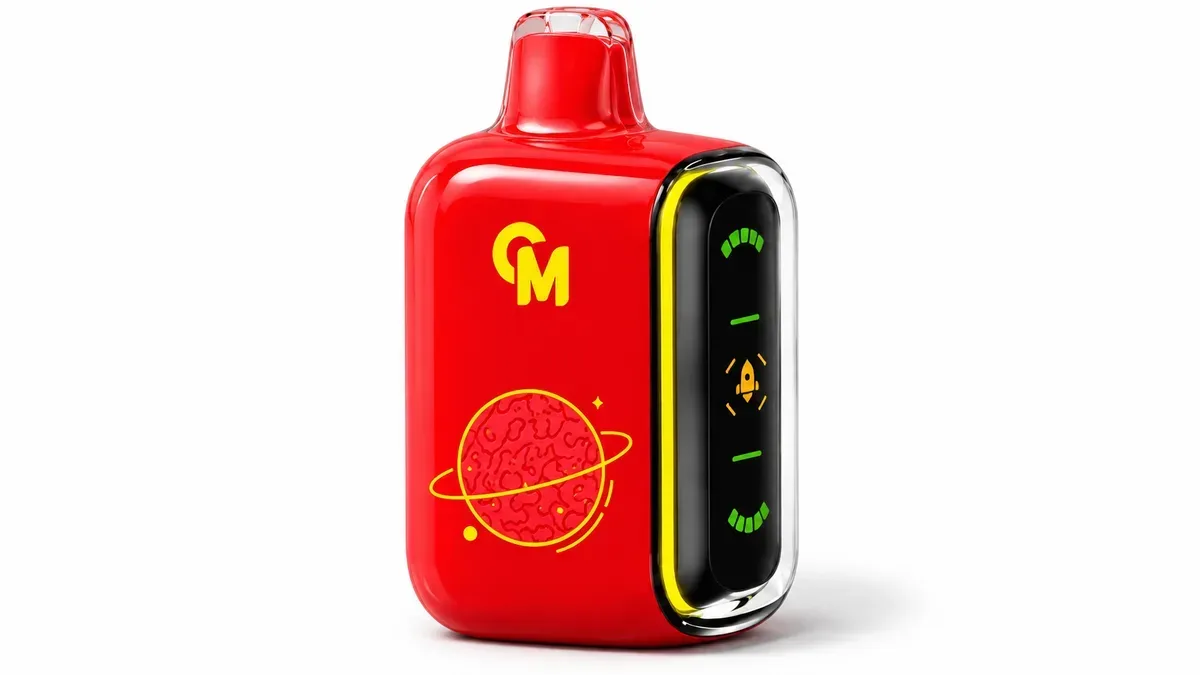
If a listing says Crystal Mary Pulse Watermelon Ice and the box adds 20000 Puffs, do they name the same variant? Crystal Mary Pulse 20000 Puffs Watermelon Ice: Product Naming and Flavour Labelling starts with three details you can check. A seller may shorten the title or put the flavour first. However, the box gives you a way to check what the title leaves out.
Start with the brand and model, then find the stated puff count and the exact flavour wording. Each field answers a different question about the product. For instance, the flavour name describes a taste and sensation, while the number gives the stated count. Once you know what each part means, you can compare a short listing with the full label.
Crystal Mary Pulse 20000 Puffs Watermelon Ice Product Name
Crystal Mary Pulse 20000 Puffs Watermelon Ice is the full name of the variant covered here. Within that name, Crystal Mary is the brand and Pulse is the model. Meanwhile, 20000 Puffs is the stated count, and Watermelon Ice is the flavour wording.
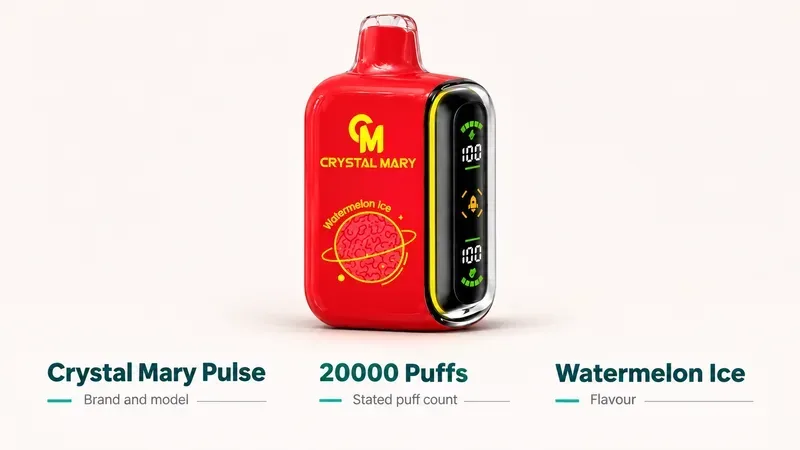
The three parts of the name
| Wording | Field | What to check |
|---|---|---|
| Crystal Mary Pulse | Brand and model | Look for Crystal Mary and the model name Pulse. |
| 20000 Puffs | Stated puff count | Check that the number describes puffs. |
| Watermelon Ice | Flavour | Look for both words in the flavour name. |
Read the fields together. For instance, a photo that shows Crystal Mary and Pulse tells you which model the box names. A separate photo might show the puff count in large type near the flavour name. If both photos show the selected variant, you can use them together to check the full name.
Word order can change without changing the identifiers. For example, “Watermelon Ice | Crystal Mary Pulse | 20,000 Puffs” contains the same three fields as the full name. The comma is a thousands separator, and the vertical bars divide the fields. Therefore, the comparison comes down to the words and number inside each field.
How much can each field tell you?
Consider a listing that displays “Watermelon Ice 20000 Puffs” above its photos. The title gives you the flavour and count, but you still need to find the brand and model. For instance, a clear image of the selected box may show Crystal Mary and Pulse on its front panel. That gives you the third field needed for the comparison.
Similarly, “Crystal Mary Pulse 20000 Puffs” gives you the brand, model, and count. If the page offers several flavours, read the selected option before using the title to identify the variant. Check that the image or product details correspond to that option. The title often describes the whole listing, while the option specifies the flavour.
Keep the full name handy if a listing breaks the wording across several places. Specifically, use it to check the title, selected option, and photos field by field. The three parts can appear on different lines or box panels. Together, they identify the named variant when they all apply to the same item.
What Watermelon Ice Means on a Flavour Label
Watermelon Ice describes a watermelon flavour with a cooling sensation. In that phrase, Watermelon names the flavour, while Ice tells you to expect a cooling note. However, the wording leaves the strength of that sensation open. Descriptions such as “lightly chilled” or “strong cooling” add claims beyond the two words on the label.
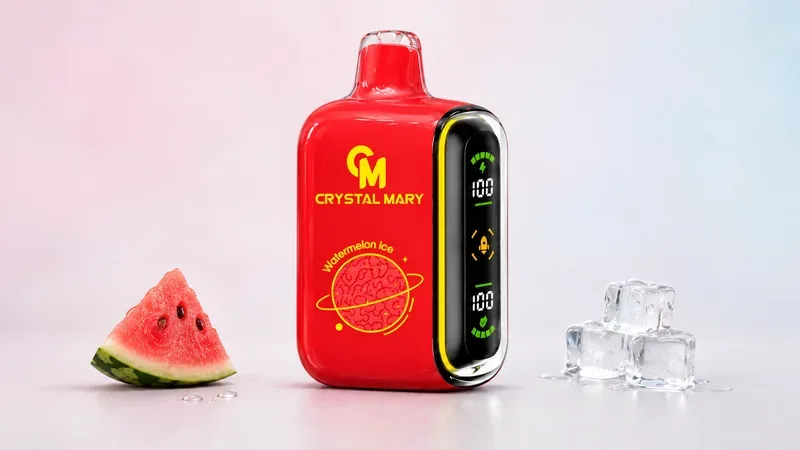
Does Watermelon Ice tell you which ingredients it contains?
No. The flavour name alone cannot establish whether the liquid contains watermelon juice, a watermelon extract, menthol, or another cooling ingredient. For instance, the word Ice describes a sensation and cannot identify the substance responsible for it. An ingredient claim needs a disclosure that names the substance and applies to this variant.
Suppose a shop describes the flavour as “watermelon with menthol,” while the box shows only “Watermelon Ice.” The box supports the flavour wording. However, the menthol claim requires its own evidence, such as a manufacturer ingredient declaration naming menthol for this product. A seller repeating that claim in multiple listings still leaves the same question open.
The same distinction applies to the fruit wording. For example, a watermelon illustration and the word Watermelon both help you recognise the flavour at a glance. Neither tells you whether the formulation uses fruit juice or how the manufacturer produces the flavour. If the source matters to you, look for a disclosure that addresses it directly.
What documentation supports a specific claim?
Look for a manufacturer ingredient list or written declaration that identifies Crystal Mary Pulse and the Watermelon Ice variant. Additionally, compare any product code, market, or version details shown on both the document and the box. Those details help you determine whether the disclosure applies to the item you are checking.
- For a named ingredient, look for an ingredient declaration that names the substance and the exact variant.
- For an ingredient amount, check whether the relevant documentation gives a concentration and identifies what that figure describes.
- For the source of a flavouring, look for a statement that specifies its source for this formulation.
Sometimes a document uses a broad term such as “flavourings.” In that case, the document confirms only the level of detail it provides. Furthermore, a disclosure for a different flavour in the Pulse range applies to the product it identifies. Check the variant name before carrying an ingredient claim from one product to another.
A retailer’s description can still help you locate the flavour on a crowded page. For instance, “cool watermelon” may describe the taste in ordinary language. However, when you compare product names, use the exact label wording, Watermelon Ice. That gives you a precise match even when different shops describe the taste differently.
What 20000 Puffs Means on the Label
20000 Puffs is the stated puff count on the label. Read it as twenty thousand puffs when you compare a box with a product listing. However, the total an individual records can vary. The number on the box also leaves open how the figure was determined.
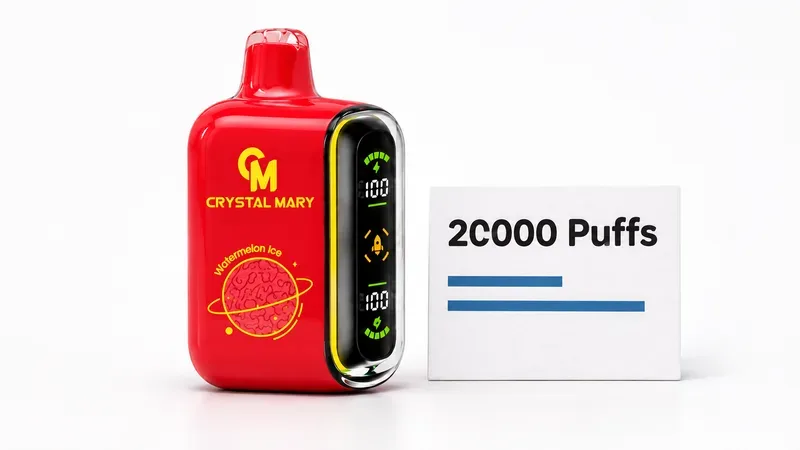
How draw duration can affect the total
Puff duration is the length of one draw. For example, ten one-second draws add up to ten seconds of drawing time. Meanwhile, ten three-second draws add up to thirty seconds. Both examples contain ten draws, even though the total drawing time differs.
A longer draw can use more liquid per puff when other conditions stay similar. As a result, a device may yield fewer draws before reaching the same stopping point. The ten-draw example illustrates the difference in duration. It gives no basis for calculating a personal total from the number on the box.
Airflow and the time between draws also help describe the conditions under which someone counted puffs. For instance, CORESTA Recommended Method No. 81 specifies conditions for machine generation and collection of e-cigarette aerosol. Its scope is aerosol collection. To connect any method to this product’s stated count, you would need documentation for the specific variant.
What would establish the basis for the number?
Look for a manufacturer explanation that states how it arrived at 20,000 puffs for this product. Specifically, check whether it describes a measured result, a calculated estimate, or another basis. If it cites a test, a report tied to the variant can show the conditions and how the test ended.
- Draw settings. Check the duration, draw volume or airflow, and time between draws.
- Device settings. Check the operating mode, where applicable, and how the test handled charging.
- Stopping point. Find the rule the tester used to decide when the count ended.
- Reported result. Check how many units the tester measured and how the report summarised their counts.
The stopping point is easy to overlook. For instance, a test could stop when the device no longer produces aerosol under the stated conditions. Another test could use a defined output threshold. Without the stopping rule, you cannot tell whether two counts describe the same endpoint.
For a packaging comparison, record the count exactly as it appears, including any qualifier such as “up to.” Then compare the numeral and the unit with the selected listing. If the documentation repeats the count without explaining its basis, you can verify the wording. How the manufacturer obtained the number remains a separate question.
How to Match a Shortened Listing Title to the Packaging
Imagine a page titled “Crystal Mary Pulse Watermelon Ice” with several box photos underneath. One photo shows 20000 Puffs, but the page also displays other variants. Before using that photo, choose the Watermelon Ice option and check which details appear with it. Then compare the three fields against the relevant packaging.
Compare the same three fields each time
- Brand and model. Find Crystal Mary and Pulse. Check both words against the packaging or the selected product details.
- Stated puff count. Find 20000 Puffs or equivalent wording such as 20,000 Puffs. Keep qualifiers such as “up to” visible.
- Exact flavour wording. Look for Watermelon Ice. If one word is missing or different, check the selected option and label.
You may find one field in the title and another in the option menu. For example, a shop might use “Crystal Mary Pulse 20K” for the page heading and list Watermelon Ice in the selector. If the selected box shows the full name, the evidence supports a match. Make sure 20K refers to puffs in that context.
When does a short title give you enough evidence?
“Crystal Mary Pulse Watermelon Ice” gives you the brand, model, and flavour. The title leaves the puff count open. However, a clear photo of the selected box showing 20000 Puffs fills that gap. A photo showing a different flavour or an unlabelled range image leaves the count unresolved for the selected option.
“Pulse 20K Watermelon Ice” includes the model, abbreviated count, and flavour. In that case, check that Crystal Mary appears in the selected item’s details or on the relevant box. Also check that 20K refers to the puff count. If those details align, the shortened title can still identify the same named variant.
“Crystal Mary Pulse 20000 Watermelon” leaves out Ice. The shop may have shortened the title, but the exact flavour still needs checking. For instance, a selected option and box that both say Watermelon Ice can resolve the omission. If the selected option also says only Watermelon, ask for the exact wording on that box.
How to handle a direct conflict
Suppose the title says “Watermelon Ice,” but the box for the selected option says “Watermelon Mint.” Both names contain Watermelon, and both may suggest a cooling taste. However, the flavour wording differs. Ask which label belongs to the item behind the selected option before treating the two descriptions as a match.
The same approach works when the numbers conflict. For instance, a listing that says 20,000 puffs and a box that says 15,000 puffs show different counts. Check whether the seller reused a photo or attached it to the wrong option. A clear image tied to the selected variant can resolve a photo mix-up.
Where to Verify Product Details When Labels Are Unclear
Choose the source according to the detail you need. A clear photo of the selected box can show you what the label says. Meanwhile, a manufacturer specification sheet can help you check a product specification. Ingredients and test conditions usually need documents that address those questions directly.
Use a source that answers your question
- Label wording. Use the physical box, a clear photo of the selected item, or manufacturer packaging images for that variant.
- Ingredients. Use a manufacturer ingredient declaration or written response that answers your specific question about Watermelon Ice.
- Specifications. Use a manufacturer product sheet or manual that matches the product name and any applicable version details.
- Test conditions. Use a manufacturer methodology statement or test report connected to the stated puff count.
A document can confirm one field while leaving another open. For example, a manufacturer product sheet may list 20,000 puffs without explaining how anyone measured or estimated that count. It confirms the stated specification. To verify the test conditions, look for a methodology statement or report that the manufacturer ties to that figure.
Likewise, a clear box photo may show Watermelon Ice and include a short ingredient panel. Read the panel for what it actually names. For instance, if it lists only a broad flavouring category, seek a variant-specific disclosure for any individual ingredient claim.
Work through missing photos and conflicting descriptions
Start by noting which field you cannot read or which two values disagree. For example, the box photo may cut off the count while the listing says 20K. Ask for a clear view of the relevant panel for the selected Watermelon Ice option. If several flavours share one gallery, specify the option when requesting the photo.
Next, compare the new image with the listing and any applicable manufacturer material. If a product code appears, check whether the manufacturer connects it to the same variant. Additionally, note any market or packaging version identified in the documentation. Similar artwork can make two boxes look alike when their text differs.
If two sources still conflict, keep the disputed field open while you verify it. For instance, a title might say 20,000 puffs while the manufacturer sheet uses “up to 20,000 puffs.” Those phrases share a number, but the second includes a qualifier worth keeping. A photo of the selected box can tell you which wording appears there.
A focused question can save several messages. For example, ask for a photo showing Crystal Mary Pulse, the puff count, and the flavour on the selected box. If your question concerns menthol or puff duration during testing, ask for the relevant manufacturer document. Each request gives the recipient a specific detail to check.
Quick Reference for Common Label Variations
Use this table when the listing and box use different spacing, punctuation, or word order. The examples assume you are checking against the supplied full name. In each case, confirm that the wording belongs to the option you selected.
| Example listing title | What you can see | Outcome |
|---|---|---|
| Crystal Mary Pulse 20000 Puffs Watermelon Ice | The brand and model, count, and exact flavour all appear. | All identifiers present. |
| Crystal Mary Pulse 20,000 Puffs Watermelon Ice | A comma separates the thousands in the same number. | Equivalent count formatting. |
| Crystal Mary Pulse Watermelon Ice | The model and flavour appear, but the title omits the count. | Check the missing field. |
| Crystal Mary Pulse 20000 Puffs Watermelon Mint | Mint replaces Ice in the flavour name. | Resolve the discrepancy. |
Simple formatting changes are usually quick to recognise. For example, “20000 Puffs” and “20,000 Puffs” use different punctuation to express the same count. Similarly, “20K Puffs” uses K to mean thousand. If the title says only “20K,” find the unit in the product details or on the box.
A missing field gives you a specific follow-up. For instance, a clear photo showing 20000 Puffs can complete a listing title that already gives Crystal Mary Pulse and Watermelon Ice. First, confirm that the photo shows the selected flavour. Then read the count and any qualifier printed beside it.
A changed word calls for a different check. For example, Watermelon Mint conflicts with Watermelon Ice even when the model and count match. Confirm which flavour appears on the box for the selected option. If the seller cannot tie either label to the option, the flavour match remains unresolved.
Conclusion
Crystal Mary Pulse identifies the brand and model. 20000 Puffs gives the stated puff count, while Watermelon Ice describes a watermelon flavour with a cooling sensation. For a specific ingredient claim, use manufacturer documentation that applies to this exact variant.
Compare the model, stated puff count, and exact flavour wording in your listing with the packaging for the selected variant. If the listing leaves out a field, verify it in manufacturer documentation for that product. If the listing and packaging conflict, resolve the difference before treating them as the same variant.
