
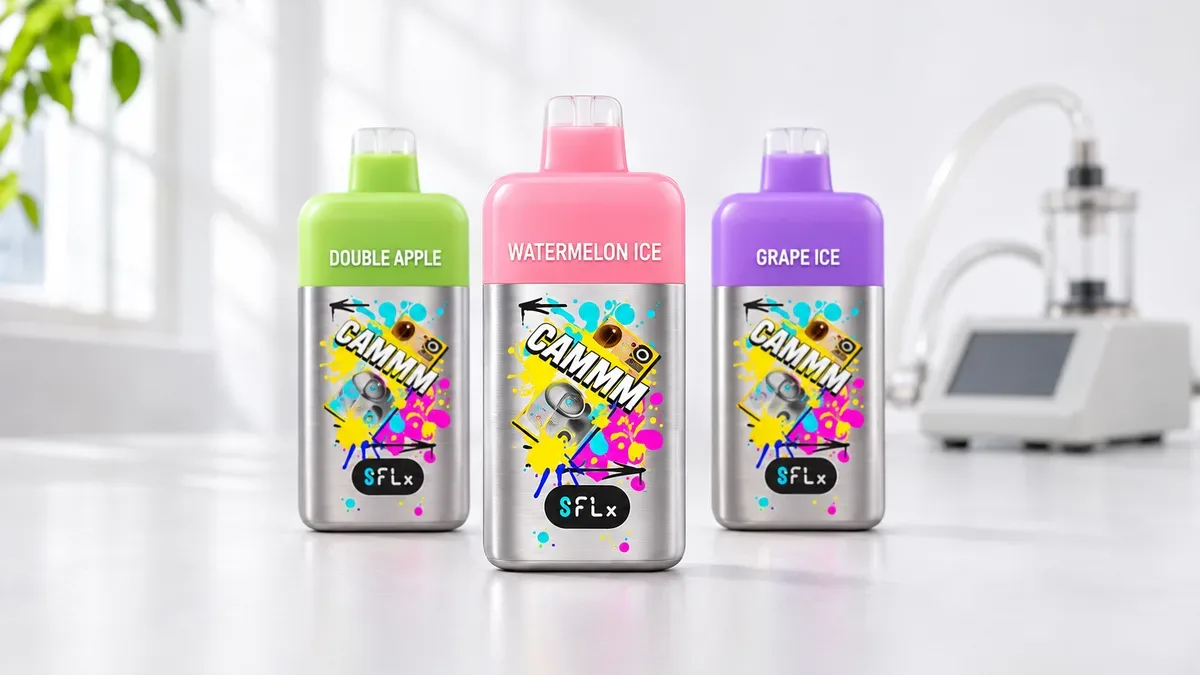
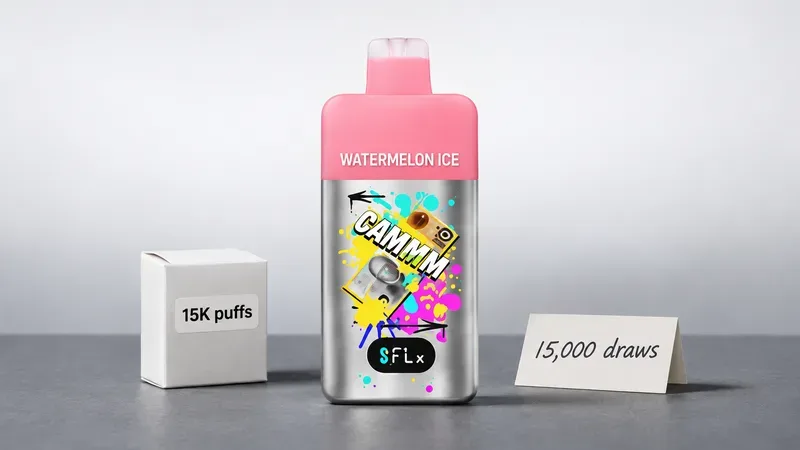
If a vape is labeled 15K puffs, how long would 15,000 draws last, and what counts as one draw? CAMMM A$ 15K Puffs: Understanding the Advertised 15,000 Puff Rating starts with the difference between a headline and a test result. Specifically, the listing gives a count without explaining the draw conditions or when counting stops. The examples below show how those details affect lifespan estimates and what the count can tell you about nicotine.
What Does the CAMMM A$ 15K Puffs Rating Mean?
What the product listing says
Vape Store Australia includes the wording “$CAMMM A$ 15K Puffs” in its product listing. Here, 15K means 15,000, and a puff means one draw through the device’s mouthpiece. Specifically, the wording advertises 15,000 draws for the product. The quoted phrase contains no qualifier such as “up to.”
In everyday use, you might count each draw you take as one puff. However, a test needs a more precise way to decide which draws earn a place in the total. For instance, a draw might barely activate the heater and produce very little aerosol. Whether that draw counts depends on the test’s definition of a completed puff.
That distinction matters because a single number can hide several decisions about how someone arrived at it. For example, a count could include every draw that activates the device. Another count could include only draws that produce a specified amount of aerosol. Both would describe puffs, yet they could produce different totals for the same unit.
What the number measures
The advertised figure and a measured result answer different questions. Specifically, 15,000 is the figure the retailer lists for the product. A measured result would say how many draws a particular unit completed under stated conditions. Ideally, a report would also show how the results varied across the units tested.
Even a documented result would still be a count of events. For instance, the same tally could represent many short draws or fewer days of more frequent use. To estimate elapsed days, you need a second number describing how many draws happen each day. The listing gives no daily rate in the quoted wording.
Think of a counter that moves up by one each time a draw meets a rule. The counter can show 500 without telling you how long those draws took or how far apart they occurred. Likewise, the 15K figure gives you a total to interpret. The test details would tell you what that total represents in practice.
How Is Vape Puff Count Tested?
What a machine measures
A puffing machine can draw air through a vape repeatedly according to programmed settings. For instance, it can take the same volume of air on each draw and keep the same time between starts. This lets a lab repeat a series of draws under specified conditions. Depending on the test, the lab can also collect aerosol and measure its output.

- Puff duration is how many seconds the machine spends drawing air in one puff.
- Puff volume is the amount of air the machine draws in one puff, usually in milliliters.
- Puff interval describes the spacing between draws. A protocol should specify how it measures that spacing.
CORESTA Recommended Method No. 81 provides an example of standardized conditions for generating and collecting e-cigarette aerosol. Specifically, it specifies a 55-milliliter draw lasting three seconds, with a 30-second period from one puff’s start to the next. That gives laboratories a repeatable way to generate aerosol. A model-specific lifespan test would also need rules for counting puffs and ending the run.
Changing the machine settings changes the demands placed on the device. For instance, a longer draw can keep the heater active for more time. Meanwhile, changing airflow can affect whether a draw-activated device switches on. Shortening the interval can also give the heater and wick less time between draws.
What counts as a completed puff
A lifespan test needs a counting rule for individual draws and an endpoint for the whole run. For example, a lab might count each draw that meets a minimum aerosol output. It could stop after several consecutive draws fall below that threshold. Another hypothetical test might count every heater activation until the device shuts off.
Imagine a machine makes 20 draws near the end of a run. The heater activates every time, but only 12 draws reach the test’s minimum aerosol output. Therefore, an activation-based rule adds 20 puffs, while an output-based rule adds 12. That eight-puff difference comes entirely from the counting rule.
Partial draws raise a similar question. For instance, the machine might request a three-second draw, but the heater could shut off partway through it. A report should say whether the test counts that attempt. It should also explain whether the test continues after a cutoff, including when recharging is possible.
What is publicly documented for CAMMM A$ 15K Puffs
The retailer’s indexed listing confirms the advertised number. However, the public sources reviewed did not establish whether anyone used a puffing machine to test this model. They also did not disclose its test duration per puff, puff volume, interval, charging protocol, sample size, or endpoint. A model-specific report would be needed to verify those conditions.
Why the Actual Vape Puff Count Can Differ From the Label
Puff duration, volume, and spacing
Picture two people using identical devices. One takes brief draws, while the other draws long enough to keep the heater active for roughly twice as long. At the same power, that extra heating time can use more energy on each draw. Additionally, it can produce more aerosol while the wick supplies enough liquid to the heater.

Puff volume adds another variable because a greater air volume can come from a longer draw, faster airflow, or both. For example, two draws may move the same amount of air but take different amounts of time. The heater can run for different lengths of time during those draws. Consequently, equal volumes can produce different amounts of aerosol.
Spacing can matter too, although its effect depends on the device. For instance, closely spaced draws may begin while the heater and wick are still warm. Longer breaks give them more time to cool. CORESTA’s guide on vaping regimes describes how duration, volume, and frequency can affect aerosol production.
In practice, a person may take longer draws during one part of the day and shorter draws later. Meanwhile, a machine can repeat a single sequence for the full run. Both patterns can reach the same tally at some point. However, they may use different amounts of liquid and energy to get there.
Battery life and puff count
Every heater activation draws energy from the battery. Specifically, how much energy the device uses depends on the power it delivers and how long it delivers it. Available battery energy therefore helps determine how many draws the device can power. The device’s cutoff also determines when it stops supplying power to the heater.
For a rechargeable device, puffs per charge describe the draws available between charges. Meanwhile, total usable puffs can span several charges if the device still has enough e-liquid to produce aerosol. For example, a battery cutoff could end the first charge with plenty of liquid left. Recharging can restore available power while the device continues using its original liquid supply.
E-liquid capacity and depletion
Starting capacity tells you how much e-liquid the device begins with. However, the number of usable draws also depends on how much liquid the heater consumes each time. A longer draw may use more liquid than a brief draw under otherwise similar conditions. As a result, two devices with the same starting capacity can reach depletion at different puff counts.
The battery and liquid supply can also reach their limits at different times. For instance, a device may retain charge after its liquid supply can no longer sustain usable aerosol output. Conversely, a power cutoff can stop the heater while some liquid remains. Either situation can end a series of usable puffs.
How Long Does a 15,000-Puff Vape Last?
Estimate days from usable puffs
To turn a puff count into days, divide the assumed number of usable puffs by the average daily count. Specifically, the first number represents how many draws you assume the device will deliver. The second represents how many draws occur on a typical day, averaged across the days you observe. Both inputs need a clear basis for the estimate to reflect actual use.
Estimated days of use = assumed usable puffs ÷ average puffs per day. For instance, suppose an observed count totals 800 draws over four days. Dividing 800 by four gives an average of 200 puffs per day. You would enter 200 as the second number in the formula.
If daily use varies, add the counts across the observed days before dividing by the number of days. For example, a busy weekend and a quiet weekday may contribute very different totals. A broader sample can better reflect those swings when it includes both kinds of days. If daily use later changes, the estimate changes with it.
Show the arithmetic at three daily rates
The table uses 100, 200, and 300 puffs per day as arithmetic inputs. Specifically, the first scenario assumes the device delivers the full advertised 15,000 usable puffs. The second uses 9,000 usable puffs as a hypothetical scenario. Each cell shows the result of dividing its assumed total by the daily rate.
| Puffs per day | 15,000 assumed usable puffs | 9,000 hypothetical usable puffs |
|---|---|---|
| 100 | 150 days | 90 days |
| 200 | 75 days | 45 days |
| 300 | 50 days | 30 days |
Read across the 200-puff row to see what happens when only the assumed usable total changes. Specifically, 15,000 divided by 200 gives 75 days, while 9,000 divided by 200 gives 45 days. Now read down the first column of estimates to see what happens when the daily rate changes. Doubling the rate from 100 to 200 halves the result.
Explain the uncertainty in both inputs
Neither column has model-specific measurements to support it as a forecast. The 15,000 column assumes the device delivers every advertised puff, and the 9,000 column simply illustrates a smaller total. Meanwhile, the daily rates serve as examples for the calculation. They describe neither typical use nor suggested use.
The formula also holds the usable total steady when you change the daily rate. However, a real change in frequency may come with longer draws or shorter gaps between them. That could change the usable total as well as the daily count. The table isolates each input so you can see how it affects the arithmetic.
Can You Compare Puff Ratings Across Devices?
Match the test conditions and counting rules
Two advertised puff counts are easiest to compare when you know how both tests ran. Start with the machine settings because they determine what each draw asks of the device. Then check how the test handled device operation and how it decided which draws counted. CORESTA Recommended Method No. 81 illustrates the level of detail a repeatable draw schedule can provide.
- Draw settings. Compare puff duration, volume, and the interval between draws.
- Device settings. Check which power mode each test used and when it allowed recharging, if applicable.
- Counting rules. Look for the same definition of a completed puff and the same rule for stopping the test.
- Reported results. Check how many units each test included and whether the advertised figure represents an average or a maximum.
An average and a maximum describe different things even when both tests use the same machine settings. For instance, imagine five units average 12,000 completed draws and the longest-lasting unit reaches 15,000. The 15,000 figure describes the highest result in that group. The 12,000 figure describes the group’s average under those conditions.
Interpret a comparison when test details are missing
Suppose one device advertises 15,000 puffs and another advertises 12,000. The first has the higher advertised rating, by 3,000 draws. However, the labels alone leave the actual lifespan ranking unknown when the protocols differ or companies keep them undisclosed. The same puff count can represent different demands and different levels of aerosol output.
For example, imagine the first test used shorter draws and counted every heater activation. Meanwhile, the second used longer draws and counted only those that met an output threshold. Those procedures could contribute to the gap between the advertised figures. Testing both devices under shared conditions would show which completed more draws under those rules.
Even then, the result would apply to the conditions the report describes. Specifically, a comparison using one power mode and one charge schedule tells you how the devices performed under that setup. If either device supports another mode, its draw count could change under a different test.
What Does Puff Count Tell You About Nicotine Exposure?
Why nicotine can vary per puff
One draw can emit a different amount of nicotine than the next. Specifically, nicotine in the aerosol can vary with e-liquid concentration, device output, and puff duration. A laboratory study by Soha Talih and colleagues measured nicotine in machine-generated aerosol while varying those factors. The researchers found that nicotine yield changed across the conditions they tested.
For example, the same number of short and long draws can produce different nicotine yields. Higher device output can also alter how much aerosol the heater generates under given conditions. Meanwhile, liquid concentration affects the amount of nicotine available in the liquid that supplies the heater. The study measured those effects for its test setup.
Nicotine emitted at the mouthpiece and nicotine absorbed by a person are separate measurements. Specifically, emissions describe how much nicotine leaves the device in the aerosol. Absorption describes how much enters the body. How much aerosol a person inhales and what happens after inhalation both affect uptake.
What can be inferred from the label
The 15K wording describes an advertised draw count. It gives no nicotine concentration, emitted nicotine per puff, or absorbed amount. If the package separately lists a concentration in milligrams per milliliter, that number describes the nicotine in each milliliter of liquid. It does not tell you how much nicotine reaches the mouthpiece during one draw.
Estimating personal exposure would require information on aerosol emissions, actual use, and uptake. For instance, two people could take the same number of draws yet inhale different amounts of aerosol. They could also absorb different amounts of the nicotine they inhale. Therefore, the puff rating alone cannot establish a nicotine dose or a person’s health risk.
Conclusion
The CAMMM A$ 15K Puffs label advertises 15,000 draws, and the public sources reviewed leave the model-specific test method unverified. In everyday use, draw patterns, available battery power, and remaining e-liquid all influence how long the device produces usable aerosol. Therefore, any estimate in days depends on the usable count and daily rate you assume. The advertised total alone cannot establish nicotine exposure or health risk.
Before interpreting or comparing puff ratings, check the packaging for test details or ask the manufacturer for a model-specific report. Specifically, look for a definition of a completed puff and an explanation of when counting stops. Those two details show which draws contribute to the advertised total and where the test ends.
