
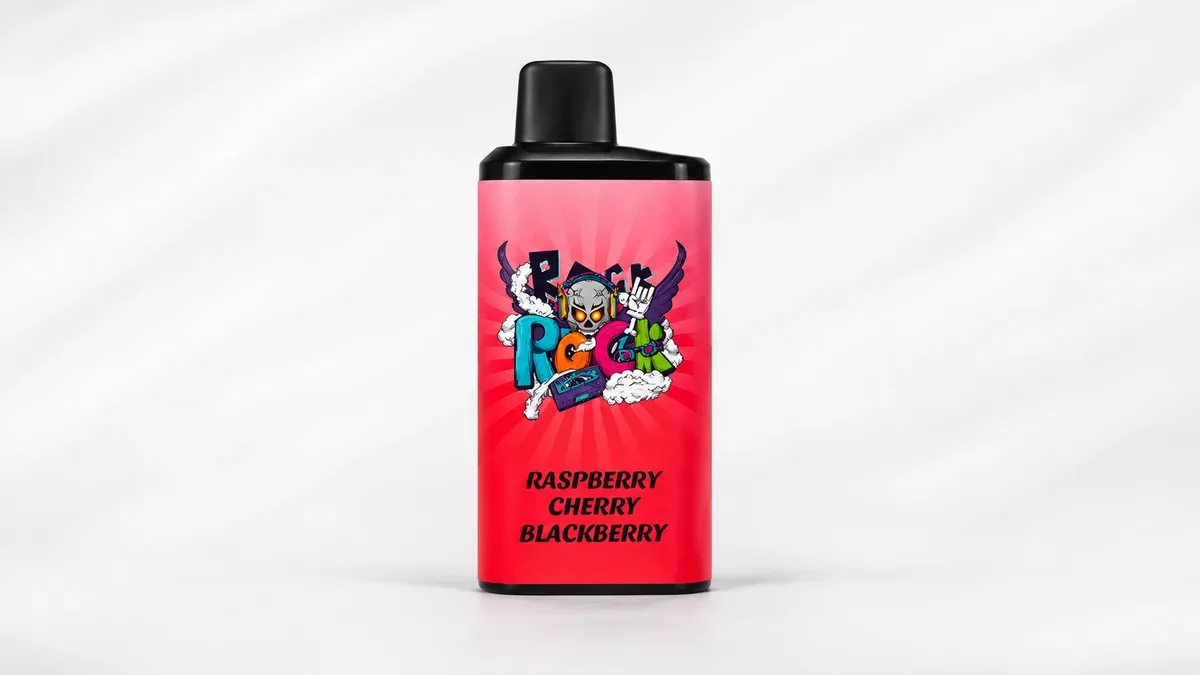
Can you legally buy the IGET Bar Pro 10000 Puffs Raspberry Cherry Blackberry in Australia? Australian retailers cannot lawfully sell or advertise this disposable, fruit-flavoured vape as described. Yet the listing showed a sale price, a cart button and a promise of nationwide delivery.
The page also gave two conflicting answers about charging. Meanwhile, the nicotine and puff figures looked precise but came without supporting measurements. Here’s what the listing actually shows, how Australian rules apply, and where to take the device if you already own one.
Can the IGET Bar Pro 10000 Puffs Raspberry Cherry Blackberry be sold in Australia?
Australian retailers cannot lawfully sell the IGET Bar Pro Raspberry Cherry Blackberry in the disposable format described. The Therapeutic Goods Administration, or TGA, says the retail supply ban covers disposable vapes regardless of nicotine content. Therefore, the same rule would apply if a seller described this disposable model as nicotine-free.
Advertising has its own restrictions. Specifically, the TGA prohibits public advertising and promotion of vaping goods unless it has authorised the activity. A product page that encourages shoppers to order, highlights discounts and promotes delivery serves a different purpose from a product-identification record. See the TGA’s Vapes: advertising and promotion guidance for the limited circumstances where advertising is authorised.
Why pharmacy supply follows different rules
Australian pharmacies can supply eligible therapeutic vapes for smoking cessation or managing nicotine dependence. However, that pathway has separate requirements covering the product and how pharmacists supply it. Where flavours are present, the permitted options are mint, menthol and tobacco. Raspberry, cherry and blackberry fall outside those options.
For instance, a participating pharmacy may supply an eligible therapeutic vape containing up to 20 mg/mL without a prescription. That option applies to adults where clinically appropriate, subject to state and territory requirements and a pharmacist consultation. Higher strengths require a prescription. However, a prescription cannot make the disposable berry variant eligible for supply under those product rules.
The format and flavour each matter to the assessment. If two pages list devices with the same nicotine strength, their eligibility can still differ because of their design and ingredients. Likewise, the listing’s adult-only warning does not authorise the sale. The TGA’s Changes to the regulation of vapes guidance explains the disposable ban and the separate pharmacy pathway.
What the $49.99 listing shows
The listing showed $49.99 alongside a $99.99 comparison price. It offered 2% off when buying two and 5% off when buying five. Additionally, it displayed a cart prompt and claimed delivery across Australia within one to three business days. Together, those details show a page set up to solicit orders.
However, a listing snapshot captures what a seller displayed at one point. The comparison price gives no sales history, and the shipping claim gives no record of completed deliveries. A cart button likewise provides no evidence of live inventory. The snapshot therefore cannot establish live stock, fulfilment or lawful availability.
Suppose a second page shows the same device at a different price. You can compare what each seller displayed, but the Australian supply question still turns on the product and the seller. For this listing, the retailer’s own description identifies a disposable device with a fruit-flavoured liquid.
Advertised specifications and conflicting charging instructions
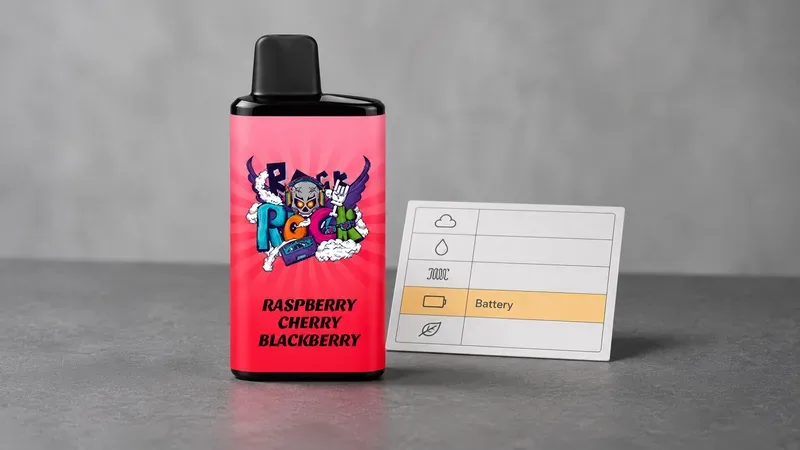
The retailer described the flavour as a blend of raspberry, cherry and blackberry with a tart finish. It also published figures for liquid volume, nicotine strength, battery capacity and coil resistance. However, the available listing material provides neither model-specific manufacturer documentation nor independent measurements. The table shows what the seller reported and what remains unverified.
| Specification | Seller-reported value | Verification status |
|---|---|---|
| Flavour | Raspberry, cherry and blackberry | Retailer description. Ingredients unverified. |
| Nicotine strength | 5%, labelled as 50 mg/mL | Retailer-reported concentration. Actual strength unverified. |
| Liquid volume | 20 mL | Actual fill volume unverified. |
| Battery | 2,000 mAh, labelled non-rechargeable | Capacity unverified. Seller instructions conflict on recharging. |
| Coil | 1.2 Ω mesh coil | Coil type and resistance unverified. |
| Puff count | Up to 10,000 puffs | Advertised maximum. Test method and results unavailable. |
Each figure answers a different question about the device on paper. For instance, 20 mL describes the listed fill volume, while 1.2 Ω describes the coil’s listed electrical resistance. Neither figure establishes how much aerosol a draw produces. Likewise, the flavour description identifies the marketed variant without providing an ingredient list.
Does the 2,000 mAh battery recharge?
The battery specification calls the device non-rechargeable, and the FAQ repeats that answer. However, the first-use tip tells readers to fully charge the device before using it. The listing gives no explanation for the contradiction. As a result, it leaves owners without reliable charging instructions for this exact variant.
The figure 2,000 mAh expresses battery capacity in milliamp-hours. Specifically, it describes an amount of electrical charge the battery can deliver under specified conditions. It says nothing about whether the device has the charging circuitry or design needed to recharge safely. A larger number cannot resolve a contradiction about how the device works.
Manufacturer documentation would need to identify the exact model and variant and state whether it supports charging. A manual for a different IGET product would leave that question open. Until those details can be verified, leave the device uncharged. If you plan to discard it, keep the casing and built-in battery intact.
A product name alone can also be too broad for a technical check. For instance, packaging may carry a model identifier that the retail title omits. That identifier would help match the unit to its instructions and battery specifications. The retailer’s conflicting statements provide no basis for deciding which instructions apply.
What 5% nicotine and 50 mg/mL mean
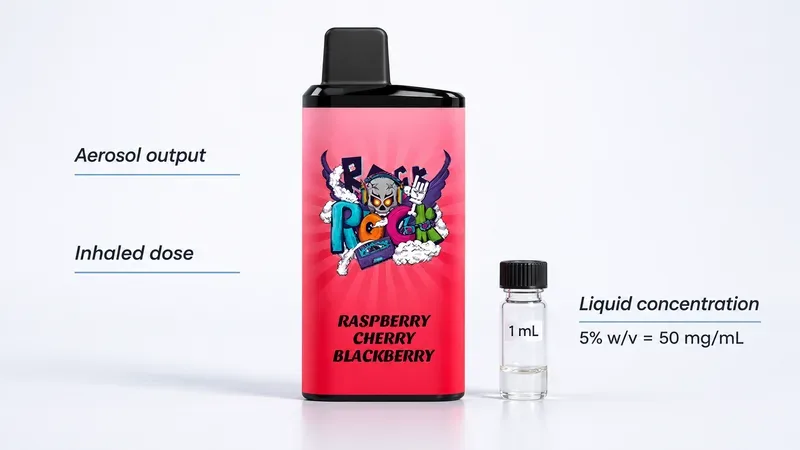
The listing uses 5% and 50 mg/mL to describe the same nicotine concentration. When a percentage expresses weight per volume, 5% means 5 grams of nicotine per 100 mL of liquid. Convert the grams to milligrams, then divide by the volume. The result describes what the seller claims is in each millilitre.
- Start with the percentage. At 5% weight per volume, 100 mL contains 5 grams of nicotine.
- Convert the mass. Five grams equals 5,000 milligrams.
- Divide by the volume. Dividing 5,000 mg by 100 mL gives 50 mg/mL.
The arithmetic checks how the two label figures relate. However, verifying the actual concentration would require evidence for the liquid in this variant, such as a batch-specific test result. The listing supplies no such measurement. Therefore, 50 mg/mL remains a retailer-reported figure.
How liquid concentration differs from dose per puff
Nicotine concentration describes the liquid before the coil heats it. Next, the device emits aerosol that can carry some nicotine from that liquid. The amount a person inhales depends on how much of that aerosol reaches them. The amount their body absorbs is a further step.
For instance, two draws can start with liquid at the same concentration and produce different amounts of aerosol. If the amount of aerosol changes, the nicotine emitted can change too. Meanwhile, a laboratory measurement of nicotine leaving the mouthpiece would describe emissions for that test. It would take further evidence to estimate what a person inhales or absorbs.
To estimate emissions per puff, a test would need measured aerosol output and nicotine delivery under stated draw conditions. Specifically, the report would need to say how long each draw lasted and how it controlled airflow. Those details help readers understand what the resulting measurement represents. Dividing the listed concentration by the advertised puff count cannot produce a dose per puff.
How the 10,000-puff claim relates to the 7–12 day estimate
Imagine two adults with otherwise identical devices and the same number of draws each day. One takes short draws, while the other takes longer ones. A longer draw can keep the heating element active for more time, using more liquid or battery energy. As a result, the two devices can deliver different puff totals before they stop working.
For instance, imagine one person draws for two seconds and the other for four seconds. If the heater stays active throughout, the second draw gives it twice as much time to run. Actual consumption per draw would still depend on the device’s behaviour. The example illustrates how two people can count the same number of puffs and use different amounts of liquid.
The retailer advertised up to 10,000 puffs. That wording presents 10,000 as a claimed maximum under unspecified conditions. However, the listing gives no method that would let a reader reproduce or interpret that figure. It also supplies no results showing how much counts varied across units.
What would support a lifespan in days?
The supplied FAQ includes the 7–12 day estimate and says lifespan depends on frequency of use. However, it gives no daily draw count behind that range. Frequency and duration affect different parts of the calculation. Taking more draws each day can shorten the calendar lifespan, even when individual draws stay the same length.
For example, a device that actually delivered 1,200 draws would last 12 days at 100 draws per day. At 200 draws per day, that same total would last six days. These are illustrative numbers. They show how a calendar estimate depends on an assumption about daily use.
A substantiated estimate would need enough detail to connect the puff test to daily use. That includes the conditions for each draw and a clear rule for counting the final one.
- Draw duration. How many seconds did each draw last?
- Draw interval. How long did the device rest between draws?
- Test endpoint. Did the test end at battery cutoff, liquid depletion or a defined drop in aerosol output?
- Average daily use. How many draws per day did the lifespan estimate assume?
Without those details, the two figures cannot validate each other. The 10,000 figure is the advertised maximum, and 7–12 days is a retailer estimate without a disclosed daily-use assumption.
How to assess authenticity, certification and customer reviews
The retailer claimed it sourced genuine devices from authorised distributors and imported this model from IGET Canada. It also claimed CE and RoHS compliance. Additionally, it advertised discreet packaging, local support in Revesby, NSW, and a 15-day return guarantee for defective products. Each claim calls for a different kind of evidence.
Match the paperwork to the exact device
For sourcing, look for confirmation from the manufacturer or named distributor covering the exact model and variant. A batch or lot identifier can help tie that confirmation to a particular unit. Likewise, a claim about importing through Canada does not establish where the manufacturer made the device. Origin documentation would need to clarify that distinction.
For the CE and RoHS claims, look for a declaration of conformity that identifies the model and applicable requirements. Relevant technical documentation or test records can help establish what the declaration covers. However, overseas conformity claims do not determine whether Australian law permits retail supply. The TGA’s rules govern that question for this listing.
Meanwhile, a returns promise and local support address describe the service the retailer says it provides. A written returns policy could clarify the deadline and which faults qualify. Evidence of actual fulfilment would require separate records. Discreet packaging also tells you nothing about whether the seller may supply the product.
Check the TGA notified vape list by product and status
Search the TGA’s notified vape list for the full model name and variant. Then compare the details across the entry, including the named sponsor and whether the notification still stands. The list also identifies withdrawn notifications. If several entries look similar, compare the notification identifiers before treating them as the same record.
- Product. Match the full model name and check whether the entry covers a device, pod or pack.
- Variant. Compare flavour and nicotine strength wherever the entry provides them.
- Sponsor. Check which company submitted the notification for that exact product.
- Status. Check the current list and the withdrawn entries, especially if you encounter an older record.
For instance, the list includes IGET BAR PLUS SE2 packs under Goodway Global Pty Ltd. Those entries cover variants such as mint, menthol and tobacco. The shared IGET branding does not establish that the Bar Pro berry variant appears on the list. See the TGA’s Notified vape list: vaping goods for lawful supply in Australia.
A notification reflects the sponsor’s declaration that the goods comply with applicable standards. TGA approval involves a separate process. Additionally, the list concerns the products identified in individual entries. A notification for one pack cannot establish the status of a different product sold under the same brand.
Why two testimonials can appear alongside zero reviews
The retailer included two favourable testimonials in the description, attributed to people in Melbourne and Brisbane. Meanwhile, the separate review area showed zero reviews. Those details can coexist because a seller can add testimonials directly to the product description without using the review widget.
However, the listing does not explain where the testimonials came from or how the retailer obtained them. It also gives no basis for identifying either testimonial as a verified purchase. The zero count applies to the review area shown, while the origin of the two testimonials remains unknown.
Where to dispose of an intact disposable vape in Australia
Keep an intact disposable vape out of your household rubbish and kerbside recycling. Its built-in battery can ignite if collection or processing equipment crushes or damages it. Additionally, the device may still hold liquid even if it has stopped producing aerosol. Leave the battery inside the device and use a collection service that accepts intact vapes.
Find a collection point in New South Wales
In NSW, check the schedule for a Household Chemical CleanOut event. The NSW Environment Protection Authority includes vapes among the items those events collect. Alternatively, call a Community Recycling Centre and ask whether that specific site accepts intact vapes. Acceptance can vary by site, so confirm before you travel.
For instance, suppose your nearest centre lists embedded batteries among its accepted items. Ask whether that category covers a disposable vape with residual liquid. If the centre directs vapes to a separate collection, ask where the next suitable event takes place. See the NSW EPA’s Never Bin a Battery guidance.
Confirm what your local service accepts elsewhere in Australia
Outside NSW, check with your state or territory waste authority or local council. Name the item as an intact disposable vape when you call or check the service’s guidance. Specifically, mention the embedded battery and possible residual liquid. That helps staff distinguish the device from loose batteries or other small electronics.
- Ask whether the location accepts intact disposable vapes from households.
- Confirm that it accepts devices with embedded batteries and residual liquid.
- Check opening times, booking requirements and any instructions for handing over the device.
Once the service confirms acceptance, take the device there intact. Meanwhile, keep it out of both kerbside bins and leave the casing closed. A collection site that accepts the complete device can handle it without requiring you to remove the battery or drain the liquid.
Conclusion
The listing shows a $49.99 retail offer for a disposable berry-flavoured vape. Australian retailers cannot lawfully sell or advertise it as described. The page also leaves rechargeability, puff performance and the origin of its testimonials unverified.
Use the TGA rules and the exact product details to assess any listing you encounter. If you already own the device, contact your local waste authority to confirm where you can drop it off intact.
