

A warning mentions your vape brand—but does it cover your device, liquid or batch? How Can Consumers Check Australian Vape Safety Alerts? Start with official Therapeutic Goods Administration (TGA) information, compare the notice against your product label, and follow its instructions.
However, scattered notices and unfamiliar product codes can make that comparison surprisingly difficult. A familiar logo or reassuring supplier statement cannot settle the question. Therefore, use a clear checking process before deciding what the warning means for you.
1. How Can Consumers Check Australian Vape Safety Alerts?
Editorial review date: 16 November 2026. Before publication, recheck regulatory details, official page locations and any publication links against current TGA guidance. Additionally, reopen individual notices because affected products and consumer instructions can change.

The immediate answer has three parts: find the official notice, match the product details, and follow the consumer instructions. Specifically, start on the TGA website under safety information, safety alerts, or recalls and other market actions. These areas serve different purposes, so checking just one page may miss relevant information.
Start with the official record
The TGA publishes significant market actions and maintains the Database of Recalls, Product Alerts and Product Corrections, commonly called DRAC. Meanwhile, safety alerts explain possible risks and any actions consumers should take. Search both when investigating a particular vape.
Importantly, TGA guidance says DRAC entries appear two business days after its agreement letter to the responsible entity. Therefore, a new supplier message may reach you before the database entry appears. Check direct communications alongside official pages, rather than treating an empty search as reassurance.
Identify exactly what you own
Keep the bottle, pod packaging, device and receipt nearby. Then compare the product name, strength, model and batch details with the notice. A brand may sell several products with different ingredients, components or manufacturing batches.
For instance, a warning about one liquid batch does not automatically cover every device carrying that brand. However, you should investigate unclear matches before using a potentially affected product. Ask your pharmacist or the supplier named in the notice to help identify it.
Finally, read the complete instructions before arranging a return or replacement. The notice may address a specific defect, exposure risk or handling concern. Your next step depends on those details.
2. Search Vape Recalls and Match Your Product Details
A useful search starts with your product, rather than a broad assumption about its brand. Specifically, gather identifying information before opening the recall database. This saves repeated searches and helps you explain any uncertainty clearly.

Follow a numbered checking process
- Gather every relevant component. Include the liquid bottle, outer carton, pod packet, device and any supplied information leaflet. Additionally, keep purchase records available.
- Record the exact product name. Copy spelling, flavour, nicotine strength and container volume. For devices, record the model and version where available.
- Find production identifiers. Look for batch or lot numbers, expiry dates, serial numbers and product codes. Photograph the markings before they fade.
- Search official TGA information. Check safety alerts, market actions and DRAC. Initially, search the full product name, then try distinctive name fragments.
- Broaden unsuccessful searches. Try the supplier or responsible entity named on the packaging. Also, remove restrictive date or action filters that could hide relevant records.
- Open the complete notice. Compare every affected-product field against your label. Finally, read the consumer instructions, contact details and any update information.
Compare identifiers, not appearances
A brand-name match only tells you that further checking makes sense. However, identical packaging can contain products from different batches. Likewise, similar product names may describe different strengths, bottle sizes or device models.
For a hypothetical example, imagine a notice names “Example Mint, 10 mg/mL, 30 mL, batch M482.” Your bottle says “Example Mint, 20 mg/mL, 30 mL, batch M527.” Those details do not establish a match, despite the shared brand and flavour.
Conversely, a notice covering all batches does not require a matching batch number. Read the stated scope carefully. Furthermore, do not confuse a barcode, notification number or receipt number with a manufacturing batch identifier.
Check pods and liquids separately from the device that uses them. For instance, an affected refill pod may fit several device models. A device warning may instead concern a particular component or serial range.
Resolve missing or unreadable information
If you cannot read the code, photograph it under good lighting without opening or dismantling the product. Then contact the named supplier or pharmacist. Describe which details match and which remain uncertain.
Additionally, check each bottle or packet individually when you own several. A multipack or repeat purchase can contain different production batches. Avoid assuming your latest purchase automatically falls outside an older notice.
Finally, save the notice title, action reference and date you checked it. This creates a useful record when seeking advice. However, revisit the live notice before acting on an old screenshot.
3. Understand What a Vape Safety Notice Does—and Does Not—Mean
Notice terminology matters because different actions address different problems. However, a worrying heading alone does not explain what you should do. Read the action type together with its affected-product description and instructions.
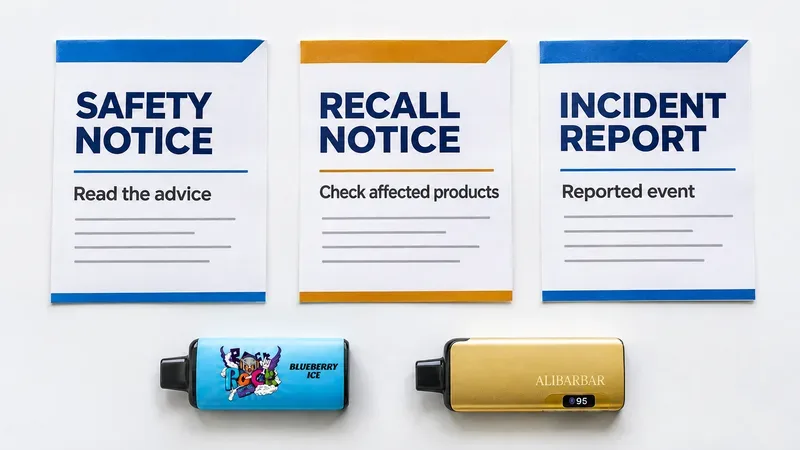
Recognise the main terms
The TGA describes several types of market action. In practical terms, these labels explain the intended response:
- Recall: an action involving the return, removal or destruction of affected products.
- Product alert: information about a concern, potentially including steps users can take to reduce risk.
- Product correction: an action to fix a problem, such as repair, modification or revised labelling.
- Quarantine: an action involving separation of affected stock; follow the specific directions about handling and release.
Meanwhile, a safety alert communicates a possible risk and any recommended action. According to TGA guidance, an alert does not automatically establish that a product caused the reported concern. Some alerts address emerging questions while investigations continue.
Additionally, older records may use earlier terminology, including hazard alerts or product defect corrections. Read their descriptions instead of assuming every unfamiliar label means a different problem. The practical instructions remain central.
Separate reports from established findings
A side-effect report records a suspected association between an event and a product. However, timing alone does not prove causation. Other exposures, health conditions or product-use factors may need investigation.
For instance, someone might report dizziness after using a vape. That report deserves attention, but it does not independently establish a manufacturing defect. Conversely, a notice citing laboratory testing provides different evidence from an unverified consumer allegation.
Therefore, distinguish the notice’s stated findings from possibilities it still investigates. Avoid upgrading “suspected” into “confirmed” when explaining the issue to others. Likewise, do not dismiss a precautionary warning because investigators have unanswered questions.
Do not confuse notification with approval
The TGA’s notified vape list addresses products that may enter lawful therapeutic supply pathways. However, inclusion does not mean the TGA assessed those goods for quality, safety, efficacy or performance. These notified goods do not hold ARTG registration through that listing.
Specifically, sponsors provide notifications about meeting applicable standards, while the TGA conducts compliance monitoring. A notification number therefore cannot establish that an individual item is authentic or defect-free. It also cannot override a later recall.
Most importantly, no published recall does not mean no risk exists. Searches can miss records, and emerging problems may await investigation. Treat seller claims such as “TGA approved” cautiously when they rely only on notified-list inclusion.
4. What to Do If Your Vape Matches a Recall or Warning
Once the details match, follow the notice’s consumer instructions promptly. However, urgent symptoms or exposure concerns take priority over paperwork. Do not delay medical help while checking a batch code or completing a report.
Address urgent health concerns first
If someone collapses, has a seizure or struggles to breathe, call Triple Zero, 000. For suspected nicotine poisoning or vaping-liquid exposure, seek immediate advice from the Poisons Information Centre on 13 11 26. Keep the packaging available if you can do so safely.
The TGA’s patient guidance warns that nicotine exposure can occur through swallowing, inhalation or skin contact. Additionally, it advises flushing exposed skin or eyes with running water. Explain the exposure and follow the medical advice you receive.
Importantly, do not wait for symptoms before seeking advice about suspected ingestion. Children face particular poisoning risks. A product’s recall status does not determine whether an exposure needs urgent attention.
Follow the instructions for that specific action
A recall may instruct consumers to stop using affected stock immediately. Meanwhile, another warning may recommend a different response or professional advice. Do not transfer instructions from one notice to another.
For example, a TGA database entry dated 20 October 2026 concerns Vaper Empire VE Nicotine 6 mg/mL Spearmint e-liquid, 30 mL. It identifies batch 2507-33-13 and expiry 07/2027. The entry states that testing detected prohibited cinnamaldehyde.
Specifically, that entry tells affected customers to stop use and contact MyDuke Customer Service about return or safe disposal and credit. Those arrangements belong to that action. Recheck the live entry before relying on these identifying details or instructions.
Additionally, contact your pharmacist if stopping an affected therapeutic vape disrupts treatment for nicotine dependence. Ask about an appropriate alternative and managing withdrawal. Avoid selecting another product solely because it looks similar.
Confirm handling, returns and disposal
Before transporting or posting a product, ask the named contact what arrangements apply. In particular, explain any leakage, overheating or visible damage. Do not assume ordinary return postage suits a damaged battery device.
- Keep affected items separate from products you still need to identify.
- Retain labels, receipts and photographs for the return or investigation.
- Ask whether the action offers credit, replacement, refund or another remedy.
- Request disposal instructions for the liquid, device and battery where relevant.
Finally, avoid pouring liquid into drains or placing a battery device into general rubbish. Seek suitable instructions first. Keep affected products away from children and pets while awaiting advice.
5. Report Vape Side Effects, Product Defects or Illegal Supply
Choose your reporting route according to what happened. Specifically, health symptoms and product faults belong on a different route from suspected unlawful supply or advertising. Sometimes the same incident justifies separate reports.
Report symptoms and product problems
Start with the TGA page titled “Reporting adverse events for consumers.” It offers routes for suspected side effects, device incidents and product defects. Additionally, its guidance says to choose the best option if you are unsure.
A pharmacist or another health professional can help you report. Meanwhile, tell the supplier about an affected product when appropriate, particularly if a notice requests contact. Supplier contact does not replace urgent care or your TGA report.
Include enough detail to make the event understandable:
- The product name, strength, model and batch or serial number.
- When you bought it, first used it and noticed the problem.
- The symptoms, malfunction or defect, including any medical treatment.
- Relevant photographs, purchase records and other products used around that time.
- Your contact details if you are willing to provide follow-up information.
Importantly, describe observations without claiming certainty you do not have. “The device became unusually hot during charging” gives investigators useful information. You do not need to diagnose the technical cause yourself.
Report suspected unlawful activity separately
Use the TGA’s “Report a breach” guidance for suspected unlawful vape supply, importation or manufacture. For advertising concerns, follow its non-compliant advertising reporting route. Describe what you saw rather than attempting to identify the exact legal provision.
Additionally, preserve the seller’s name, location, advertisement details and the date you observed them. Screenshots can help document changing online material. Do not purchase or use another product merely to gather evidence.
Finally, reporting supports monitoring and investigation, but it does not guarantee a finding about your individual case. A submission also does not establish causation or arrange medical treatment. Seek healthcare and follow recall instructions independently of the reporting process.
6. Receive Official Vape Safety Updates and Recheck Notices
Make repeat checking easy by bookmarking the TGA’s safety alerts, market actions and DRAC pages. Additionally, explore the subscription options currently offered on its website. Choose relevant official updates without assuming a dedicated vape-only service exists.
The TGA also uses official social media channels to communicate important safety information. However, a shared post or notification should lead you back to the complete notice. Short messages may omit batch ranges, contact arrangements or later corrections.
Keep a simple product record on your phone. Include photographs of labels, purchase dates and the pharmacy or supplier details. Then update that record when you buy another batch or replace a device.
Furthermore, reopen relevant notices when you receive a supplier message or hear about an expanded action. Later updates may change affected-product details, handling advice or return instructions. Compare the current wording with your saved copy.
Finally, check spam folders if you expect direct correspondence from a pharmacy or supplier. Keep your contact details current with them where appropriate. These habits support official searching, but cannot guarantee that every warning reaches you immediately.
7. Final Vape Safety Checklist and Frequently Asked Questions
Before closing your search, check that you have answered the practical questions below. Specifically, focus on identification, instructions and any unresolved uncertainty.
Your final checking list
- Search official TGA safety alerts, market actions and DRAC.
- Match the product name, strength, model and production identifiers.
- Read the complete notice, including updates and consumer instructions.
- Seek urgent medical advice for symptoms or suspected poisoning.
- Confirm return, credit, replacement or disposal arrangements with the named contact.
- Report suspected adverse events, defects or unlawful activity through the appropriate route.
Does a matching brand mean my vape is recalled?
No. Match the full affected-product description, including any batch or model restrictions. However, a notice covering all batches may apply without an individual batch match.
What if I threw away the box?
Check the bottle, pod packet, device and purchase records for identifiers. Then ask your pharmacist or the named supplier to help. Missing packaging does not settle whether the product is affected.
Can I trust a “no recalls found” result?
It only describes what your search found. Broaden the search and check official alerts alongside DRAC. Additionally, seek advice if the product malfunctions or causes symptoms.
Does the notified vape list guarantee safety?
No. The TGA explains that it has not assessed listed goods for quality, safety, efficacy or performance. Furthermore, inclusion cannot rule out a later defect or recall.
Will every recall offer the same remedy?
No. Read that action’s instructions and contact the named organisation. Specifically, confirm the available remedy and safe handling arrangements before returning or discarding anything.
Conclusion
Official notices, accurate product matching and notice-specific instructions form the core checking process. However, neither an empty recall search nor notified-list inclusion guarantees safety. Keep investigating unexplained symptoms, faults or uncertain product details.
Open the TGA safety information portal and compare your identifiers with relevant notices. Then contact a pharmacist or the named supplier if the match remains unclear. Most importantly, seek urgent care when exposure or symptoms require it.
