
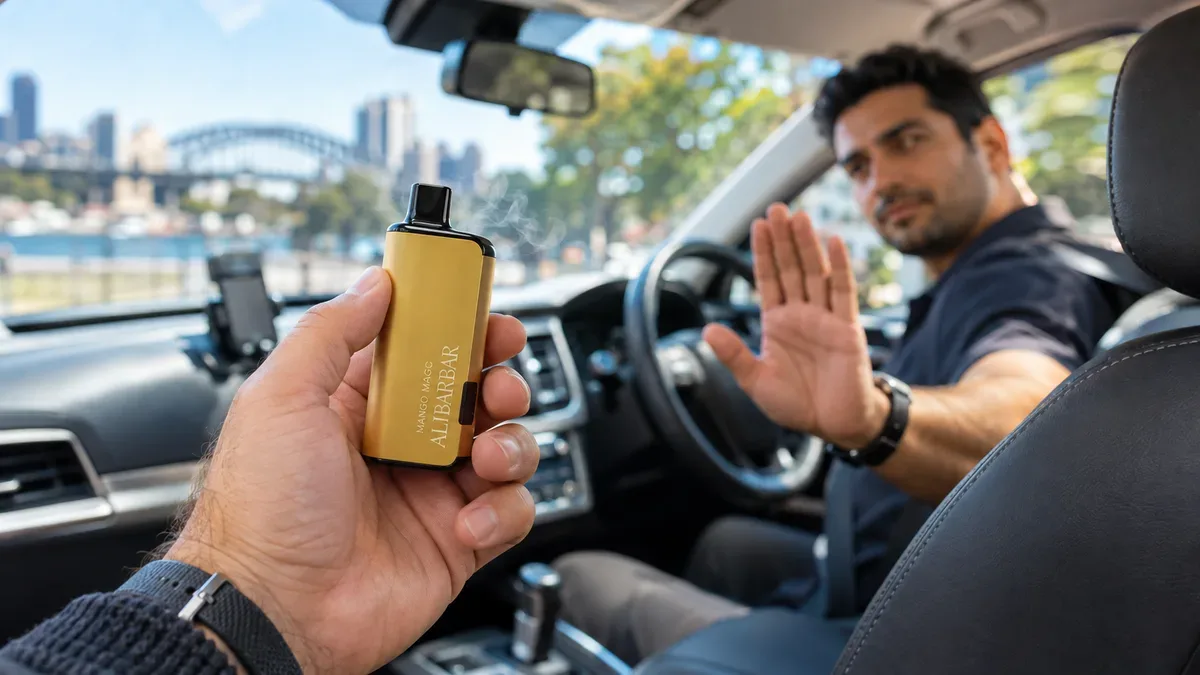
You enter a rideshare, reach for your vape, then pause. Can You Vape in a Taxi or Rideshare Vehicle in Australia? Opening a window may seem considerate, but it rarely settles the issue. Moreover, asking the driver does not guarantee that vaping becomes lawful or acceptable.
Australia has no single rule that neatly covers every booked journey. State laws, transport regulations, workplace duties, child protections, and operator policies can overlap. Therefore, both passengers and drivers should treat every taxi and rideshare vehicle as vape-free.
This guide compares all eight jurisdictions and explains the practical rules during a trip. It also covers penalties, complaints, cleaning claims, and account restrictions. However, laws and operator terms can change, so always check current official guidance before travelling.
1. Can You Vape in a Taxi or Rideshare Vehicle in Australia?
The short answer
Passengers should not vape inside a taxi, Uber, or another rideshare vehicle. That remains the safest answer, even when a vehicle’s legal classification varies. Furthermore, a platform or driver may prohibit vaping beyond the minimum requirements of local law.
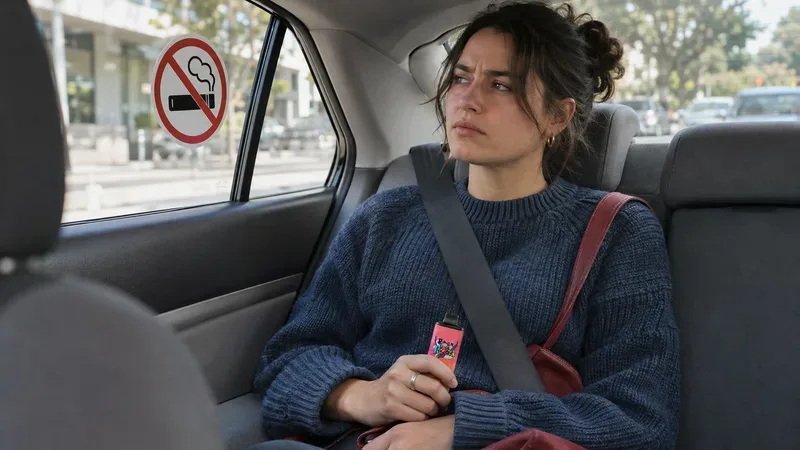
Consider a passenger taking one puff during a ten-minute trip. The driver may face lingering aerosol, an unhappy next passenger, or a complaint about vehicle cleanliness. As a result, a seemingly minor act can affect several people and the driver’s income.
Why the answer is not purely national
Each state and territory controls smoking and vaping in public places differently. Transport legislation may also regulate taxis, booked-hire cars, or public passenger vehicles. Additionally, workplace safety duties can protect drivers from unwanted aerosol exposure.
Operator conditions add another layer. For instance, a rideshare platform may ban vaping whenever its app facilitates a service. Therefore, conduct may breach platform rules even when a particular statute does not clearly name rideshare cars.
Taxis versus rideshare vehicles
Taxis often fall expressly within public transport or commercial passenger vehicle rules. Rideshare cars usually remain privately owned, yet their status changes during booked work. Specifically, transport laws may regulate them while drivers accept bookings, collect passengers, or complete trips.
However, definitions differ between jurisdictions. A provision covering a “taxi” may not automatically cover every privately owned rideshare car. Other rules may use broader terms, including booked-hire vehicle, public passenger vehicle, workplace, or enclosed public place.
Does driver permission make vaping legal?
No. A driver’s verbal permission cannot override legislation, transport conditions, workplace duties, or platform standards. Moreover, the driver may misunderstand the applicable rule or overlook a child-protection provision.
Permission also does not bind the vehicle owner or booking service. Therefore, both parties could still face complaints or platform consequences. The simplest approach is to wait until the journey ends.
Common misconceptions
- “The window is open.” An open window does not cancel a rule applying to the vehicle or trip.
- “It is only one puff.” Most restrictions regulate the act, not the number of inhalations.
- “I am in the back seat.” Your seating position rarely changes the vehicle’s legal category.
- “My device produces little vapour.” Low visible output does not necessarily create an exemption.
- “The driver owns the car.” Private ownership does not erase transport rules or operator conditions.
Nicotine-free products
Many laws regulate using an e-cigarette or personal vaporiser, rather than nicotine alone. Consequently, a nicotine-free product may receive the same treatment as a nicotine vape. Labels may also prove unreliable, so passengers should never rely on packaging as a legal defence.
2. Vaping Laws by State and Territory
New South Wales and Victoria
New South Wales applies smoke-free restrictions to vaping in enclosed public places and listed outdoor areas. Public transport stops, platforms, ferry wharves, and taxi ranks are vape-free. Additionally, using a vape in a car carrying a child under 16 is illegal.
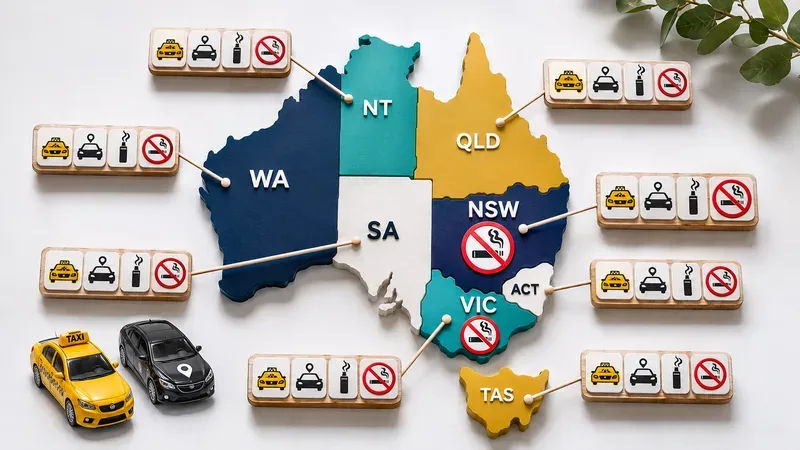
NSW passenger transport rules expressly address several forms of public transport. However, the position of a particular rideshare car may depend on its classification and operating circumstances. Workplace safety duties and operator rules can still prohibit vaping where transport wording requires closer analysis.
Victoria also treats e-cigarette use like smoking across many regulated smoke-free areas. Taxis and commercial passenger vehicles operate within a detailed transport framework. Furthermore, child-in-vehicle restrictions, workplace responsibilities, and operator conditions may apply independently.
Queensland and Western Australia
Queensland prohibits smoking and vaping at public transport waiting points and in various regulated public areas. Transport legislation also restricts smoking in public passenger vehicles. Therefore, the exact status of a taxi or booked-hire vehicle must be checked under current transport definitions.
Queensland also prohibits smoking and vaping in a vehicle carrying a child under 16. Notably, a queue can remain regulated beyond the immediate sign or shelter. A person waiting in an airport taxi queue should not assume that moving several metres makes vaping acceptable.
Western Australia bans vaping wherever smoking is prohibited. Its official health guidance includes taxis within smoke-free public transport. Moreover, smoking or vaping in a vehicle containing a child under 17 is unlawful.
WA restrictions also cover enclosed public places and workplaces. Consequently, a commercial trip may attract several overlapping protections. Private ownership alone does not provide a reliable exemption during passenger service.
South Australia and Tasmania
South Australia prohibits smoking and vaping in enclosed public places, workplaces, and certain transport areas. Its legislation expressly regulates tobacco and e-cigarette products. Additionally, a vehicle containing a child under 16 must remain smoke-free and vape-free.
Taxi, hire-car, and rideshare situations require attention to both health and transport rules. For instance, a vehicle may function as a workplace even where another provision uses narrower public transport language. Operator conditions can impose a complete prohibition as well.
Tasmania uses broad “smoking product” concepts that include electronic cigarettes and personal vaporisers. Smoke-free rules cover workplaces and declared public areas. Therefore, readers should check whether a taxi, hire car, rank, or pickup area meets a current statutory definition.
Tasmanian child-in-vehicle protections also require careful verification before publication. Specifically, confirm whether the current provision captures vaping and the precise age threshold. Do not copy an age limit from another jurisdiction.
Australian Capital Territory and Northern Territory
The ACT expressly bans smoking and vaping in enclosed public places, including taxis. It also covers public transport interchanges and areas within five metres of designated stops. Furthermore, cars carrying children under 16 are subject to a separate prohibition.
Rideshare cars may require further classification under transport and workplace rules. However, platform restrictions remain relevant during app-based trips. Access Canberra handles several smoke-free compliance matters, while police may enforce child-in-vehicle offences.
The Northern Territory regulates e-cigarettes alongside tobacco products for many consumption restrictions. Enclosed workplaces and public areas receive smoke-free protection. Additionally, commercial passenger transport conditions may control driver and passenger conduct inside regulated vehicles.
NT readers should verify current vehicle categories and child protections directly with government sources. This step matters because transport conditions and public-health legislation can change separately. Furthermore, airport or venue rules may restrict vaping at a collection point.
What must be checked for every jurisdiction
- The statutory meaning of smoking, vaping, e-cigarette, and smoking product.
- Whether the vehicle qualifies as a taxi, booked-hire car, public passenger vehicle, or workplace.
- Whether a booking is active or the driver remains available for hire.
- Whether passengers, workers, or children are inside the vehicle.
- The protected child’s age under the current local provision.
- Whether the vehicle occupies a taxi rank, airport zone, station, or regulated pickup area.
Suggested comparison table
| Jurisdiction | Taxi rule | Rideshare rule | Child age threshold | Rank or pickup-area rule | Responsible regulator | Official source |
|---|---|---|---|---|---|---|
| New South Wales | Check smoke-free and passenger transport rules | Classification, workplace duties, and operator rules apply | Under 16 | Taxi ranks and public transport stops are vape-free | NSW Health, transport authorities, and NSW Police | NSW Health guidance and current legislation |
| Victoria | Commercial passenger and smoke-free rules apply | Check commercial passenger classification and platform terms | Verify current threshold | Check designated transport and venue areas | Victorian health and transport authorities | Victorian Department of Health and current legislation |
| Queensland | Public passenger vehicle restrictions apply | Check booked-hire status and operating conditions | Under 16 | Public transport waiting points and queues may be covered | Queensland Health and transport authorities | Queensland Government health and transport guidance |
| Western Australia | Official guidance includes taxis as smoke-free public transport | Check workplace, transport, and operator requirements | Under 17 | Check airport, venue, and local restrictions | WA Health and transport authorities | HealthyWA and current legislation |
| South Australia | Check enclosed public place, workplace, and transport rules | Workplace and operator conditions may apply | Under 16 | Certain public transport areas are vape-free | SA Health and transport authorities | SA Health guidance and current legislation |
| Tasmania | Check smoking-product, workplace, and transport provisions | Confirm vehicle status and operator terms | Verify current threshold | Declared smoke-free areas may apply | Tasmanian Health and transport authorities | Tasmanian Department of Health and current legislation |
| Australian Capital Territory | Taxis are expressly covered as enclosed public places | Check vehicle status, workplace duties, and platform rules | Under 16 | Interchanges and areas within five metres of stops are covered | Access Canberra and ACT Policing | ACT Government guidance and current legislation |
| Northern Territory | Check tobacco, workplace, and commercial passenger rules | Confirm current rideshare and workplace requirements | Verify current threshold | Check airport, venue, and designated-area rules | NT Health, licensing, and transport authorities | NT Government guidance and current legislation |
Accuracy note for publication
Every table entry requires final verification before publication. Confirm all definitions, exemptions, age thresholds, penalties, and regulator responsibilities against current health and transport guidance. Moreover, check the legislation itself where official summaries leave a rideshare classification uncertain.
3. Passenger and Driver Vaping Rules During a Trip
Passenger obligations
Passengers should switch off or safely store vaping devices before entering the vehicle. They should also follow lawful driver instructions and avoid releasing aerosol inside the cabin. Most importantly, a passenger should stop immediately when asked.
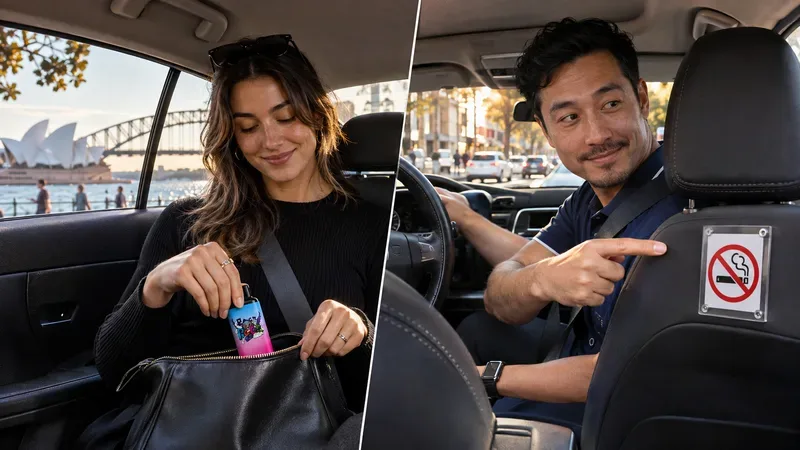
Aerosol can affect the driver and later passengers after the user leaves. Moreover, residue or odour may remain on upholstery and interior surfaces. Keeping the device stored prevents arguments and reduces accidental activation.
Driver obligations
Drivers should not vape while carrying passengers. Smoke-free vehicle rules, workplace duties, platform standards, and passenger comfort can all apply. Additionally, handling a device may distract a driver from traffic conditions.
A passenger may have asthma, pregnancy-related concerns, or chemical sensitivities. Therefore, driver permission cannot address every person’s health needs. A consistently vape-free cabin provides a clearer and safer operating standard.
Refusing or ending a trip
A driver may ask a passenger to stop vaping and store the device. Before departure, the driver may refuse service where lawful and consistent with operator requirements. However, drivers must follow safety rules and must not discriminate against protected characteristics.
If conduct continues, a driver may end the journey at a safe, lawful location. The driver should avoid stopping where traffic, isolation, or other conditions create danger. Furthermore, any cancellation should follow the booking service’s current process.
Reporting a driver
A passenger can report a driver who vapes during a trip. First, record the trip time, booking reference, vehicle details, and location. Additionally, note what occurred and whether anyone asked the driver to stop.
Reports may go to the platform, taxi operator, booking service, or transport regulator. For immediate danger, move to safety and contact emergency services. However, do not distract or confront the driver aggressively while the vehicle moves.
When no passenger is present
An inactive car used privately may receive different legal treatment from an active commercial vehicle. However, “no passenger” does not always mean “no restriction.” The driver may remain on duty, available for hire, parked at a rank, or working inside a regulated workplace.
Cleaning and preparation time can also count as work. Furthermore, a taxi licence, owner agreement, or operator policy may require a permanently smoke-free cabin. Drivers should check every applicable condition before vaping inside an empty vehicle.
Long journeys
For a long journey, ask whether the driver can make a safe and lawful rest stop. Leave the vehicle before using the device. Moreover, move away from taxi ranks, station entrances, queues, and other designated smoke-free areas.
4. Uber and Other Rideshare Vaping Policies
Uber vaping policy in Australia
Uber’s Australian community guidelines state that smoking and vaping are not permitted while using its apps. The rule applies to riders and drivers during relevant services. Therefore, it can prohibit conduct even where local legislation uses narrower vehicle wording.
The guidelines also recognise that vaping may distract a person operating a vehicle. A passenger can request an immediate trip ending if a driver vapes while driving. Furthermore, repeated or serious breaches may affect access to an account.
Other rideshare and taxi operators
Do not assume every service uses identical wording. Check the current terms of the booking platform, taxi network, hire-car operator, and vehicle owner. Specifically, look for rules covering smoking, vaping, cleanliness, damage, safety, and passenger conduct.
Terms can change without matching legislative changes. Moreover, local operators may adopt stricter standards than national platforms. A rule shown inside the app may form part of the service agreement.
Driver-set vehicle rules
A rideshare driver can generally maintain a no-vaping rule inside a privately owned vehicle. This remains reasonable even where legislation does not expressly name that rideshare category. After all, the driver must protect the cabin, personal comfort, and future passengers.
Asking politely does not require the driver to agree. Therefore, treat “no” as the final answer. Continuing after a refusal can turn a simple request into a conduct or safety problem.
Cleaning fees and evidence
Vaping does not automatically produce a cleaning charge after every incident. However, documented odour, visible residue, burns, spilled liquid, or other damage may support a claim. Platforms usually assess evidence under their current fee and damage procedures.
Drivers should document the condition promptly and accurately. Meanwhile, passengers should dispute an incorrect claim through the platform’s review process. Neither party should exaggerate evidence or request money outside authorised channels.
Ratings and account consequences
Possible outcomes include cancellation, a poor rating, a warning, or temporary restrictions. Serious or repeated behaviour may lead to deactivation or another formal review. Additionally, consequences can affect drivers and passengers differently under the same platform.
No outcome is guaranteed from a single report. Platforms usually consider available evidence, prior reports, and the seriousness of the conduct. Therefore, submit factual details instead of assumptions about motive.
Respectful conduct
A request for permission should remain respectful and pressure-free. The driver has every right to protect the vehicle and decline. Most importantly, continuing after a warning may create distraction, conflict, or an unsafe roadside stop.
5. Children, Taxi Ranks, and Other Special Situations
Vaping in a car with children
Every Australian jurisdiction protects children from smoking in vehicles, although wording and thresholds can differ. Current rules must be checked to confirm how vaping fits each provision. Moreover, the restriction may apply regardless of who owns or drives the car.
Do not assume “under 16” applies nationally. For example, Western Australian guidance uses an under-17 threshold. Therefore, publishers and travellers must verify the local age before relying on any summary.
Taxi ranks and pickup zones
Smoke-free rules may cover taxi ranks, public transport stops, stations, platforms, and queues. Airport pickup zones and booked-hire collection points may also have venue-specific restrictions. Additionally, signs may expand or clarify the controlled area.
NSW expressly includes taxi ranks within smoke-free public transport locations. The ACT covers interchanges and areas near designated taxi stops. However, boundaries and exemptions differ, so observe signs and official local guidance.
Before pickup and after drop-off
Stepping outside the vehicle does not automatically make vaping lawful. You may still stand inside a regulated queue, station precinct, or smoke-free airport zone. Therefore, walk to a lawful location before activating the device.
The same principle applies after drop-off. For instance, a hospital entrance or public transport interchange may have its own exclusion distance. Furthermore, private venues can impose broader vape-free conditions across their property.
Windows, doors, and parked vehicles
Opening a window or door rarely defeats a rule applying to the vehicle, trip, workplace, or child’s presence. Parking temporarily does not necessarily help either. Similarly, turning off the engine may leave the vehicle within the same regulated category.
A stationary car can also remain inside a smoke-free pickup zone. Consequently, the safest choice is to leave both the vehicle and restricted area. Always confirm that stopping there is lawful first.
Second-hand vape aerosol
Vape emissions are aerosols, not harmless water vapour. They may contain fine particles, nicotine, flavouring chemicals, and other substances. Additionally, odour and residue can remain after visible aerosol disappears.
Exposure can occur within the confined space of a vehicle. Opening a window may reduce concentration, but it does not eliminate exposure. Therefore, ventilation should never replace a vape-free cabin.
Accessibility and health concerns
Passengers or drivers may have asthma, respiratory conditions, or chemical sensitivities. Pregnancy-related concerns may also make aerosol exposure especially unwelcome. Furthermore, someone should not need to disclose private medical information to request clean cabin air.
6. Penalties, Complaints, and What Vape Users Should Do
Possible legal consequences
Unlawful vaping may lead to an infringement notice or court-imposed fine. Amounts differ according to the jurisdiction, location, and offence. Additionally, separate consequences may apply for vaping near children or inside a regulated transport area.
Health inspectors, transport officers, police, or other authorised officials may enforce particular provisions. Therefore, never rely on a penalty figure from another state. Verify current amounts and enforcement powers before publication or formal action.
Transport and platform consequences
Non-legal consequences can still matter. A driver may refuse service, end a trip safely, or submit a conduct report. Moreover, a platform may apply a cleaning charge, warning, rating consequence, or account restriction.
A passenger report can also affect a driver. For instance, driver vaping may trigger a safety review or temporary account limitation. Accurate evidence helps the operator assess both sides fairly.
What passengers should do before boarding
- Finish vaping only in a location where local rules permit it.
- Switch off the device and lock it if that feature exists.
- Store it securely to prevent leaking or accidental activation.
- Check signs around taxi ranks, stations, airports, and pickup zones.
- Never assume that driver permission overrides legislation or operator rules.
What to do during a long trip
Ask the driver whether a safe rest stop is practical. If the driver agrees, leave the vehicle and identify a lawful vaping location. Additionally, move clear of regulated transport areas, entrances, children, and other people.
Allow enough time for the aerosol and odour to disperse before returning. However, respect the driver’s schedule and any stopping restrictions. A driver does not have to stop where doing so would be unsafe or unlawful.
How to document an incident
- Record the date, time, and booking reference.
- Note the vehicle registration, operator, and trip location.
- Describe what happened without adding unsupported conclusions.
- Record any request to stop and the response received.
- Preserve relevant messages, receipts, or permitted photographs.
- Follow local privacy and surveillance laws when gathering recordings.
Where to report concerns
Start with the rideshare platform, taxi operator, or booking service. If necessary, contact the relevant state or territory transport regulator or health authority. For immediate threats, dangerous driving, or another urgent safety issue, contact police or emergency services.
Choose the agency that regulates the specific conduct. For example, a taxi service complaint may differ from a smoke-free area complaint. Furthermore, child-in-vehicle offences may involve police rather than the booking platform alone.
Legal-information disclaimer
This content provides general information and does not constitute legal advice. Laws, definitions, exemptions, policies, penalties, and vehicle classifications can change. Therefore, consult current state or territory legislation and official health and transport guidance for your circumstances.
Conclusion
Passengers and drivers should treat taxis and rideshare vehicles as vape-free. The precise legal basis varies across Australia, yet several rules may operate together. Child protections, transport restrictions, workplace duties, driver requirements, and platform standards can all prohibit vaping or create serious consequences.
Keep your vape stored until the trip ends. Moreover, check current guidance from the relevant state or territory authority before relying on a legal exception. During a long journey, request a safe stop and vape only where local rules allow it.
