
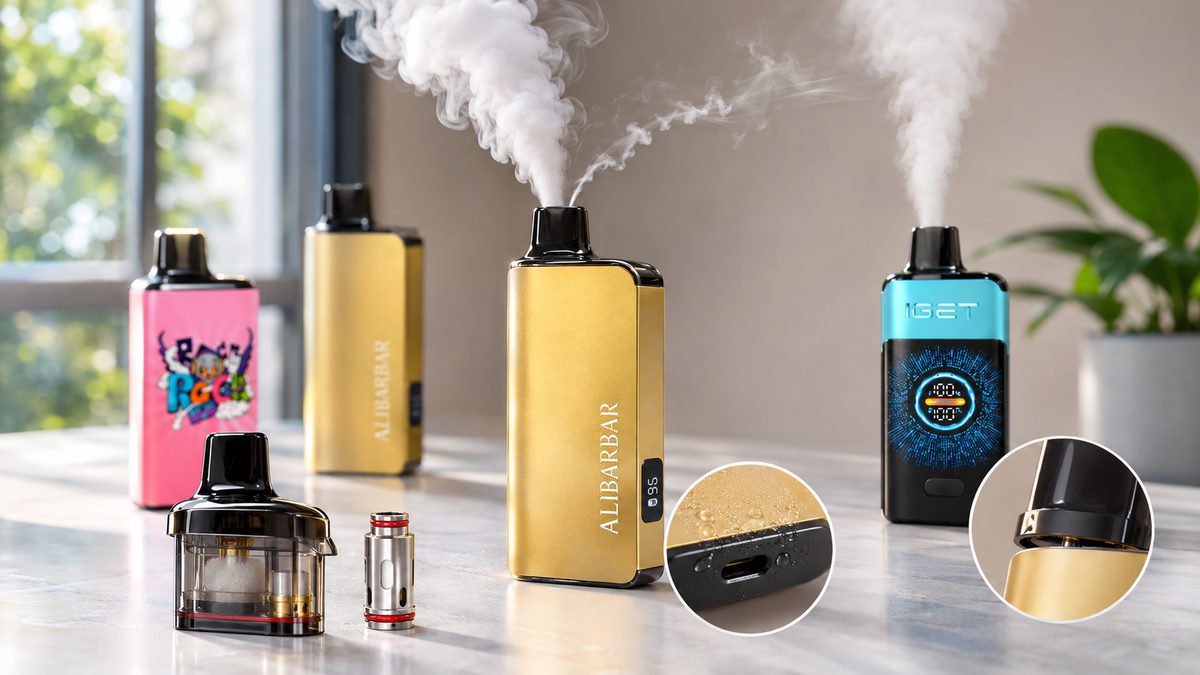
One puff produces a dense cloud, the next feels weak, and another brings gurgling or a dry taste. Why Can Vape Devices Produce Inconsistent Aerosol? The answer often involves several small variables working together. Puff technique, coil condition, battery power, airflow, e-liquid, and temperature can all change the result.
However, random adjustments can make the problem harder to identify. A systematic check helps separate normal variation from a worn component or device fault. The steps below apply to refillable tanks, pods, regulated mods, and disposable devices.
1. Why Can Vape Devices Produce Inconsistent Aerosol?
Vape aerosol forms when a powered coil heats e-liquid held inside a wick. The heat creates tiny airborne droplets, gases, and other constituents that the user inhales. Therefore, the resulting plume is not harmless water vapor. Its composition depends on the liquid, coil temperature, device design, and puff conditions.

Visible cloud density offers only a rough indication of total aerosol output. For instance, bright side lighting can make a modest plume look unusually thick. Cold air may also increase condensation and improve visibility. Meanwhile, warmer surroundings can make a similar amount of aerosol disappear faster.
Particle size also changes what the eye sees. Smaller droplets may remain airborne longer but appear less dense under ordinary lighting. Moreover, e-liquids with more vegetable glycerin often create thicker-looking clouds. Liquids containing more propylene glycol may appear lighter while still carrying nicotine and flavoring constituents.
Normal variation versus a repeating problem
Some puff-to-puff variation is normal because people rarely inhale with identical timing and force. A longer draw gives the coil more heating time and moves more air through the device. However, repeated weak output suggests more than ordinary technique variation. The same applies when output changes sharply during one short session.
Pay attention to the complete symptom pattern rather than cloud size alone. Muted flavor, harshness, dry hits, flooding, or intermittent firing provide useful clues. Additionally, listen for unusual crackling and gurgling. Note whether the mouthpiece releases liquid droplets or feels hotter than usual.
Inconsistent output deserves investigation when it appears repeatedly under similar conditions. Specifically, check whether the problem follows charging, refilling, coil replacement, storage, or a temperature change. A simple pattern may reveal the likely cause. However, heat, electrical warnings, or battery damage require immediate caution.
2. Coil and Wick Problems That Disrupt Vapor Production
The coil and wick should rank among the first checks when flavor changes accompany unstable output. The coil supplies heat, while the wick continuously delivers liquid to its surface. Therefore, either component can disrupt aerosol production. Worn coils may heat unevenly, while damaged wick material may feed liquid unpredictably.

Residue can gradually coat the coil after repeated use. Sweetened or strongly flavored liquids often leave deposits faster than simpler liquids. As a result, the coil may need more power to reach its former temperature. Flavor can become muted before visible aerosol drops noticeably.
Too little liquid reaches the coil
An under-supplied wick cannot replace liquid as quickly as the coil evaporates it. Consequently, one puff may seem normal while the next tastes dry or harsh. Rapid repeated draws can worsen this condition. High power, low liquid, thick e-liquid, or blocked liquid ports may also restrict supply.
A dry hit often tastes burnt, sharp, or unusually hot. Stop drawing if that taste appears, because continued heating can damage the wick further. Moreover, allow time between puffs and confirm that liquid covers the intake openings. Tilting some tanks briefly may help liquid contact the wick, but follow the manufacturer’s instructions.
Cold weather can make thicker e-liquid move more slowly. For instance, a pod that works indoors may struggle after sitting in a cold vehicle. Therefore, let the device return naturally to a moderate temperature before testing it. Never use an external heater, flame, microwave, or hot water.
Too much liquid surrounds the coil
Flooding creates the opposite problem. Excess liquid gathers around the coil and interferes with efficient heating. In fact, the device may gurgle, spit droplets, leak, or produce a weak, wet plume. Drawing too forcefully can pull more liquid into the coil chamber than the coil can process.
Overfilling, damaged seals, incorrect assembly, and unsuitable liquid can also cause flooding. Additionally, condensation may collect inside the mouthpiece and imitate a leaking pod. Wipe accessible surfaces with a dry tissue after removing the pod or tank. Do not insert metal tools near contacts or internal wiring.
Why new coils sometimes fail
A new coil does not guarantee steady performance. It may have a manufacturing defect, loose installation, damaged seal, or incompatible resistance. Moreover, the wick may remain partly dry if the user begins vaping immediately. Most replaceable coils need careful priming according to their supplied instructions.
Priming usually means filling the device and allowing the wick to absorb liquid before use. Some manufacturers also recommend starting near the lower end of the approved power range. However, never apply liquid where the instructions prohibit it. Excessive manual saturation can flood the coil before the first puff.
Check that the coil sits straight and fully engages its mounting system. Furthermore, compare its model number and resistance with the device compatibility list. Replace a questionable coil with a genuine compatible unit when safe external checks fail. Persistent trouble after replacement may point toward contacts, power delivery, or the device itself.
3. Battery, Connections, and Power Settings
A coil needs stable electrical power to reach a similar temperature during each puff. A depleted battery may reduce output, delay heating, or stop firing under load. Therefore, compare performance before and after charging with approved equipment. Follow the charging instructions supplied with the device.

Regulated devices may display battery level, coil resistance, wattage, and warning messages. Watch for resistance readings that jump between puffs without a coil change. Specifically, large unexplained changes can indicate a loose coil, contaminated contact, or connection problem. Stop using the device if it reports a short circuit or related electrical fault.
Contacts and firing behavior
Condensation or leaked e-liquid can interfere with contacts between a pod and its battery. First, turn off the device when its design permits. Then remove the pod and wipe accessible contacts with a dry, lint-free material. However, do not scrape them, dismantle the battery, or push objects into openings.
Observe how the device responds when activated. A normal indicator with weak flavor may suggest a coil, wick, airflow, or liquid issue. On the other hand, flickering indicators or delayed activation may suggest power or connection trouble. Auto-draw devices can also misfire when condensation blocks their airflow sensor.
Resistance and wattage clues
Coil resistance affects the power required for proper operation. Many replaceable coils show both resistance and a recommended wattage range. Therefore, confirm that the displayed resistance roughly matches the installed coil’s marking. Minor movement can occur, especially as the coil changes temperature.
A setting below the recommended range may produce cool, weak aerosol and incomplete evaporation. Conversely, excessive power may overwhelm the wick and create harshness or burnt taste. Most importantly, stay within both the device and coil manufacturers’ specifications. Do not bypass protections or experiment beyond rated limits.
To separate coil trouble from a power fault, note flavor, resistance, and firing behavior together. Replace the consumable only when the instructions allow safe replacement. If a compatible new coil restores stable flavor and output, the old coil was likely responsible. However, repeated failures may indicate another cause.
A removable battery requires additional care. Use only the battery type and configuration specified by the manufacturer. Furthermore, stop using any cell with a torn wrap, dent, corrosion, or unusual heat. Battery inspection or replacement should not involve opening a sealed device or battery pack.
4. Airflow, E-Liquid, Weather, and User Technique
Aerosol consistency depends on the device and the conditions surrounding its use. Airflow cools the coil, carries aerosol outward, and influences liquid movement through the wick. Therefore, a small airflow change can affect temperature, flavor, and cloud appearance. Dust, condensation, pocket lint, or a misplaced finger may block an inlet.
Check visible airflow openings without probing deep inside them. Additionally, confirm that adjustable airflow parts remain in their intended position. A very restricted setting may create a warmer, stronger draw. A wide setting can feel cooler and may make the aerosol seem less concentrated.
Liquid viscosity and filling conditions
E-liquid thickness affects how quickly the wick receives fresh liquid. More vegetable glycerin usually makes liquid thicker, particularly in cool conditions. Meanwhile, more propylene glycol generally makes it flow more easily. A small pod may struggle with liquid designed for larger coils and wider intake ports.
Use only liquid types the manufacturer considers compatible. Moreover, avoid mixing unknown products inside a tank to change thickness. The result may feed poorly, leak, or contain an unsuitable nicotine concentration. Check the fill limit and close every cap or plug securely.
Low liquid can expose wick openings during a tilted draw. However, overfilling may reduce the air space that some systems need for pressure balance. Pressure changes can also push liquid through the coil during travel. For instance, a filled tank may leak after a significant altitude change.
Temperature, pressure, and draw style
Heat makes many e-liquids thinner, which can increase flooding and leakage. Cold makes them thicker, which can slow wicking and cause dry puffs. Additionally, rapid temperature changes can alter pressure inside a pod or tank. Store the device upright when its instructions recommend that position.
Drawing style matters just as much. A very hard pull may flood some coils by forcing extra liquid toward the heating chamber. Conversely, a weak or brief draw may not activate an auto-draw sensor reliably. A smooth, moderate puff often produces the most repeatable result.
Change only one variable during diagnosis. For example, clear an external airflow obstruction before changing power or replacing the coil. Then test under the same safe conditions. As a result, you can identify which adjustment actually changed performance.
5. Safe Vape Device Troubleshooting by Device Type
Begin with reversible checks that require no disassembly. Look for warning messages, unusual heat, cracks, swelling, leaks, or a burning odor. If none appear, check charge level, liquid level, airflow openings, and normal assembly. Additionally, review the operating instructions before removing any replaceable component.
A simple diagnostic sequence
- Pause and inspect: Stop puffing, let the device cool, and check for visible damage or unusual heat.
- Confirm the basics: Check charge, liquid level, airflow, locks, settings, and any screen warning.
- Clean external areas: Wipe the mouthpiece, pod base, and accessible contacts with dry, lint-free material.
- Verify compatibility: Compare the coil, pod, liquid type, resistance, and power range with official instructions.
- Test one change: Reassemble correctly, then take one moderate puff under normal conditions.
- Replace the consumable: Fit a genuine compatible coil or pod if the design permits safe replacement.
- Seek support: Contact the manufacturer or an authorized retailer when inconsistent performance continues.
This order reduces unnecessary changes and keeps observations useful. Moreover, it prevents a new setting from hiding the original problem. Never continue testing through burnt taste, overheating, electrical warnings, or active leaking. Those signs move the problem from routine maintenance into safety territory.
Refillable tanks and regulated mods
For a refillable tank, check liquid level, airflow position, coil seating, and seal condition. Then compare displayed resistance with the coil marking. Furthermore, confirm that the wattage remains inside the recommended range. Prime a replacement coil exactly as its manufacturer directs.
If gurgling follows a refill, inspect the fill cap and accessible seals. Avoid overtightening, because excessive force can damage threads or deform seals. However, a cracked tank, damaged connector, or persistent base leak needs professional attention. Do not attempt repairs involving wiring or battery compartments.
Refillable and prefilled pod systems
Pod systems often collect condensation beneath the pod. Remove the pod according to instructions and dry accessible surfaces. Additionally, check whether the pod sits evenly and clicks or magnets into place correctly. A loose fit can cause intermittent firing or changing resistance.
Replace the pod when its coil tastes burnt, leaks persistently, or produces weak output after charging. For refillable pods, confirm that the fill plug closes completely. Moreover, avoid using a liquid that exceeds the system’s stated compatibility. Never puncture or pry open a prefilled pod.
Disposable devices
A disposable device may weaken as its battery or liquid supply approaches depletion. Flavor can fade, and activation may become intermittent. However, charging applies only when the manufacturer explicitly designed and labeled the device as rechargeable. A charging port does not authorize opening or modifying the enclosure.
Do not refill, dismantle, puncture, crush, or repair a sealed disposable. Moreover, do not keep drawing when it tastes burnt or feels unusually hot. Follow local battery and electronic-waste rules when disposal becomes necessary. Keep depleted devices away from children, pets, heat, and water.
Symptom-to-action reference
- Weak aerosol with normal flavor: Check charge, airflow, power settings, draw strength, and liquid compatibility.
- Weak aerosol with muted flavor: Inspect liquid level and consider a worn or residue-coated coil.
- Dry or burnt taste: Stop immediately, check liquid supply, and replace a damaged consumable when permitted.
- Gurgling or spitback: Check for flooding, overfilling, condensation, damaged seals, or an overly forceful draw.
- Intermittent firing: Check locks, charge, pod seating, accessible contacts, and displayed warnings.
- Changing resistance: Stop testing if changes are large, then inspect coil seating and seek qualified support.
- Persistent leaking: Stop use, contain the liquid safely, and replace the faulty pod, tank, or seal.
- Unusual heat or odor: Stop use immediately and move the device away from combustible materials when safe.
Information to record before seeking help
Good notes help support staff identify patterns without repeated trial and error. Record the coil resistance, recommended wattage, current setting, liquid type, and device model. Additionally, describe when the symptom appears. Note whether it begins after filling, charging, storage, travel, or several consecutive puffs.
Describe flavor and sound changes as precisely as possible. For instance, “gurgling after refilling” gives more direction than “it works badly.” Moreover, report displayed error messages exactly. Photographs of external damage or leakage may also help, provided handling remains safe.
Do not conceal modifications, drops, water exposure, or incompatible accessories. Those details can explain unstable behavior and guide safer advice. However, never recreate a dangerous symptom for a photograph or demonstration. Contact the manufacturer or an authorized retailer instead.
6. When Inconsistent Aerosol Signals a Safety Problem
Inconsistent aerosol alone does not always mean a device is dangerous. A cold liquid, tired coil, blocked inlet, or changing draw can cause ordinary variation. However, output changes deserve immediate attention when heat, battery, leaking, or electrical signs appear. Stop using the device until qualified support assesses it.
Routine maintenance can include wiping accessible condensation, charging correctly, checking settings, and replacing an approved consumable. In contrast, users should not repair wiring, protection circuits, sealed batteries, or damaged enclosures. Furthermore, never bypass a warning message or hold the firing control to force operation.
- Stop immediately if the device becomes unusually hot while idle or charging.
- Stop if the battery swells, dents, corrodes, hisses, vents, or develops a damaged wrap.
- Stop after repeated short-circuit, over-temperature, or resistance warnings.
- Stop when liquid enters the battery compartment or leaks persistently near electrical contacts.
- Stop if smoke, sparks, melting, or a strong burning odor appears.
If safe, disconnect charging power without touching a hot or damaged device. Then keep people and combustible materials away from the area. Additionally, follow local emergency guidance if fire, smoke, or venting occurs. Do not place a damaged lithium battery in household rubbish.
Batteries and sealed disposable devices are not user-serviceable. Therefore, never open them to investigate inconsistent output. An authorized retailer, manufacturer, or appropriate recycling service can provide the next step. When uncertainty remains, discontinuing use is the safer choice.
Conclusion
Inconsistent aerosol usually traces to draw technique, coil condition, unstable power, obstructed airflow, unsuitable e-liquid, weather, or depleted disposable components. Therefore, check charge, liquid level, airflow, connections, settings, compatibility, and consumable condition in a fixed order. Change one variable at a time. This approach identifies many common causes without unsafe disassembly.
Most importantly, stop using any device with unusual heat, battery damage, electrical warnings, burning odor, or persistent leaking. Do not repair batteries or open sealed disposable devices. Otherwise, follow the diagnostic sequence and record the symptom pattern. Contact the manufacturer or an authorized retailer if consistent performance does not return.
